Wednesday, 22 March 2023

AUKUS Revealed


Details of the AUKUS programme have finally surfaced (excuse the clunky metaphor) after leaks that moved the emphasis from its content to the media reaction.

Paul Keating's criticism was characteristically direct and comprehensive, and he has been consistent on this topic for decades. His personal attacks on the current cabinet were not constructive in terms of the debate, except to give the fifth estate a serve which they probably deserved. His rationale was lost in the crossfire.

There are plenty of defence analysts who share his view, but from a different perspective.

The Chinese are not going to be worried about a few extra nuclear boats that rotate through Australian ports, even if they have hostile intent. 

What is more significant to me, as an ex-conscript who lived through the sixties and seventies, are the memories of fear being used to wedge the Australian voter into supporting US led adventures into Asia. 


That fear of isolation, of the Asian "other" and threats "coming down" from the north of the continent has always been embedded in the Australian post-colonial psyche. It is powerful, and has been used to great political effect for more than a century. 

It saw its origins in the anti-Chinese riots during the gold rush era, morphed into the White Australia policy, was supercharged by Imperial Japan during World War Two, and persisted through Korea and Vietnam.

The only time it was real was in 1942, although archival material has revealed that the Japanese had no intention of a military invasion of Australia. It helped maintain conservative governments in power until 1972, when press and electronic media coverage of the situation in Vietnam revealed that the war was a tragedy, and its rationale based on mythology.


Another thread running through our recent history as a result of the events of 1940 - 44, is the belief that we always need strong and powerful friends to have our back. We can learn two historical lessons from that era. The first is that those strong and powerful friends can be rendered useless in very short time. Fortress Singapore fell between December 1941 and February 1942, when the British and Commonwealth forces were routed by the Japanese. After the fall of Singapore Churchill made it clear that he was prepared to sacrifice an Australian division to save his jewel of the Empire in Burma.

The Americans came to our aid not to save Australia, but to establish an unsinkable aircraft carrier in the South-West Pacific. In the case of both these "great and powerful friends" their self-preservation was always the first cab off the rank. The Japanese overreached, and Australia was lucky.

We cannot assume that this history will repeat, and that the USA (especially if an isolationist like Trump is in power) will continue to support us. 

This is the fundamental weakness of AUKUS. It involves one "friend" who abandoned us in 1942 because it needed to save itself, and another who helped us only because it was in their security interests to do so.

The only lesson we can take from the recent past is that we cannot ignore the geography. We need to build alliances, strategic and economic, with our northern neighbours, and at the same time develop a totally independent defence policy.

Whilst Keating is right, he probably should have avoided personal criticism of his party, but Labor has been wedged by the politics of fear. They really had no choice but to back AUKUS, but their timidity is shameful, and it does not bode well for our future security.

The images provide a clear narrative of these politics. Recent headlines in the local media are eerily redolent of the anxieties of the past that led us into tragedies such as Vietnam and Iraq.


Sunday, 12 March 2023

Robodeath

Pic courtesy Kindpng

The title, gentle reader, is not a typo. Robodebt was implicated in seven suicides.

Whether the failed and unlawful scheme caused suicides or not, it has permanently stained the previous government, and the public servants who implemented it.

That's ignoring the fact that it cost the Australian taxpayer $1.76 billion in settlements, without counting $112 million in interest.

Think about it. A computer algorithm demanded refunds from people who had been paid social security payments. These refunds were based on income averaging, which apart from being unlawful, was based on a dodgy mathematical theory.

I've had some personal experience of dealing with the public service (in this case DVA) when it comes to demands for refunds. I retired in 2005, but was asked to return to work in an advisory position between 2006 and 2017. As an ex-serviceman (I don't much like the American inspired "veteran" term, so don't use it), I was drawing the old age pension from DVA earlier than my peers, and was obliged to report my financial circumstances to ensure I was receiving the correct amount.

I did so religiously, and because I wasn't always employed for the same fraction annually, my reporting was quite frequent. I probably should have smelled a rat when the pension didn't seem to change with my hours, but I kept reporting nevertheless.

Late in 2014, after two years in receipt of these regular payments, I was working in Goondiwindi when my mobile rang at 9:30 pm displaying a "private number" on the screen. I answered, and a woman introduced herself as a DVA agent working on a debt recovery team.

She began the conversation by saying "How do you feel about defrauding the Australian taxpayer?" After I'd picked myself up from the floor, I asked her to identify herself by name, but she refused. She told me that action would be taken to recover the debt ($16000) immediately.

When I got home, I went into the local DVA office (since closed) to try to work out what exactly was going on. They were courteous, but seemed to have little knowledge of the unit doing the recoveries, so gave me a number to phone whilst I was in the office. I was assigned a person who promised to follow up and get back in contact.

Thus began a series of conversations, and a flow of correspondence which lasted three years. It quickly became apparent that I had been overpaid, but the overpayments were not as a result of my failure to report, but of DVA's failure to adjust the payments. I needed evidence to show this, and requested a Freedom of Information disclosure of my file, which arrived as a CD.

This documentation showed my reports, but also included information from another file. It became obvious that they had me mixed up with someone else, whose wife or partner was also working and receiving an income. At this time my wife had been retired (without an income) for a couple of years. Eventually, I sent the material to the Commonwealth Ombudsman's office.

The upshot was an apology from DVA, and approval for me to repay the debt in instalments at the same rate that it had been accumulated. This was fair, although I had an advocate tell me that if I had insisted, the debt would probably have been waived.

The timing of this is interesting, and has a connection with Robodebt. Abbott's 2014 budget was a shocker, and Treasury made demands on a range of agencies (DVA and Centrelink) amongst them, to recover debts. This action was trumpeted by the Coalition government at the time as a way of fixing the debt problems it had inherited. It was political, not financial, in the same way that our commitment to Vietnam was political, and had nothing to do with national security.

Bashing Centrelink recipients in 2014 played well with some, as did fear of Communism with the same group in the sixties and seventies. Robodebt was the bureaucracy's answer to the political demand.

What remains to be seen is whether or not the politicians who introduced the scheme will be held accountable by the Commission when the report is published.

I won't be holding my breath.... 


Saturday, 4 March 2023

The Second Amendment


I'm not in the habit, gentle reader, of posting Youtube videos, but this is well worth the watching.

You could reasonably say that this is not an Australian problem, and you'd be correct, but there are political parties and pressure groups out and about in this country, pushing to ape an American style gun culture. 

The Harvard review referred to at 3:20 can be found here.

Australian SLR 7.62 mm Semi-auto


My interest in firearm regulation has a lot to do with carrying one of these things for  ten months in Vietnam. They are, after all, designed and manufactured to kill.

We don't need them freely available in this country.


Comments closed.

Sunday, 26 February 2023

Super Nonsense


Not too many with balances over $2 million (courtesy Firstlinks).

The current confected outrage about possible changes to superannuation is more than a little hypocritical.

Most of the noise is coming from the Coalition, who have always had an ideological loathing of compulsory superannuation.

It's hypocritical because they introduced changes to access to superannuation during the pandemic without previously announcing their intentions. The pandemic, of course was not planned, but neither was the current state of the economy post pandemic. If it was OK to change super as the consequence of one unpredicted emergency (the pandemic), why is it not OK to change tax breaks as the consequence of a different emergency (inflation)?

In terms of "middle Australia", whom John Howard claims are under threat if a cap is introduced to super balances, I question how many "middle Australians" have balances over $3 million?

Superannuation, a Labor initiative, is designed to provide an income post retirement, and saves the taxpayer an arm and a leg, and always has done so. It was never intended as a tax break for multi-millionaires, despite that fact that an industry has developed which does just that, and makes a tidy dollar doing so.

I know well the benefits of super, as it is my current source of income. Back in 1971, I had a different view.

When I was conscripted as a teacher in 1969, I had already been a member of a superannuation fund (then called the State Public Sector Superannuation Scheme) for twelve months. As a "bonded" teacher, my super payments were compulsory, as were the contributions of the then Department of Education. Back then, I had absolutely no understanding of the process, so I made no arrangements to cover my compulsory contributions. To this day, I have no idea of what happened to my employer contributions.

The army had its own scheme (DFRB), and I contributed to that from my princely private's pay (about two thirds of what I was earning as a teacher, even with operational loadings). Nothing went in to QSPSS from my army pay, but I continued, under the 1912 act, to be obliged to make contributions.

The result of this was a bill for about $600 (a fair whack in 1971) on discharge. The bill was made up of my owed contributions, together with interest, because the fund borrowed the money to continue to pay them. I had to buy clothes and a car, put a bond on a flat, and the Education Department failed to pay me because they'd lost my file during the two years I was in the army.  

At that point I began to understand how superannuation works.

I understand it much more clearly now.   


Monday, 13 February 2023

AUKUS and Sovereignty


7 RAR headquarters Nui Dat 1970 - Image courtesy AWM

There is a slice of the history of the US/Australian relationship, relevant to AUKUS, which has been largely forgotten. Let me remind you, gentle reader, of its significance.

When Australian troops were first deployed to South Vietnam in March 1965, the battalion involved (1 RAR) was based at Bien Hoa Air Base and under the command of the US 173rd Airborne Brigade.

By 1966, an Australian Task Force base had been established at Nui Dat, and that task force was responsible for the security of Phouc Tuy province, an area which had historically been dominated by the Viet Cong, and was strategically important because of its proximity to Saigon.

This assigning of a separate command responsibility to the Australian Task Force was a result of the different priorities and tactics used by our forces, and the reluctance of the Australian military to fight under American command.

It was also an expression of our national sovereignty, and evidence of the difference between Australian and American understandings of counter-insurgency warfare. By the time of the withdrawal of 8 RAR in 1970, when I was in country, the populated areas of Phouc Tuy were largely secure, as a consequence of the tactics learned and applied successfully in the Malayan campaign.

The significance of this expression of our sovereignty was not lost on our military commanders, nor on the baggy-arses like me who were at the pointy end of the decisions being made about our activity. My memory of the operational efficiency of the Americans we encountered in the field reflected well on our commanders' insistence on independent operations.

Now, over fifty years later, the same issues of sovereignty emerge, and the linked article expresses it well.

It points out the tactical and strategic advantages of nuclear powered boats, but emphasises the principle that we should never compromise our sovereignty.  

Image courtesy Business Insider

These boats need to be built here, crewed exclusively by Australians, and their activity driven by our security needs, not those of any other country. This is especially the case, when you regard the political instability which has become a feature of the USA since 2016.

Frankly, I trust the Americans as far as I could kick them when it comes to alliances. It has always been the case that self-interest reigns supreme when it comes to US foreign policy.

Building the boats here, and crewing them by our navy is going to slow the acquisition of these submarines by at least a decade, perhaps longer. 

This is the situation that bothers me more than somewhat.

Monday, 6 February 2023

The Power of Listening


Pic courtesy NT Air Services

No doubt, gentle reader, you've been reading and hearing about the proposal to insert in our Australian constitution reference to an indigenous voice to parliament.

You've also, undoubtedly witnessed objections to the proposal voiced (excuse the pun) by people usually labelled "Conservatives". 

Their objection is the alleged lack of information about the proposal.

Frankly, it's a very simple proposition - that the elected parliament listens, and when that parliament has formed legislation as a consequence of the usual numbers on the floors of both houses, legislation as a response will follow. The content of those legislative responses will obviously depend on what the Voice recommends.

For the last two hundred plus years, the situation of indigenous communities has not improved. This situation is starkly obvious when you check the statistics.

There are a complex range of reasons for this, but labelling our indigenous brothers as a primitive hunter-gatherer society, one typical Conservative response, is unhelpful. Our ancestors at the time were not exactly paragons of civilized virtue. One thing I learned, when heading up Aboriginal and Torres Strait Islander educational programmes for five years in Northwest Queensland is that non-indigenous Australians don't really know how to listen.

Don't get me wrong, there is no shortage of good intentions in the full range of bureaucracies tasked with helping these communities, but frankly, these well intentioned people don't have a clue. Back in 1992, I was one of them.

I embarked on a very steep learning curve, and one thing I did learn was that listening was essential but neglected. There was no mechanism in the education departmental structures facilitating a process where members of those communities provided advice to the public servants implementing what were expensive programmes.

We set up a group in the Northwest which met on a monthly basis in the various communities in the educational region, and these committees, made up mostly of elders, and mostly of women, examined project proposals put forward by the school sector in these communities, and funded them in order of merit.  

The communities involved were Boulia, Bedourie, Birdsville, Longreach, Dajarra, Urandangie, Camooweal, and Mount Isa. I was often surprised at the order of merit set up by the NATSIEP* group. It was very different from what I considered appropriate, but the group was usually vindicated at the end of the reporting period when we looked at the results.

On one occasion, we had a problem of kids coming and going across the Territory border following funerals and the usual east-west travel patterns. One of the elders suggested we meet with the NT authorities in Alpurrurulam, across the border.

This involved meeting with the Territory people in an old (fortunately air-conditioned) railway carriage at Alpurrurulam, and thrashing out the details. One of the people in the Territory group was Tracker Tilmouth. Because of his name I asked him if he was related to Charlie Tilmouth from my rifle section in 7RAR. It was then that he broke the sad news to me that Colin (Charlie we called him) was his cousin and had died in 1990. Charlie had been RTA'd on 28th April 1970 after being seriously wounded in our bunker contact on 22nd April.

Charlie (Bruce Ravenscroft on left) in 1970
                         Pic courtesy "Contact Wait Out" - Bruce Ravenscroft

 The result of the Alpurrurulam meeting, was a communication protocol with the Territory education authorities that allowed tracking of kids so that they could move seamlessly from one educational jurisdiction to another, with the programme data available in all locations. It worked.

After my experience in the Northwest, it is abundantly clear to me that we need to listen. This notion, of course, turns over two hundred years of interaction on its head, and I reckon this is the problem for the Conservatives.  

I often wonder what Charlie's opinion would have been.


*National Aboriginal and Torres Strait Indigenous Educational Programme 


Comments closed.


Sunday, 29 January 2023

By Their Mentors You Will Know Them


Anthony Albanese (Pic courtesy Parliament of Australia)

One way of looking at the history and conduct of prime ministers in Australia is to consider their mentors.

Let's look in turn at mentors for Tony Abbott, Scott Morrison and Anthony Albanese.

B. A. Santamaria, a prominent Catholic layman, and strident anti-Communist had a strong influence on Abbott. Many of Abbott's cultural views were modelled on Santamaria's proto-Fascism, particularly his opposition to the Republicans and his support of the Nationalists in the Spanish Civil War.

B A Santamaria (Pic courtesy Catholic Weekly)

Abbott wrote a foreword to Alan Reid's novelisation of Santamaria's life (The Bandar Log) in 2015, and launched Gerard Henderson's biography in the same year.

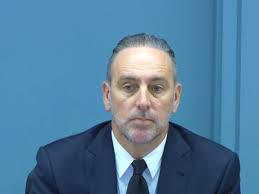
Morrison's mentor was Hillsong Pastor Brian Houston. I write "was" because he has distanced himself from Houston since the latter was arrested on charges of concealing his father's sexual abuse of minors. There were also reports in 2013 and 2019 that he had engaged in inappropriate behaviour with two women associated with his church.

Brian Houston (Pic courtesy The Guardian)

Albanese's mentor was Tom Uren who was Deputy Leader of the federal ALP from 1975 until 1977, and served as a junior minister in the Hawke government from 1984 until 1987.

Tom Uren (Pic courtesy The Australian)

Abbott's mentor was a extreme right winger, and a militant Catholic. Morrison's was a disgraced evangelist. Tom Uren (Albanese's mentor) was an ex prisoner of war of the Japanese who worked on the Burma railway and witnessed the atomic bombing of Nagasaki in August 1945.

The public conduct of these three Prime Ministers is a study in contrasts.

Did this have anything to do with what they learned from their mentors?


Comments closed.


Kerry O'Brien's Thea Astley Address

  Image Courtesy The Echo Kerry O'Brien's Thea Astley address at the Byron Bay's writer's festival on Saturday 15th August i...