Showing posts with label Media. Show all posts

Thursday, 30 July 2026

The Difference Between Arson and a Barbecue


Pic courtesy Holocaust Encyclopedia

No doubt, gentle reader, if you are interested at all in local (Australian) politics, you're across the controversy about Pauline Hanson's appeal against her conviction for a breach of section 18C of the Racial Discrimination Act of 1975. That law makes it unlawful to act in public in a manner that is reasonably likely to offend, insult, humiliate or intimidate a person or group based on their race, colour, or national or ethnic origin.

There's no doubt that she is in breach of that law. It's only necessary to read what she posted on X (formerly Twitter) in September 2022 telling Senator Faruqi to "pack your bags and piss off back to Pakistan".

That evidence is clear, as is the likelihood that those words were designed to offend, insult or humiliate migrants like Senator Faruqi. No court could find otherwise. Appealing that verdict in the High Court would be either an attempt to keep the issue in the news cycle or to keep lawyers in business.

Hanson's supporters claim that the senator was simply exercising free speech. The term "free speech" can be used to cover a multitude of sins, but it does not include a call to violence or hate. Telling a senator belonging to a religious group hated by a minority that she should leave her country of citizenship is precisely that - hate speech.

It resembles closely the kind of speech directed against minorities throughout the last century which invariably led to episodes of institutional violence towards that minority. That's simply history.

Calling what Hanson wrote in September 2022 "free speech" is the same as calling arson a barbecue.

Saturday, 2 May 2026

A Welcoming Commemoration?

Pic courtesy Wikipedia

Since Anzac Day, gentle reader, we've been inundated, in both social and legacy media, with stories about people booing at dawn ceremonies.

The targets of the misbehaviour (because that's simply what it is) have been the welcome to country ceremonies delivered by a local indigenous person.

Almost without exception, people responding to the issue take opposing sides, and often become very aggressive about it.

For me, there are three aspects.

The first is about how we should behave at public commemorations. I was brought up in the tradition of respectfully observing these commemorations, and that booing (for example) is very bad behaviour. To me, it matters not form what the piece of public ritual takes, the mere fact that it is publicly symbolic means it should be publicly respected. 

If you object to it, you take it up with the organisers. You don't publicly abuse the presenter. I'm a lifelong republican, but I don't boo "God Save the King".

Then there is the nature of the ritual. In the case of Welcome to Country, it's a gesture of welcome. It can be seen as a measure of reconciliation. There is a ritual involved which has been appropriated from indigenous culture, and its intent in that ancient culture was to avoid conflict.

On that ancient traditional level, it's about peace. On another level, especially since the failed referendum, it's about reconciliation. How it can be seen as offensive on either of these two levels is beyond me.

Finally, there's the context of the significance and solemnity of the Anzac commemoration. My attitude to this has been coloured by personal experience. I was conscripted to fight in Vietnam in 1970, and finished up in a rifle section. Two of my companions in that section were Murris. One was from Alice Springs in Central Australia, an Eastern Arrernte man.  The other was a Bundjalung man from Kyogle. 

The digger from Alice Springs was seriously wounded when we hit bunkers in April 1970, and ended up on a  medevac flight back to Australia. He never completely recovered and died in 1996 at age 49. Both these men were respected members of our unit, but were not well treated on return to Australia. As far as I'm concerned, any misbehaviour directed at a Welcome to Country ceremony is a personal affront to every indigenous veteran.

The fact that some politicians have jumped on the outrage bandwagon (on the one hand outraged that there is a Welcome to Country at the dawn service, and on the other outraged at the booing) is sad.

We ended up in Vietnam on the back of a political exercise, and that did not work out well for us or the Vietnamese. It was particularly tragic for the five hundred plus Australians who died there, and the thirteen hundred plus wounded.  

Let's keep grubby politics out of the issue.

It dishonours all of those who served, especially the scores of indigenous men who defied regulations prohibiting their eligibility to serve and signed up anyway.


Friday, 24 April 2026

A Just War or Just a War?

Pic courtesy Leunig and Jason Goroncy

 No doubt, gentle reader, you have come across the criticism of Pope Leo by the POTUS.

On the face of it, none of Trump's Truth Social post  makes a great deal of political sense. He needs the conservative Catholic vote in states like Pennsylvania, michigan and Wisconsin, which were fundamental to his election in 2024.

What is also hard to fathom is his grounds for this criticism. His Truth Social post talks about Leo being "weak on crime, weak on nuclear weapons", and mentions a meeting with David Axelrod. 

Now Leo has not made any definitive statement about crime since he began his reign as pontiff,  apart from criticising state crime in Iran after the reported killing of protestors. Maybe Trump doesn't believe there is any such thing as state crime..

As for nuclear weapons, Leo has described nuclear weapons as "a profound horror" and "an affront to humanity".

So maybe Trump is unhappy about the Pope's criticism of the war against Iran.

That criticism did not name either Trump or the USA, but did call for deescalation. 

In any event, the Pope is qualified (unlike J D Vance) to talk about the moral theology underpinning the notion of a just war. For a war to be just, a number of criteria have to be met. Frank Brennan discusses this in his homily given on the Third Sunday of Easter.

He quotes Cardinal McElroy of Washington, who pointed out that the war was not necessary, that diplomacy had been bulldozed, and that there was ambiguity about the intention and purpose of the military commitment.

The principles of a just war are that it has just cause, is a last resort, is declared by a proper authority, has a right intention, and a reasonable chance of success, and that the end is proportional to the means being used.

Trump's "just cause" has ricocheted between preventing Iran accessing nuclear weapons and changing the regime. Strangely enough, there was an agreement called the Joint Comprehensive Plan of Action (JCPOA) supervised by the International Atomic Energy Agency, limiting Iran to nuclear material insufficient to construct a bomb, but that agreement was dissolved in May 2018.

Guess who withdrew from the agreement. I'll let you guess. It wasn't Iran.

Trump appealed to the Iranian people to overthrow the mad Mullahs, but was unwilling to provide any material support, so any sane observer might be tempted to doubt that genuine regime change is part of a just cause.

As for "proper authority", Trump doesn't have congressional approval, and the "reasonable chance of success"  seems to have evaporated with Iran's persistent intransigence.

The USA's attack on Iran in the middle of diplomatic negotiations reminds me eerily of Japan's attack on Pearl Harbour on 7th December 1941.

Was Imperial Japan's aggression part of a "just war" back then? The lead up and sequence events are similar. There's a fair chance that the outcome for the aggressor this time will also be similar.

Friday, 30 January 2026

Deja Vu


About 56 years ago, four students at Kent State University were shot dead by the Ohio National guard.

I remember it well, as I was at the time a rifleman in 7 RAR and we were patrolling on operation Concrete. The news filtered through to us when we got back to Nui Dat at the end of the operation. The students were protesting the invasion of Cambodia, an event that was happening only 100 Kms to the North West of our location. 

Neil Young released "Ohio" shortly after the massacre, and despite the fact that Nixon was re-elected in 1972, the impact of this song, together with publicity about the My Lai Massacre  (which was in news at about the same time) began to have a profound effect on public opinion against the war.

Bruce Springsteen has released Streets of Minneapolis which is already having an impact given the extent of its shares on social media.

There has been, and always will be, a visceral reaction across the Pacific  to US citizens being shot by uniformed people in their own country.

This incident may represent a turning point in US public opinion.

It's certainly deja vu. 

(The words mean "already seen").


Saturday, 24 January 2026

Advice for the Troops


When I was on the way to Vietnam on the HMAS Sydney in February 1970, we were given a pamphlet outlining how we were expected to behave as soldiers in our interactions with Vietnamese civilians.

We had very little contact with civvies, except on leave in Vung Tau, so it wasn't all that useful, but coming across this little piece of history online the other day, reminded me that the military did make an effort to provide some factual information for its soldiers.

In the fact sheet above, issued to American GIs in World War Two, the military explained the phenomenon of fascism, the ideology that these same GIs were fighting.

Taking some of that advice, and applying it to the current situation under the Trump administration, is a revelatory exercise. 

The Fact Sheet #64 was entitled "Can We Spot It?"

The second paragraph begins with - 

Any fascist attempt to gain power in America would not use the exact Hitler pattern. It would work under the guise of "super-patriotism" and "super-Americanism". 

Trump's slogan is "Make America Great Again". 

It goes on to list three fascist aims -

1. Pitting of religious, racial and economic groups in order to break down national unity - In the United States native fascists have often been anti-Catholic, anti-Jew, anti-Negro, anti-Labor, anti foreign-born"

That is a pretty accurate summary of what is happening in the USA now, where members of minority groups are being taken off the streets into detention. It has an application in this country as well, when you look at the hate that is daily posted on social media, usually referring to Indigenous Australians, Muslim Australians, and Asian Australians. It's the bread and butter of One Nation.

2. Fascists cannot tolerate such religious and ethical concepts as "the brotherhood of man". Fascists deny the need for international cooperation. 

This has a very familiar ring when Trump's railing against globalism is considered.

3. It is accurate to call a member of a communist a "communist" - Indiscriminate pinning of the label "Red" on people and proposals which one opposes is a common political device. It iis a favourite trick of native as well as foreign fascists.

This labelling is used with boring frequency. It has the advantage for the neo-fascists in this country and abroad in that it removes any possibility of debate. The label is enough. It is particularly popular on social media, as it operates as a type of shorthand which suits those who are too lazy or ignorant to describe what they actually object to. 

My father fought fascists in World War Two, a war in which forty thousand Australians died.

The ignoramuses who post about the communist menace have short memories, or no understanding of history.


Friday, 2 January 2026

A Royal Commission?

Pic courtesy CPA

We're hearing, gentle reader, a clamour for a Royal Commission after the Bondi tragedy.

I have written that this clamour can be classified under the heading of "cashing in" on that tragedy, but beyond that, perhaps the notion has some merit. 

Let's put aside the politics and the ghoulish behaviour of most of the media, (especially social media) and consider terms of reference for a Royal Commission.

The generality of the call is all we're hearing at the moment, not the specificity* of its terms of reference.

Here are my humble suggestions of what those terms of reference should be -

1. Was there a connection between the events of October 7th 2023 on the Gaza/Israel border, the IDF's response since, and an increase in anti-semitic rhetoric and behaviour in Australia?

2. Was there a connection between the activities of Islamic State Franchises in the Philippines and Australia and the radicalisation of the shooters at Bondi?

3. Was the granting of a firearms licence to Sajid Akram an oversight on the part of the NSW firearms registry?

4. Are the various state firearm's registries competent to ensure that militants don't gain access to weapons, and are they sufficiently resourced to ensure this?

5. Are the National Intelligence Community (NIC) agencies competent to cooperate and share information that will prevent a recurrence of this atrocity?

If this is to be a good faith enquiry to prevent another attack like Bondi, these are the factors that need to be examined. The brief of the commission needs to be narrow and specific to prevent it weaponizing the politics of the situation.

A simpler brief will also allow the findings to be expedited. A Royal Commission needs to heal divisions, rather than exploit them, to unify rather than to blame, and to provide a strategy to prevent this obscenity from happening again.

Any outcome that doesn't ensure the last one is futile. 

*With apologies to Kevin Rudd.


Wednesday, 15 October 2025

"Peace" in our Time


Pic courtesy NYT.

We're being bombarded with media (both mainstream and social) about the arrival of "peace" in the Middle East.

When you've lived as long as I have, and observed the history of that part of the world, the notion that there is now "peace" is greeted by at the least incredulity, and at the most derisive laughter.

I am the same age as the state of Israel, after all.

Granted, credit should be allocated to Trump, as he seems to have driven much of the negotiation. His financial connections in Saudi Arabia though his son-in-law have no doubt greased the palms of the oligarchs that run the show in that country, and his family businesses will no doubt benefit from the reconstruction benefits and the contracts they generate.

He needed them to be onside, and along with the Qataris, the Egyptians and the less compromised Europeans, in the end they were.

He is, after all, in the same business as Osama Bin Laden.

Let's identify what has actually changed after the agreement.

First, and most critical, the Israelis aren't continuing to kill scores of Gazans using air-delivered high explosives daily. I have personal experience as a conscript, of being on the receiving end of misguided ordnance. It was a long time ago, but it's not something you forget. To be delivered from that is, I suppose, a kind of "peace".

Second, the living hostages have been released, along with thousands of Palestinians imprisoned by the Israelis. 

And there is hope of something more permanent. Excuse my cynicism, but I'll believe it when I see it.

Monday, 6 October 2025

Migration


It's a long time since I've heard Gaelic spoken in a church, gentle reader, but I had that experience on Sunday.

The last time was August 1980, when my bride and I were visiting the Irish Republic and we went to mass in Cork. Forty five years is a long time, and viewed from the perspective of the marches a few weekends ago, we've actually gone backwards in this country in our views on migration.

Yesterday was celebrated as Migrant Sunday in our local parish, and speakers of different languages, all migrants, read the prayers of the faithful in their own tongues. 

Thus we heard Irish, Spanish, Swahili, Pidgin, Vietnamese, Tagalog, Fijian, Arabic, and Bahasa Indonesian. 

The fact that one of the speakers was native Irish, and physically indistinguishable from the bulk of the population was especially significant. 

My father, a descendant of Irish migrants used to describe being called a "dirty little tyke" as he was horse whipped by an Orangeman in Warwick back in the day.

This in a relativelly conservative regional city like Toowoomba, could be considered remarkable, but it isn't. These people are members of our community, welcomed and contributing. Unfortunately migration is frequently used as a dog whistle by those who are happy to use fear and bigotry as their ticket to political influence. 

That was very clearly demonstrated in the recent marches.

Perhaps our Filipino parish priest expressed it best with a garden metaphor. 


He noted that the magnificent floral displays witnessed in our carnival of flowers are comprised of a wide variety of diverse blooms, and this diversity is largely responsible for the spectacle. 


Friday, 27 June 2025

The Follies Revisited


Pic courtesy Political dictionary

Those of you, gentle reader, who are of an age that remembers the war in Vietnam, will recall the Five O'Clock Follies.

This was a daily press briefing that was given by the US military in Saigon (most often at the Rex Hotel) providing a consistent narrative of success in the conflict.

We all remember how that worked out.

I've always believed that Americans, whilst members of a supposedly well educated community, have  a blind spot when it comes to understanding history. 

This blind spot, when coupled with what is called American exceptionalism and nationalistic fervour,  distorts their appreciation and understanding of historical fact to the point where very little of what is officially published is credible.

One of the clearest examples of this was reporting during the Follies of the destruction of the Ho Chi Minh trail. Certainly, the trail (basically a series of dirt tracks) was bombed incessantly, but what was destroyed were a series of these tracks. The VC simply created a new detour, often in hours or days, and the flow of armaments and personnel would resume.

The more primitive the infrastructure, the easier it was to rebuild it. Eventually the American public saw through the notion that "destruction" was temporary rather than permanent, and along with the shock of the 1968 Tet Offensive, they withdrew whatever support they had for the war.

I'd be very surprised if the long term outcome of the attacks on Iran will be any different. 

Friday, 13 June 2025

History Rhyming in Images


Los Angeles 2025

This post, gentle reader, is a montage of images.

Half were photographs taken in Europe during the second world war.

Auschwitz 1944

The other half were taken in Los Angeles during the last couple of days.

Los Angeles 2025

They're posted without comment, except to point out that in each case one minority group was targeted by government.

Berlin 1943


Warsaw 1942


Los Angeles 2025

During World War Two those targeted were Jews.           

During the last few days, the people targeted are undocumented immigrants.

You can come to your own conclusions.....


Saturday, 17 May 2025

Karma and the Voice


Image courtesy Om Swami

Karma (as it appears in the AI overview in my Google search) is defined as "the ultimate consequences of an earlier action. Essentially, good karma leads to positive outcomes, whilst bad karma leads to negative ones".

The Coalition had a dose of bad Karma on May 3rd, and I'll attempt a quick analysis which I reckon informs the result. I'm no political commentator, but there are patterns in the results that are pretty obvious.

Peter Dutton used the Voice referendum as a wedge to both unite his party with the Nationals, and discredit the ALP. In both those strategies, he was successful, and plenty of pundits forecast that his negative campaigning leading up to the referendum would be poisonous when the country next went to the polls.

So let's see if there's any truth to that notion.

Here's a list of seats that the Coalition lost to Labor -

Banks; Bonner; Leichhardt; Sturt; Bass; Braddon; Deakin; Menzies and Moore.

Quite a few of these seats recorded a better than 40% "Yes" vote in the Voice referendum. Here they are -

Bonner; Sturt; Deakin and Menzies.

Then we should take a look at the so-called Teal seats and other Independents recording better than 40% "Yes" in the referendum -

MacKellar; Warringah; Kooyong; Ryan; Curtin and Clark.

In fact, all of these seats with the exception of Fowler, Indi, and Kennedy, recorded a majority "Yes" vote.

The fact of the matter is that the strong swing recorded against the Coalition on May 3rd was led by voters who supported the Voice. The evidence is clear when you look at the electorates Labor won and the Independents held.

It's completely likely that they carried their disgust about Dutton's campaign to the ballot box.

What goes round comes round..... 


Update -

The Coalition has broken.

Remember how Dutton followed Littleproud in kicking Blackfellas.

More Karma?


Thursday, 27 March 2025

Mythbusting


Image courtesy 6PR

I came across this post the other day.

I have never met Normie Rowe, but have deep respect for him as a fellow Vietnam veteran and Nasho. He left Vietnam just before I got there, but I certainly travelled in APCs belonging to his unit (3 Cav) in 1970. 

It was noisy, but beat walking. It helped to forget about land mines....

Rowe is also a very talented musician. The post is attributed to Normie, but without actually asking him, gentle reader, I won't know whether he wrote it or not. 

In any case, I'm interested in the facts of history, not (in this case) how a Vietnam veteran (including a respected celebrity) allegedly reflects on his experience. There is a time and place for that

I find myself agreeing with much of what is attributed to Rowe in the post, especially his remarks about conscription being a political exercise. 

The part that doesn't hold water refers to an anecdote about the deathbed confession by an advisor to Harold Holt. All Normie writes is that he'd heard the anecdote. He makes no judgement about whether it is real.

To cut to the chase, the post alleges that Normie ended up as a conscript because the government believed that calling up a celebrity would improve public support for the scheme, support that had never been on firm ground. The substance of the myth is that his birthdate was never drawn, and that he was enlisted as a publicity stunt. 

Indeed, his birthdate (1st February 1947) was not drawn in the fifth intake on 10th March 1967, but that was irrelevant as he hadn't registered. He was absent from Australia at the time making music in the UK. 

He was required to register when he got home, and did so, in one of the fifteen supplementary ballots held during the course of the scheme. There were sixteen regular ballots, one more than the supplementary ones. I had registered in the normal ballot he missed and my birthdate was drawn in that 10th March ballot. Strangely, that's my bride's birthday, although we hadn't met at the time.

The routine supplementary ballot was held for those registering on return to Australia, and Normie's birthdate was drawn. He was enlisted in January 1968, assigned the regimental number 3793130, did recruit training and was allocated to Armoured Corps.

He was in Vietnam from 14th January until 19th December 1969.

The myth has been bouncing around the interweb for years, and has been debunked before, but it persists. It featured on Media Watch in March 2008.

I was at a meeting of ex-Nashos the other day, and heard the myth being floated again. I had my iPad with me and was able to show the ex-Nasho who was proclaiming it, chapter and verse showing the Normie's birthdate drawn in the supplementary ballot. 

It made no difference, and we parted with his belief in the myth still firm. He claimed the whole thing (including the record of the supplementary ballot draws) was a government conspiracy.

Obviously, the myth is more entertaining than the history.


Monday, 24 March 2025

Shared Values - Take two


Monthly value of US merchandise exports to Australia (A$ millions) since 1988

Monthly value of Australian merchandise exports to the United States (A$ millions) since 1988

Pics courtesy Wikipedia

I've posted about this before, but the issue is much more significant now.

The rationale of "shared values" is routinely advanced by our political class to support the notion that we should, as a matter of policy, go along with much of what is happening under the Trump administration at the moment.

Given that, it would be useful to examine just which values we share with Americans, at both the individual and community level. This is difficult, in the first instance, because the diversity that exists across populations in both countries makes it difficult to determine what those individual values are.

Would an African-American from Chicago hold the same values as a white American from the Midwest, or a Latino from Texas? Would a hipster from urban Melbourne hold the same set of values as a wheat farmer from Merredin, or a Murri from Dajarra?

The answer, of course, is that individual comparisons and assumptions simply do not hold, so we will have to look at institutional and political values.

AI will tell you that Australian values respect mateship, and the notion of a "fair go', whereas Americans value individual achievement, free will, and economic success. The institutional outcomes of these factors are universal health programmes, strong social security and welfare structures in Australia, and private insurance and a relatively scelorotic welfare system in the USA.

It describes an Australian laid back attitude to leadership, and a lack of deference to authority, whereas Americans respect authoritative leaders and those in positions of power. These values feed consensus (not weak) politicians in Australia, and authoritarian leadership in the USA. The current situation mirrors that.

It says Australians have a more relaxed approach to the work-life balance, and focus more on enjoying life than making money, but Americans value career advancement and are tolerant of long working hours. 

The cliche of the tall poppy syndrome is cited in Australia, but Americans are painted as admiring "superstars" and those who are very successful.

And when it comes to class structure, Americans are described as categorising people by status, whereas Australia has a relatively low degree of class structure.

Frankly, I believe that there is confusion generated by the fact that we share a common language and there are strong parallels in our national history narrative, as we are post colonial societies which began as British settlements. These commonalities mask or hide significant differences.

These differences were demonstrated starkly to me when I served beside Americans in Vietnam fifty five years ago. I vividly remember situations where the hierarchical culture of many American military units got in the way of getting the job done. As Australians, we often exploited this culture when we were scrounging for materials. It was very easy to use rank as a wedge to get what we wanted.

The attitude towards race demonstrated by the Americans was in strong contrast to ours. We saw indigenous diggers as of equal status. The Americans didn't, and this was sometimes a source of tension when we fraternised with African-American soldiers when on leave.

I remember being pulled aside by a well-meaning GI in a nightclub in Saigon, and being told "You don't want to associate with those motherfuckers". He was referring to a group of black Southerners who were great and generous company.I saw these same attitudes, especially to race and status, when I visited the USA in 2018. Nothing has changed in half a century.

In summary, I believe that the rationalisation of "shared values" as a basis for our alliance is mythology.

We need something more solid than that, given what is at stake.


Monday, 17 March 2025

The Power of Attention


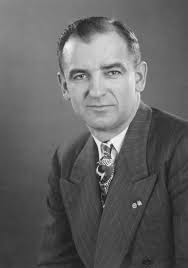
Joseph R McCarthy courtesy Wikipedia

 You don't have to look very far in recent American political history, gentle reader, to find a figure resembling Donald Trump.

That figure, Joseph McCarthy, the Senator from Wisconsin, who was prominent from 1950 until 1954, until he was censured by the Senate, had galvanised public opinion around the issue of alleged Communist subversion in American institutional life. 

McCarthy's activities for that relatively brief period of time, had an impact well beyond both the span of his crusade, and the walls of the US Senate.

The combination of power, fame and falsehood has always held a magnetic attraction for the US media. In a country where there is no publicly funded media of any real consequence, corporations that make a profit by selling copy (print or digital) will always be attracted to what is loud, exciting and simple. 

This monopolising of the spotlight is an important pathway to political power across the Pacific. There are any number of cliches bearing witness to the phenomenon. There is no such thing as bad publicity. is just one of those cliches, and one that Trump understands very well.

Trump, either consciously or instinctively, is well aware of this phenomenon and has exploited it adroitly. This exploitation has taken on a sinister turn recently, with his administration's attempt to push aside media agencies that challenge his narrative.

He has also demonstrated that he is prepared to take on many institutions previously protected by their status, including the churches, the courts, and the military.

McCarthy met his demise when he took on the US military, and after he was denounced by Edward R Murrow, a highly respected broadcaster, he quickly lost favour and with it, attention. 

Unfortunately, by that time he had done a great deal of damage during the half a decade of his notoriety. Anti-communist hysteria spread beyond the shores and institutions of the USA, and had an influence in Australian politics lasting well into the early sixties.

Our tragic adventure in Vietnam was just one outcome. Echoes persist even today. They're all over social media.

Social media thrives on memes that are loud, exciting and simple.

Social media is a good earner for a few. It has become a parasite feeding on rumour, fear, and outrage, and the platforms are lining up to take advantage of the spoils. 

That fact that it influences the outcomes of elections and is being harnessed by political operatives is perhaps the most worrying aspect of all.  


Monday, 10 March 2025

A Cockeyed Bob?


Police station and residence. The government house we lived in was identical.

Those of you living in south-east Queensland and northern New South Wales have probably had enough of cyclone Alfred. 

We've been minimally effected, and apart from my bush house doing the watusi which meant that everything on its shelves ended up in a heap on the floor, life has proceeded as usual.

Tropical cyclones are part of my lived experience, having grown up in north Queensland, and my earliest memories are those surrounding a cyclone which crossed the coast at Carmila on March 11th 1950. I was about three at the time, but can remember parts of it, including sheltering under a sturdy oak table in our kitchen whilst the school residence broke up around us.

This link takes you to a newspaper account in the Townsville Daily bulletin of 13th March 1950. It took two days for the full story to get through, a contrast to the real time reporting we're seeing today. Dad gets a mention in the report.

The house lost all its corrugated iron roof, and part of the gable end at the front. We were obliged to live in the school for a couple of weeks whilst the residence was re-roofed.  

Another early memory was the smell of burning linen. A family down the road from us also moved into the school, and one of them came down with Tuberculosis. Back then, we were advised to burn all bed linen used by this family. My mother had taken bed linen out of storage which had been a wedding gift, and loaned it to this family.

Repair crew that was sent into Carmila by rail.

Mum was very upset when it had to be burned, and I recall the smell, and her distress.

Since then, I lived in Townsville for a while, and was there when cyclone Aivu crossed the coast near the Burdekin River between Townsville and Bowen on April 4th 1989. Whilst that cyclone didn't do a great deal of damage around Townsville, it caused lots of flooding to the north, and for a while looked to be a major threat.

This may have been why,  given my recall of the Carmila experience, I moved my family overnight to my new school which had been built to cyclone proof standards in 1987. I rationalised that if the school was going to be declared a cyclone, I would be prepared by being on site.

As I write this, in Queensland, at least, no lives have been lost, although the same can't be said for Northern NSW.

And the term "Cockeyed Bob?" I haven't heard it used for decades, but apparently it was once applied to severe and unpredictable storms.

That would describe Alfred. 


Saturday, 15 February 2025

Appeasement Revisited

Pic courtesy Cagle.com

Any student of history, gentle reader, will recall an incident in 1938, when a national leader returned to his country after signing a peace deal with an authoritarian european leader.

He was very pleased with himself, and waved the written agreement around, proclaiming "Peace in our time!"

This was after that authoritarian leader had taken over vast swathes of territory from a neighbouring european country with military force.

Move forward to February 2022, when another authoritarian leader invaded a neighbouring european country, after annexing large swathes of its territory in 2016.

Another recently elected national leader has now intervened, he claims, to make peace. He is prepared to allow the aggressor nation to retain control of the territory it has taken by force, and is sidelining in negotiations the leader of the country invaded. 

When challenged by the media as to the morality of this process, he blamed a previous administration for the situation.

Consider, gentle reader, an alternative history which could have followed from the 1938 situation.

Consider, if Churchill, when he became Prime Minister of the United Kingdom, had blamed Neville Chamberlain for the situation, an turned a blind eye to the aggression that followed, and the consequences.

That is precisely what Trump has done. He has blamed Biden for the situation, and ignored Russian aggression.

Far-fetched?

I'm not sure.

Putin is driven by his obsession with recreating an Imperial Russia, just as Hitler was seeking a one thousand year Reich.

Putin, apparently was traumatised by the fall of the Soviet Union in 1991, just as Hitler was by Germany's defeat in 1918.

Both Hitler (as a soldier) and Putin (as a KGB agent) were proudly working for their respective countries when their governments fell. Both were/are fervent nationalists.

The parallels are stark...


Monday, 13 January 2025

Oh Canada!


Pic courtesy Rosa Miranda Sauret

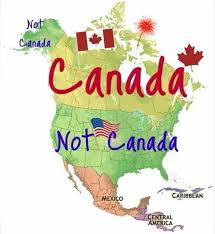
In the light of Trump's recent postings on social media about Canada, it's worth recalling, gentle reader, one significant historical element of US-Canada relations.

I'm writing, of course, about the tens of thousands of draft dodgers that travelled north to Canada during the war in Vietnam, between 1965 and 1975.

One estimate puts the number between 30,000 and 40,000. 

What is interesting about this history is that it seemed to have no effect on US-Canada relations. When you think about it, that appears odd. After all, the northern escape continued unabated for ten years, and these men whether they were draft resistors or deserters, were clearly in breach of the law in the USA.

Yet Canada accepted them as immigrants and made no attempt to determine their reasons for crossing the border. This turning a blind eye arrangement was accommodated by both Canada and the US, and it's interesting to consider the reasons for this.

One rationale is that the USA had much greater concerns when it came to international relations in general and relations with Canada in particular, so long as the number of war resisters could be contained, and they didn't want to rock the boat by making an issue of their treatment.

Strangely perhaps, draft and military offences were not included in the Canada-US extradition treaty. Basically, even if the US authorities had wanted to take action, they could do nothing providing Canada accepted these young men as immigrants, and indeed Canada did.

In any event, President Gerald R Ford granted an amnesty programme for draft evaders in September 1974, requiring them to work in alternative service occupations for periods between six months and two years.

Later in 1977, Jimmy Carter fulfilled a campaign promise to pardon any draft evader who requested one. I have no idea how many took advantage of this, although a figure of 556 is floating around in the archives.

This 2018 Canadian study (in French and English) by Luke Stewart provides useful background.

My only comment about Trump's offer would be that whilst travelling, I have mistaken a Canadian or two for an American and received a thorough telling-off for doing so.

One young woman said "That's the worst possible insult you could offer any Canadian! The basis of our identity is that we are NOT American."

Thursday, 2 January 2025

Should we be Very Afraid or Simply Vigilant?

Darwin Harbour - Managed by the Chinese

During the last week, gentle reader, I came across a number of Youtube discussions about our relationship with China.

Watching these provided a way of filling in the time across lunch and tea breaks during the Boxing Day test in Melbourne. Test cricket is, after all, a quasi-meditative activity, and the breaks in play are too brief to allow the beginning of any new task.

Whilst the computer screen is handy, you might as well put it to good use.

I've always been fascinated by what is perceived as a resemblance between events between World Wars One and Two in relation to the India-Pacific region and the situation now in 2025. Mark Twain had something to say about history which is relevant.

Back in the late thirties, we had an emerging power in Imperial Japan, an isolationist USA, and an Australia that was ill-prepared for conflict.

These days, we observe an emerging great power in China, a President-elect of the USA who loudly uses isolationist rhetoric and an Australia that is once again, ill-prepared for conflict. 

Obviously, the situation is much more complicated than that, and I am supremely ignorant of the art and science of military preparedness, but I certainly don't want to see the mistakes of the past repeated. 

The first three discussions deal in turn with whether China is a military threat, what we should do about it, and two fairly similar viewpoints regarding the current situation. The last is included as a piece of devil's advocacy.

The first piece is an address by Peter Jennings AO presented by the Institute of Public Affairs. He has a distinguished career in the field, specialising in strategic policy, crisis management, international security and foreign policy. He was until 2022 the executive director of the Australian Strategic Policy Institute. It is fair to note that both Jennings and the IPA adopt generally conservative positions on most issues.

 Jennings has a a lot to say, but in summary, he advocates building up deterrence, and seems quite convinced that the Chinese will move against Taiwan by 2027. He also points out that AUKUS is irrelevant, as it is simply too far down the track, even if everything goes to plan. He also assumes that the USA will continue to want to be involved.

I simply don't share that last sunny assumption. 

Michael Shoebridge is the Director of ASPI's Defence, Strategy and National Security Program. He describes how we might quickly develop that deterrence capacity. He references Ukraine, the Middle East, and the asymmetrical conflict involving the Houthis and the US Navy in the Red Sea. Unlike Jennings, he's not so sure that the Americans will have either the capacity or the will to become involved in our near North.

Where Shoebridge makes sense to me is when he advocates the use of drones, and the rapid establishment of local capacity to manufacture quantities of low-tech cheap weapons that can be replaced to meet attrition. The capacity to provide the necessary hardware to sustain prolonged conflict is vital, as the Japanese discovered between 1940 and 1945. 

A discussion that neatly ties the issues together is this interview conducted by David Speers from ABC Insiders late last year with Mike Pezullo and Sam Roggeveen. Again, they repeat a view that conflict looms, but can be avoided. Pezullo is prepared to put the risk of war as a percentage, which he concludes is 10%. Roggeveen makes the very good point that Beijing is closer to Berlin than Sydney, and questions why we need submarines that effectively shrink that distance. 

The final video is puts an argument that Australia's own military-industrial complex is what drives the media's fixation with China, and governments of both political persuasions are complicit in maintaining that fixation. I'm not sure I agree with Boreham, but some of what he says resonates with my own experience as a conscript involved in a tragic war in SE Asia driven by the politics of fear.

I wouldn't want that episode repeated.

You, gentle reader, can make up your own mind....

Sunday, 22 December 2024

Broadcasting Vs Narrowcasting

Andrew Olle (Pic courtesy Australia media hall of fame)

The other day, gentle reader, I listened to the Andrew Olle Memorial lecture, given this year by Fran Kelly.

It was an excellent address, and coincided with the ABC's online platforms releasing a major restructure of their news and information offerings. One of the features of this reorganisation is the capacity for consumers to tailor content based on their interests.

On the face of it, this would seem to be a great way to develop and maintain an audience.

But after listening to Kelly's address, I began to consider a downside to this capacity of consumers to narrow their choices, based on her concept of a shared audience. Reflecting on her seventeen years of breakfast radio, she described the great sense of community that develops around broadcast radio.

She talked about the variety of listeners, the early morning joggers, the tradies on site setting up a job, the parents driving the school drop, the farmers on their harvesters, and the retirees enjoying a lie in, as participants in this community.

She's right, of course, as live radio is a medium that (unlike this one) allows you to move through your daily tasks whilst maintaining your participation. 

You can flick seamlessly using whatever app works, from mobile phone, to car audio, to radio, without the listening process interfering with the task at hand.

I thought about that against the context of the new ABC online platform which allows you to concentrate narrowly on your own set of topics, and wondered what that would do to the sense of a shared community embedded in broadcast radio.

Surely, there will be a trend from broadcasting to narrowcasting (if such a word exists), which is anathema to community.

This move by the ABC is no doubt directed by a belief that the national broadcaster is competing with the other networks for the listener's ear. I'm not sure it is, and whether a redevelopment of the platform will make any difference. 

Frankly, I believe the people determining the future of the ABC should listen to the parts in her address dealing with the threat of misinformation to the listener, and spend time and money on combatting that.


Otherwise, the prediction given in her address that within five years 90% of what is posted on the internet will be AI generated fakery*, may well come to pass.


*see 41.20 in the address.


Friday, 6 December 2024

What Price Sovereignty?


This photo of a Chinese made shirt is a reminder, gentle reader, of the profound changes in our relationships with the rest of the world that have emerged in my lifetime.

When I was growing up in the fifties (yep - I'm really old) most of the clothes I wore were made in Australia.

Back then the rag trade was well established locally. 

In Sydney, for example, there were nine thousand (mostly women) working in clothing and tailoring, over four thousand in dress and hat-making, and about eight thousand in shirt making.

Today, if all clothing made in China, Bangladesh or Vietnam vanished overnight, there would be a lot of naked Australians wandering about.

Then there's motor cars. My first memory of our family car was a  green 1952 Austin A40.


Our A40's number was Q484451.

Then there was a Vanguard Spacemaster. 

Our Vanguard. Rego was Q645324 (rear only).

Both these were British imports, but by then an Australian industry had developed on the heels of Ben Chifley's push for local manufacturing, and later we owned a series of Australian made Holdens.

My first non-Australian made purchase was a Renault, but since then I've been buying cars from Japan or Korea. The coalition government pretty much chased local manufacturing away in 2013 because it was ideologically opposed to both unionised workforces and supporting local manufacturing, and there hasn't been a local industry since.

The same phenomenon has occurred in the full range of manufacturing industries, to the point where not very much is made here. We have become a country where we confine ourselves to digging minerals up and exporting them, only to have them converted to manufactured goods offshore which we then buy as imports.

Manufacturing contributes only 6.3% to Australia's GDP, and export earnings through manufacturing are 11% of the total. Only 6.8% of the Australian workforce is employed in manufacturing.

We are almost entirely relying on imports to maintain our lifestyle. This is perhaps not a large issue, except that opportunities for careers in the sector have shrunk, but I find the fact that we are almost entirely reliant on imports for vital commodities such as transport fuels pretty alarming.

Australia holds about a month of fuel supply onshore. Under International Energy Agency rules, we need to hold 90 days in reserve. We do, but most of that 90 days worth is actually tanked overseas!

Perhaps I'm succumbing to some kind of nationalist paranoia, but I find these facts difficult to accept. We seem to have forgotten our recent history.

Perhaps the election of an avowedly isolationist US administration will encourage us to take a look at our national sovereignty. 

We are, let's face it, on our own.

The Difference Between Arson and a Barbecue

  Pic courtesy Holocaust Encyclopedia No doubt, gentle reader, if you are interested at all in local (Australian) politics, you're acros...