![]() |
| Pic courtesy the Wire. |
One of the memes doing the rounds in social media at the moment, gentle reader, connects migration with the housing crisis.
![]() |
| Pic courtesy the Wire. |
![]() |
| Pic courtesy Public Delivery |
Maybe it would help to push the sensational reporting, the endless conjecture, and the triumphalism and despair aside for a bit, and look at a few (very) simple facts.
Turnout is always a good statistic to check. It looks like coming in at about 65%, which is a few percentage points lower than in 2020. I could attempt to analyse the reason for the small decline, but that would be conjecture, best avoided. The fact remains, however, that despite claims to the contrary, this election was unremarkable in terms of voter engagement.
Let's look at the popular vote. Best projection (they're still counting here and there) is Trump 50.5%, Harris 48.0%.
Applying some basic (if unconventional) analysis to that, could be informative.
If you add votes for Harris to the quantum of non-voters, you get 48% + 35% (100% - 65%) = 83%. Put simply, 83% of eligible voters did not support the winner, or if all the 35% did, they didn't believe that the situation was serious enough to warrant a trip to a booth, a dropbox, or the hassle of completing a mail-in ballot.
It makes media references to a "landslide" or "unprecedented realignment" look pretty silly.
So after taking that metaphorical cold shower, the pundits should probably look at their forecasts of an historical shift in trans-Pacific politics, for two reasons. One is that Trump is notorious for over promising. You need only to look at his first term to understand that simple reality. There is no new unbroken border wall, for example, and what there is, was paid for by American, rather than Mexican taxpayers.
Promises about vaccines (Operation Warp Speed) were not kept, and Obamacare was not repealed. His promise to end gun-free zones was also not kept, and is an example of an issue unaffected by the pandemic, which has been used as an excuse for some of his broken commitments.
So the rhetoric he used to get into power is not a clear indicator of what he will do with that power. It reminds me a little of the cliche about a dog chasing cars and what it would do if it actually caught one. Trump's failed business ventures are text book examples of unfulfilled promises.
Finally, I learned a useful lesson about Americans when I served beside them in Vietnam fifty plus years ago. Whilst I shouldn't generalise, and there are some very smart Americans, the quip we often made after encounters with Yanks in country was "You can tell them anything; sell them anything".
That seems to me to remain largely true.
It's finally caught up with me - the dreaded Covid.
It's probably my own fault because I wasn't up to date with the vaccine. I was lulled into a false sense of security, as much as anything else because the issue has been completely ignored by the media.
I had made a booking to get the most recent version of the vaccine but had come down with mild respiratory symptoms on the day of the booking, and when I turned up at the surgery was banished to the carpark.
My GP sent me off for testing, and sure enough I was positive. He was apologetic for not seeing me in the surgery, but explained (from about three metres away on the passenger's side of the car) that he'd had so many bad experiences with himself and staff going down with the bug that he was being very cautious.
What I found confusing was that the pathologist wasn't masked or gowned. I hope she doesn't contract it.
One the positive diagnosis was sent by text, I was booked for a telemedicine appointment which resulted in a course of antivirals. The guidelines were pretty clear, so I've been isolating since diagnosis, which is a greater inconvenience than the virus itself. I have a few days to go.
Mind you, the first few days weren't pretty (burning eyes, sinus headaches, and sandpaper throat). I wouldn't wish it on my worst enemy. That only lasted a day or two, and has cleared up. The antivirals seem to have worked for me. They have side effects, but in my case minor - a metallic taste which persists.
So far, my bride seems to have escaped, so fingers crossed.
As to how I caught it - who knows. I did venture unmasked to a large shopping centre congested by the Christmas rush a few days before onset of symptoms, so perhaps that's where it originated. The fact is, the virus is still rampant, even if mainstream media has decided to ignore it.
I's no linger a story that sells papers or attracts clics, I guess.
The statistics speak for themselves in terms of how it was handled in Australia, but the wingnuts across the Pacific (which has a death rate four times ours), and a few here, continue to make a big noise.
What remains unmentioned is that 135840 cases have been reported in Queensland this year, and weekly averages are around 1500 weekly. When you consider that many cases go unreported, it's likely that the real incidence rate is much higher.
Wear a mask in congested areas, gentle reader, and ignore the outrage merchants who really don't have anything to complain about.

![]() |
| Australia - Total Cases - Courtesy Worldometers* |
In most households they were routine viewing. Usually the premier or PM (flanked by a coterie of health officials) would go into great detail about the significance of the daily figures.
During this period (March 2019 until about November 2021) the daily cases, hospital admissions and deaths were read out with the frequency of the football scores. We saw graphs and analyses to burn.
Take a look at the graphs here.
The first one above, shows a dramatic rise in cases on December 1st 2021 to 211,654, a figure about seven times higher than the average between August 2020 and July 2021.
The second graph (total deaths) shows a similar trend. We are losing between about 80 and 100 Australians daily to this virus, which is far in excess of the figure one year (and two years) ago.
The daily rate is shown below -
You, gentle reader, can please yourself.
*You can check this site here.
Comments closed.
![]() |
| Pic courtesy Caterina Sullivan |
| Pic courtesy Youtube |
Now we have a new running joke about the issue of an unvaccinated tennis player. You know the story. His visa was cancelled, he then won a court battle overturning the original decision, and the matter is going back to the federal court as this is written.
There seems to have been very poor communication between Tennis Australia, the Victorian State government, and the Australian Border Force.
In the end, the decision to withdraw a visa rests with the Minister, and he has made his position clear.
It’s very hard to avoid the cynical conclusion the Morrison government is exploiting what was probably a monumental stuff-up and turning it into a political opportunity. It smells a bit like the Tampa incident. The bulk of voters probably couldn’t care less about whether this particular celebrity goes or stays, but they are fed up to the back teeth by exceptions made to said celebrities.
I well remember what my daughter went though last year when she was trying to get home. Apart from anything else, it cost her a great deal of money, and for a while, rendered her homeless, relying on the generosity of friends. Federal government decisions limiting the numbers of returning Australians completely wrecked her plans. She was an Australian citizen and was fully vaccinated. Djokovic is an alien, and unvaccinated. Obviously, there is one rule for elite athletes, and another for the plebs.
As a parent, I went through this ordeal with her, as did tens of thousands of others. We have good memories and can’t abide exceptions being made on the basis of celebrity status.
It’s an ill wind that blows nobody any good, and at least Australians have been reminded of the plight of thousands of people in detention who happen not to be celebrities.
What happens to Djokovic is neither here nor there, but the whole hairy chested border control narrative exposes the level of opportunistic cynicism characterising the current government.
The joke is on the Australian electorate.
Update: The deportation stands, which seems to be OK with most.
| Pic courtesy paho.org |
Apart from that potential, it also provides a snapshot of how well various communities (and societies) work in times of crisis.
An analysis of the performance of the 51 US states on their management of this major health issue provides an insight into how well they function at their most basic task, that of keeping their citizens safe, and how political values are reflected in the outcome.
The measure I will use is the Covid-19 death rate per million as published on the Worldometer website, which uses a variety of information sources to arrive at the various statistics, and is generally reliable.
Let's rank the various American states from worst to best in terms of the deaths per million as of today (29th December 2021), list the political affiliation of the governor, and then specify the vaccination rates at December 28th for each state. The first figure represents the deaths per million for that state, and the percentage represents the vaccination rate -
1. Mississippi - 3501 - Republican - 48.06%
2. Alabama - 3352 - Republican - 47.49%
3. Arizona - 3317 - Republican - 56.85%
4. New Jersey - 3256 - Democratic - 70.26%
5. Louisiana - 3222 - Democratic - 50.15%
6. New York - 3067 - Democratic - 71.53%
7. Tennessee - 3018 - Republican - 51.17%
8. Arkansas - 3014 - Republican - 51.06%
9. West Virginia - 2951 - Republican - 54.89%
10. Georgia - 2948 - Republican - 50.65%
11. Massachusetts - 2922 - Republican - 74.41%
12. Oklahoma - 2920 - Republican - 53.33%
13. Florida - 2905 - Republican - 63.11%
14. Rhode Island - 2875 - Democratic - 76.1%
15. Michigan - 2868 - Democratic - 56.59%
16. Pennsylvania - 2828 - Democratic - 63.57%
17. South Carolina - 2826 - Republican - 53.01%
18. Indiana - 2812 - Republican - 51.89%
19. South Dakota - 2790 - Republican - 56.83%
20. Montana - 2717 - Republican - 53.86%
21. New Mexico - 2754 - Democratic - 66.06%
22. Nevada - 2725 - Democratic - 56.26%
23. Kentucky - 2708 - Democratic - 54.09%
24. Wyoming - 2637 - Republican - 47.33%
25. North Dakota - 2627 - Republican - 52.38%
26. Texas - 2619 - Republican - 56.78%
27. Missouri - 2589 - Republican - 52.89%
28. Connecticut - 2546 - Democratic - 74.47%
29. Iowa - 2472 - Republican - 58.67%
30. Ohio - 2462 - Republican - 54.97%
31. Illinois - 2435 - Democratic - 64.2%
32. Kansas - 2390 - Democratic - 56.71%
33. Delaware - 2337 - Democratic - 63.96%
34. Idaho - 2313 - Republican - 46.15%
35. California - 1935 - Democratic - 65.95%
36. Maryland - 1931 - Republican - 70.2%
37. Wisconsin - 1903 - Democratic - 61.73%
38. Minnesota - 1868 - Democratic - 65.18%
39. North Carolina - 1841- Democratic - 52.38%
40. Colorado - 1817 - Democratic - 65.09%
41. Virginia - 1816 - Democratic - 67.86%
42. Nebraska - 1722 - Republican - 59.52%
43. District of Columbia - 1713 - Democratic - 67.41%
44. New Hampshire - 1423 - Republican - 67.01%
45. Oregon - 1333 - Democratic - 66.39%
46. Washington - 1294 - Democratic - 67.7%
47. Alaska - 1292 - Republican - 56.1%
48. Utah - 1177 - Republican - 58.44%
49. Maine - 1110 - Democratic - 75.56%
50. Hawaii - 764 - Democratic - 63.38%
51. Vermont - 745 - Republican - 77.29%
And, just for the hell of it, let's list the same data for the various Australian states (which, to be consistent, requires some squirrelly maths to arrive at the deaths per million figure as expressed for the USA. The figures for Tasmania, the NT, WA, SA, and Qld are comparatively meaningless, as they are projections per million for the very few deaths that have occurred in those jurisdictions. You'll note that whilst only one person has died from Covid in the NT, my data says "4". this is simply a projection based on the population of about a quarter of a million. The same mathematical contortions are employed for Tasmania. I include these figures in the same form as the US figures to provide a basis for comparison. Again, the first figure is the death rate per million, and the last the percentage of fully vaccinated individuals) -
1. Victoria - 225 - Labor - 92.4%
2. New South Wales - 80 - Coalition - 93.5%
3. ACT - 34.7 - Labor/Green - 95%
4. Tasmania - 24 - Coalition - 92.8%
5. Northern Territory - 4 - Labor - 84.1%
6. Western Australia - 3.3 - 83.4%
7. South Australia - 2.8 - Coalition - 87.7%
8. Queensland - 1.3 - Labor - 86.1%
Now, let's ask some questions.
It's up to you, gentle reader, to answer them.
1. Is there any connection between the political affiliation of the state legislature and the death rate? Of the top 10 worst performing states in the US, 7 are Republican, and 3 are Democrat. In Oz, it appears irrelevant, although Labor doesn't come up smelling of roses in Victoria.
2. Is there any connection between vaccination rates and death rates? In the US, with the exception of New Jersey and New York, the states with the highest death rates have the lowest vaccination rates.
3. What is the reason for the massive difference between the consolidated death rate in the USA of 2522 per million and the Australian figure of 85. Why is it thirty times ours?
It's somewhat sobering to understand that if that rate for Oz was the same as it is in the USA, we would have lost 64,000 Australians.
That's 7000 more than the number of Americans killed in Vietnam.
Will the saving of so many Australian lives be acknowledged?
![]() |
| Image courtesy ec.europa.eu |
These claims have been floated extensively on social media, although in the case of Kelly on Twitter only, as his Facebook account has been suspended because he was using it to peddle misinformation.
Let's start with Bob Katter. Media reports circulating say that he claimed in a speech on Sunday 21st November in Cairns that several of his staff had died or been made severely unwell as a result of Covid vaccine administration. They are based on audio in which he stated that there were "eight or nine people" in his office who "had died or had been badly affected" by the vaccine.
On questioning, his staff insisted that what Mr Katter had said was that there had been "eight or nine cases come into our office" and it was not people "in" his office - obviously a complete misunderstanding. One can assume that the electoral office would have been put out of commission if this had actually happened. I don't know how many people work there, but "eight or nine" sounds more than a little suss....
The actual audio of his speech indicates that he said "into" and not "in", but is sufficiently unclear to allow for both interpretations. Let's allow Bob the charitable interpretation that he meant the eight or nine cases were were constituents in his Federal electorate of Kennedy, which covers 567,377 square kilometres and had an enrolment of 107,644 in 2019.
Now let's assume Bob was indeed referring to Kennedy constituents and that his statement that eight or nine cases of adverse reactions had occurred is correct, (although he didn't furnish any proof), and look at figures for that electorate.
I couldn't find a breakdown of vaccination take-up for Kennedy, but if you average Cairns (85% first dose) and Charters Towers (73% first dose) you come up with a figure of 79%. The only other large population centre in the electorate is Mount Isa, which is pretty much a mine town. There was nothing on-line that I could find about vaccination rates in the Isa, but unless the culture has changed since I lived there in the nineties, you can bet your boots that both the mines and the various government agencies, both indigenous and otherwise, are vigorously pushing vaccinations.
That 79% of 107,644 gives you 85,038 vaccinated. So if Bob is referring to his constituents, that's an adverse reaction rate of 0.015835, or one adverse reaction in about a thousand, on the lower end of what is typical of reactions to most vaccines, as a visit to the Australian Immunisation Handbook website reveals. In the case of the Pertussis vaccination, administered routinely to Australian infants, the incidence of adverse local reactions is approximately 10%. That's about ten times the rate for Covid vaccines. Why isn't Bob Katter getting excited about Pertussis vaccination?
![]() |
| Image courtesy UN ilibrary |
Then we look at Craig Kelly. He's made so many bizarre claims about Covid (relating both to treatments and vaccination) that it'd difficult to address them all, but how about this one -
"The vaccines are not sufficiently effective, and they're not sufficiently safe" which you can hear at about 1:30 seconds into an unsolicited video he sent me from a speech he made at a rally in Melbourne last weekend. (This is despite the fact that I have messaged him on a number of occasions requesting that he cease sending unsolicited texts to my phone and removing the number from the UAP database).
Let's look at the first of these two statements - the first one that the vaccines are not effective. (I'm not sure what "sufficiently" means in this context). There are any number of published studies around the issue of vaccine effectiveness, but this one is very recent, and very representative. It reports -
Findings
The highest VE estimates against new cases in >16 year-old individuals, for all outcomes, were reached at the 15-21 day period after the second dose, ranging between 97.7% for deaths and 98.6% for severe/critical disease. VE estimates of the 14-20 day period after the first dose ranged between 54.3% for infection and 77.3% for severe/critical disease.
Interpretation
The *BNT162 vaccine is highly effective in preventing new SARS-CoV-2 cases. Among >80 year-old individuals, high effectiveness develops more slowly. In breakthrough cases, vaccination reduces complications and death.
Kelly has been pushing Ivermectin as a treatment, and demonstrating outrage that it is not prescribed. (Being of a cynical mindset, I do wonder if that concern has anything to do with his patron buying up copious quantities of the drug - but I digress).
Here is just one summary from a recent trial of Ivermectin conducted in June and published in the International Journal of Infectious Diseases. There are many more studies which came to the same conclusion -
In a retrospective study, a single dose of 200 ug/kg of ivermectin was explored for its effect on patients with severe COVID-19. In congruence with this evidence, no improvement in microbiological and clinical outcomes was found in the ivermectin group compared with the control group.
Similarly, in another randomised, double-blind clinical trial, ivermectin (administered at a dose of 300 ug/kg of body weight per day for 5 days) compared with placebo did not significantly improve the time to resolution of symptoms among adults with mild COVID-19 infection. The evidence is of very low certainty for the effects of ivermectin in reducing mortality, need for hospitalisation, and reduction of time for clinical improvement in COVID-19 infection.
It's obvious, that when it comes to disinformation, both these politicians have talent.
It would be funny, if it wasn't dangerous. It kills people.
And Kelly's and Katter's claims - frankly bullshit...
*Pfizer
Comments closed.
The project is driven by two factors, the first is attempting to understand the motives and attitudes of national servicemen in regards to their service in Vietnam. That will comprise the research element once I complete all my course work. I'm in no hurry, enjoying the journey.
The second is the sheer excitement of discovery. There is so much material hidden away in archives, and so little time left to share the recollections of those of us who were personally involved.
And, of course, there are myths to bust.
I was initially advised by the University to jump straight in at the deep end and begin to conduct the research. Apparently my memoir would have been sufficient to gain admission to a Ph D programme. This course of action would most probably have been a mistake, because my forty-year grasp of the conventions of academia is weak, and would have turned the enterprise into an exercise in frustration.
Entering at master's level means I can navigate my way through the minefield of referencing and the various academic conventions that, whilst they haven't really changed since I last studied in the late seventies, use very different tools from those I employed forty years ago. These tools are essentially digital, and whilst they facilitate research and save time, involve techniques that have to be learned. My fellow students (digital natives) don't have these issues. I have forty years of progress to catch up with.
The only downside has been the elimination of the face-to-face aspects of the course programme as a consequence of the pandemic. Covid has turned the physical presence of fellow students into a virtual experience. You will always learn as much from your peers as your supervisors, and that learning is a bit stilted via zoom.
Having said that, my supervisor is a veteran of Afghanistan, and has a very clear understanding of military culture, which is a distinct advantage.
Comments closed.
![]() |
| Courtesy www.statesman.com |
Unfortunately, I didn't take note of the poster's identity, so can't attribute it.
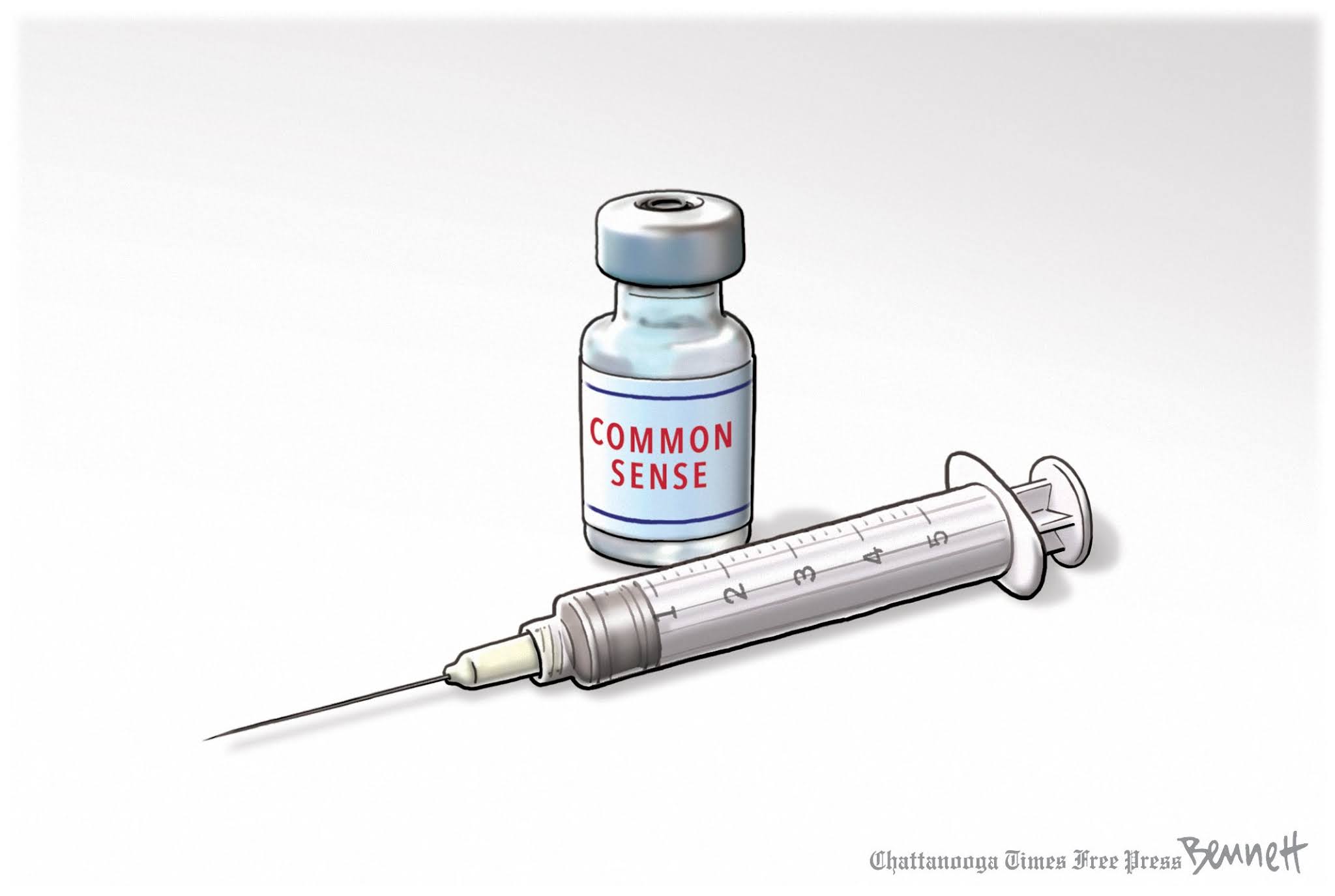
Anyway, after looking at it again, I've decided that it's worth posting, as it reeks of real common sense, which trumps faux outrage every time -
Vaccination history has long been required to travel (if you have been in countries where some of those ‘old’ diseases still persist) and they’re also required when you enrol your children in most kindergartens and schools.
When I was studying in the 90s, I had to show proof that I had been vaccinated for hepatitis B too. We can be stopped by police at anytime and asked to submit to a test to prove that we are not intoxicated and we carry licences to prove that we have passed our driving test, library cards, club cards, reward point cards, train/bus passes, credit cards etc.
All of these cards are required to prove something at different times and places, and many of them track where we go, what we buy etc. (For the insidious purpose of making us buy more of the same usually too). Not to mention phones which record where we go (by GPS tracker no less), our heart rate, our bank balance, where we shop, what we listen to, what we read, what we look at online etc., AND we live with CCTV pretty much everywhere these days.
So, we have not lived in a ‘free’ world for a long time, and I personally, don’t really have a problem with carrying a card which shows that I’m happy to help keep my community safe and limit my use of hospital resources should I happen to get sick.
I’m just really grateful that I live in a country that can afford to vaccinate everyone for free, and also that I’m not living in Afghanistan or any other country at war (civil or otherwise).
There are a huge number of people out there who are living through traumatic experiences every day and experience limitations on their rights and freedoms that we cannot even begin to imagine. I imagine that they would be astounded that we’re kicking up a fuss about government regulations which are being put in place to protect our lives and limit the spread of illness.
Comments closed.
![]() |
| Image courtesy Lion International |
The term came from the phrase "F**k you Jack, I'm all right".
Essentially, any soldier going "Jack" was either selfish, stupid, or both.
Stupid, because our lives depended on each other.
Selfish, because he was putting considerations about his own well-being ahead of that of his comrades.
A good example would have been a digger who coughed, sneezed, smoked, snored or farted in an all-night ambush. Such a soldier would have been given a swift kick up the backside by an NCO (or perhaps a fellow soldier, depending on who got to him first).
That principle of collective loyalty and cooperation is fundamental to success in any undertaking where disunity is death, and it is illustrated so clearly when we look at statistics emanating from the USA, where states with high vaccination rates are suffering far fewer Covid 19 deaths than those where vaccine hesitancy is rampant.
It is almost a perfect negative correlation.
And yet we observe people of little brain and miniscule moral comprehension taking to the street in the name of "freedom" in this country. In the process, they have casually desecrated the Shrine of Remembrance.
The "freedom" they're advocating is the freedom to jeopardise the well-being of the group in favour of the selfish demands of the individual. I've blogged previously about how that glib notion has fallen in a heap with the advent of the pandemic.
We have also observed the phenomenon (relatively new to Australia) of rent seeking politicians appropriating the anger and frustration inevitably generated by the restrictions to their own ends.
This is one cultural trend that should be swiftly booted back across the Pacific from whence it came.
It is divisive, destructive and dangerous.
Comments closed.
![]() |
| Pic courtesy WSJ |
It's gone. It persists only in archive. And this little blog survives, gentle reader. Darwin was spot on...
At the same time, a pandemic has killed six hundred and twenty-seven thousand in the Land of the Free. It's reasonable to conclude that the two situations (the deaths of over half a million Americans, and the demise of a "Libertarian" blog) are linked.
Libertarianism has always been a romantically destructive philosophy. It is associated these days with the American Right, but ironically has its origins in the later works of Marx and Engels (Ernesto Screpanti, Libertarian communism: Marx Engels and the Political Economy of Freedom, Palgrave Macmillan, London, 2007).
Its ideological base has been co-opted by politicians such as Rand Paul and many Americans who admire the thought of writers like Ayn Rand. There is a depth of irony in this association, of course. You have only to read a few of Ayn Rand's quotes on Libertarianism to understand that -
Libertarians are a monstrous, disgusting bunch of people: they plagiarize my ideas when that fits their purpose, and denounce me in a more vicious manner than any communist publication when that fits their purpose.
Libertarianism has always been impossibly romantic, espoused by dilettantes, and deemed fashionable by the shallow. It has always lacked substance and pragmatism, and of course, as a system of association and organisation, is entirely impossible. It is essentially the refuge of the intellectually lazy and the naive. God knows there's a few of those loose in the Land of the Free, and many of them post in the lunatic Right blogosphere.
That has been revealed so clearly by the consequence of the pandemic across the Pacific, and the wailing and gnashing of teeth caused by the attempted application of science to its management. The non-existent US health system has a lot to do with it, of course.
An even deeper irony holds when you consider that by most recognised criteria, The USA is not up there on international comparisons when it comes to actual Liberty.
The 2021 Index of Economic Freedom which promotes economic opportunity, individual empowerment, and prosperity puts the US at twentieth on the scale, well below countries such as Australia, New Zealand, Switzerland, and Ireland.
And I didn't use this post as an excuse to play some BB King. That's my story and I'm sticking to it, but the thrill of Glibertarianism has indeed gone...
My youngest daughter has been left in limbo in the UK after the recent National Cabinet decision to cut the cap of returning Australians by 50%.
She is a very well-organised young person and had booked her return airfare at the expiry of her two-year working visa. She had vacated her accommodation and resigned her job in Bristol to correspond with the expiry of her visa.
Now she is vulnerable, at the mercy of her friends.
She paid about four times for the return fare as it cost her to travel to the UK in June 2019, before Covid was around.
Her dream of working in England, and travelling all over the continent, financed by working two jobs in Brisbane for two years turned to dust. She got as far as Iceland and Portugal, and that was it.
Now, her government has prevented her from coming home.
Consider the strange historical symmetry in this situation remembering that fifty-two years ago, I was forced by my government to leave my home and fight as a conscript in a civil war on foreign soil.
And on each occasion, the government in power is the Coalition.
For the second time in a little over fifty years, young Australians are convenient political collateral.
So much for the Liberal Party's regard for personal freedom......
Comments closed.
![]() |
| Image courtesy ICT works |
The discussion has generally been about consent for sex, against the background of a high profile incident in parliament house, the awarding of Australian of the Year to Grace Tame, and school students becoming active about the issue.
But consent operates in a range of other contexts, notable amongst them the use of personal data. How often have you given consent for your information to be shared online, and how much thought do you put into that question? Look at the image above to get a handle on the complications.
Now we're hearing about consent in relation to medical matters, specifically the AstraZeneca vaccine. I had the first dose back in mid-April, with no ill effects. The flu vaccine, on the other hand, left me with a very tender left arm for a few days.
I needed no persuasion to have either, so consent was not an issue, but in the past, it has been.
Many years ago (1982) my bride and I lost our first baby (full-term) through stillbirth. A post mortem revealed the cause was a cerebral aneurism, the consequence of a minor malformation which meant the baby could not survive the rigours of birth.
We were asked by the obstetrician at a debriefing appointment after my bride's discharge from the hospital whether we were planning to have more children. When we answered in the affirmative, he suggested that future births should be cesareans.
We made no decisions at the time, but went home and discussed the suggestion at length. It was clear that my bride did not want to go down that path, so we went back to the doctor, and asked him to explain simply the dimensions of the risk we were managing. He said that there was an 80% likelihood of safe childbirth.
Put this way, it was easier to make a decision, which was to opt for normal delivery, and four healthy babies later, that worked out well. What the experience did for us, was to highlight the issue of consent, and which player (or players) in the scenario have the right to provide it.
I was reminded of consent again when completing my St John's CPR refresher the other day. The instructor reminded us that first aid cannot be provided to a conscious lucid individual who refuses it.
I hope I'm never put in that situation.
Now we have National Cabinet deciding that the AstraZeneca vaccine can be provided to people under forty if they give informed consent. Again, that consent needs to be weighed against the background of a risk/benefit analysis.
Sometimes I think that the medical profession has a problem with allowing consent to be the prerogative of the patient, and I'm sure I understand why. It must be mortifying to know that the decisions the patient makes may not be in his/her long-term interest. It must butt up against the "first do no harm" principle something fierce.
Consent is also a critical factor in any discussion about euthanasia, but maybe I'll look at that another time.
In summary, medicine, whilst a noble profession, runs the risk of assuming a power it does not have. I'm talking about the "playing God" cliche.
I hope my GP brother doesn't read this.
![]() |
| Pic courtesy healthychildren.org |
![]() |
| Pic courtesy Jakarta Post |
Pic courtesy Shutterstock The use of euphemisms has always fascinated me, gentle reader. One on-line dictionary defines the meaning of the ...