Showing posts with label Travel. Show all posts

Friday, 17 July 2026

The Details Matter


Note one chrome mirror - one black plastic.

Australian politics and international affairs have recently become something resembling a failing soap opera.

So, gentle reader, I'll post something less disagreeable.

My project to convert a Japanese domestic market Toyota Hiace into a camper is just about complete, so I'll outline the journey, and where I've ended up. 

The vehicle is a 2014 Hiace Commuter which was used as a dry cleaner's vehicle in Japan. Clothes aren't heavy, so I assumed that it hadn't had a hard life. It was showing about 140000 kms when I bought it from a Brisbane importer who furnished all the necessary documentation, including the auction report from its sale prior to import.

As I bought it with dry cleaner's clothes racks.

A mechanical inspection confirmed that the vehicle was in good condition, and had a number of useful features including an aftermarket audio installation with Apple Carplay. More about that later.

It also had a slightly upgraded trim and features list which included push button start, climate control AC which has an extra unit cooling the rear of the cabin. It is also 180mm wider than the local market vehicles. Again, that's a mixed blessing. More about that later.

Fitout side unit installed across the cabin. Note modem and fire alarm.

Tyres have plenty of tread, albeit a little older than ideal, and the van features chrome trim not seen on the local market. There was also a three person bench seat installed which I removed. I reckon the business was family owned, and that seat was used to drop family members/employees off each day before the vehicle went on daily delivery runs.

First step was to install a plywood floor, which was fairly straightforward. Then I used pre-glued vinyl planking to dress it. This also was cheap, as we had sufficient planking left over when we refloored our home a few years ago.


Initially, to construct a bed, I bought a door from Bunnings, attached legs to it, and attached it to the floor using metal brackets. I located an unused single bed mattress on Facebook and installed it on the bed. This provided accommodation for about a year, until I spent $1990 on a slide out bed from Boxed Fitouts. I'd also used a second hand baby change table (found at Vinnies) as a frame for storage until I replaced it with another Side box from Boxed Fitout ($990). 

Can be converted to a double.

To provide off-grid power, I bought a Bluetti AC70P, ($745) and had a inverter/charger installed so that it automatically charged as the vehicle is driven. For connection to mains power I spent $500 on an external plug.

Despite appearances, it's securely anchored.

What I've finished up with is a van that remains fairly light, is easy to drive, and comfortable both for road trips and extended stays off grid. The Bluetti is good for about three days to keep the Kings 75 lit fridge running, but requires only about 50 kms of driving to be fully charged. I've also bought a small folding Rovin solar kit ($250) for extended stays. I haven't had an opportunity to personally trial it off grid yet, although my daughter has at a four day outdoor festival. It works OK to maintain charge for light use (fridge and charging devices).

Senior's handle & camping sink. The sink is not a total success - unwieldy.

As mentioned above, the van came with a CarKit_blink Japanese audio kit, which is fine, except it's designed for use in metropolitan Japan, and is next to useless in the Australian bush, where streaming through Apple Carplay works providing you're within coverage.


The van's extra width is handy in providing living space, but can be a challenge when parking in narrow bays at shopping centres. It is not too wide to be unwieldy, but a great deal of care is needed if you want to avoid inconveniencing fellow parkers. Having said that, it takes up a lot less space than a Dodge Ram, or a Chevrolet Silverado, and people park them in supermarket car parks. The van is 2280mm tall, so that precludes using most underground parks which average between 2100mm and 2200mm.

Slide out storage. Porta-Potti for contingencies. Not used so far.

In summary, the vehicle cost $24000, and I've added about $5000 worth of kit to make it habitable across twelve months of ownership. 

At that outlay, it's a totally competent camper, and the chassis is sound and looks like being reliable and cheap to maintain. It's not exactly fun to drive, especially in comparison with my previously owned Mazda MX5s. It's a bit like driving a block of flats. 

It is, however, quiet and comfortable when cruising, and the elevated seating position means you have a great view of traffic and surroundings.

Sunday, 5 July 2026

The Fourth of July

The pool is stained. (Pic courtesy the Guardian)
 

Yesterday was the fourth of July, gentle reader, so we're bombarded via the media with stories about the 250th Anniversary of the adoption of the USA's declaration of Independence.

It can also be called a semiquincentennial, if you're keen to impress with your vocabulary.

To be frank, the celebrations leave me more than a little unimpressed, as they're characterised by vulgar expressions of American exceptionalism.

In fact, down through the years, much of what happens on the other side of the Pacific has left me unimpressed, but unfortunately it can't be ignored. Decisions made in Washington, and the vicissitudes of American culture and history have affected my life and experience.

I remember being shaken awake by my father on 22nd November 1963 to tell me of John Kennedy's assassination. He was succeeded by Lyndon Johnson, whose cynical use of the Gulf of Tonkin incident on 4th August 1964 to gain congressional approval to wage war in Vietnam had a major influence on my future.

Australia's commitment to send troops to Vietnam in April1965 was largely triggered by American policy, and it was only one month later that our defence act was amended to allow conscripts to be deployed overseas.

Then in 1967 my birthdate was drawn in the national service ballot, and after deferment for eighteen months whilst I graduated as a teacher and worked for twelve months to discharge my bond, I was enlisted in January 1969.

Vietnam followed in 1970, and it was then that I had my first encounter with American GIs. They also left me unimpressed. They were very poor soldiers, and our unit gave them a wide berth, as they attracted unwanted attention from the VC.

There were also two occasions when they went very close to causing us real harm. The first was when we encountered a bunker system in April, and USAF F105s dropped napalm closer to our position than the bunkers. The second was a few months later when an American artillery detachment based at the Horsehoe lobbed a couple of salvoes of 155mm rounds on a track junction we were ambushing because they neglected to check for friendlies prior to the fire mission

We discovered that the reason for their carelessness was their practice of using marijuana during fire missions to escape their apparent boredom.

We had a couple of phrases describing the Yanks. The first was "They draw the crabs" and the second "You can tell them anything; sell them anything".

The second aphorism helps to explain the "election" of Donald Trump. I put "election" in quotes, because you look at the turnout figures in the 2024 presidential election, and examine his slim majority, you understand that he was supported by about one third of American voters. Trump's 77.2 million votes  equate to roughly one-third of all eligible American adults. 

When the financial crisis arrived in 2008, like many other Australians I lost a large chunk of my superannuation balance because of regularity failure across the Pacific, and most recently, American foreign policy pushed fuel prices higher and contributed to inflation in Australia.

Today I read a post by an American on social media telling Australians how grateful we should be because they saved us from the Japanese in World War Two. 

This same American is no doubt ignorant of a number of salient facts of history. The first is that the US didn't enter hostilities until two years after the rest of the free world, and only then after their Pacific feet was blown out of the water on December 7th 1941.

The second is that Australian troops were the first to stop the Japanese on land in New Guinea.

And the third was that they supported us out of pure self interest. Australia was, after all, an unsinkable aircraft carrier.

You'll just have to forgive me for remaining unimpressed with the USA after the impacts it has had on my life since 1970. They continue to tell us how wonderfull their republican experiment is.

Frankly, it's still very much a work in progress.


Tuesday, 26 May 2026

A Conference


Melbourne always looks black and white.

Last weekend, gentle reader, I attended a conference in Melbourne, looking in hindsight at the war in Vietnam.

It was attended by delegates from all over the country, and the keynote speaker was a Yank. His address was comprehensive and well researched.

The Saturday proceedings are listed below, and full transcripts will be posted soon. 


Walking into the conference resembled having a close encounter with my bookshelf. The authors of a large proportion of my books about the war were present.

The reason for attending was to develop a network of military historians, amateur and professional, who can help me with my doctorate looking at the subject of national servicemen between 1965 and 1972 who served in Australia, Papua New Guinea, and Malaysia.

Obviously, this conference was about Vietnam, but when you consider that during that seven year period, the whole raison d'etre for the size and deployment of the army was Vietnam, it was well worth attending.

The only downside was its location. Melbourne is my least favourite Australian city, and nothing during my sojourn there, has altered that opinion.

Now that I've been accepted as a doctoral candidate, the hard work starts. 


Thursday, 9 April 2026

The Mug Lair

Pic courtesy South China Morning Post

I've blogged before, gentle reader, about the relevance of language, and observed how it has changed and developed during my lifetime.

According to the Dictionary of Australian Slang, the term "Mug Lair" means a "flashily dressed young man of brash and vulgar behaviour". 

The Oxford Dictionary definition describes a "person who is stupid and vulgar", adding for effect "a two bob mug lair, all bleach and trousers", although I've heard "all mouth and trousers"

And finally, Acronyms and Slang uses "a bothersome show-off" as its definition.

If we break it down, a "mug" is generally accepted as a gullible person, and a "lair" as an attention seeker, although putting the two words together subtly alters the impact of the description.

It's a great shame that the Australian slang term has largely been left behind in common use. My grandfather and father would have been very familiar with it.

Mind you, they inhabited an Australia which was unsullied by language dragged across the Pacific by social media.

Across the pacific, one third of American voters* set up an electoral college that gave power to a classic Mug Lair. There were 241,184,779 eligible voters in 2024.  Of those, 32% voted for the Mug Lair; 31% voted for Harris; and 36% did not vote. 

The definition is a perfect fit, except he is no longer young.

*One third didn't vote, one third voted for his opponent, and one third voted for the Mug Lair.


Monday, 23 March 2026

Quo Vadis Cuba


Havana in happier times.

Back in 2018, gentle reader, I spent a couple of weeks in Cuba.

I blogged about it at the time, and have been observing from a distance since.

Back then I noted that Obama's visit to Cuba in 2016 had a positive effect on the country, encouraged as it was by Pope Francis. Obama was the first sitting US President to visit the country in eighty-eight years, as the previous visit from Calvin Coolidge was in 1928.

When I was there, the optimism generated by the thawing of relations was rapidly beginning to fade, as Trump had been in the White House for a year and a half.

There were still plenty of tourists around, and cruise liners were visiting Havana. These days, since US restrictions introduced in 2019, all US-based cruise ships are banned from calling on Cuban ports.

In addition, the supply of oil from Venezuela which had pretty much kept the Cuban economy afloat has dried up since the US kidnapping of Nicolas Maduro.

Now we have Trump announcing that he would be taking over Cuba. His exact words were - 

"I do believe I’ll be having the honour of taking Cuba. It’s a big honour, I ​mean, whether I free it, take it. I think I can do anything I want with it."

Apart from the stark arrogance of this statement, it ignores the fact that the country is in trouble because of sixty-eight years of spiteful US embargoes. What I recall of my visit is the laid back happiness of the Cubans I encountered, which contrasted so strongly with what I had encountered in the Americans I met back then.

It appears that exporting misery has become fashionable across the Pacific.


Tuesday, 17 February 2026

Gum Free Capital


I had a reason to be in Canberra for a few days, gentle reader, in connection with speaking gig at the 75th Anniversary of National Service Commemoration.

Canberra is different.

It's like another country. There are small things.

For example, I wanted to freshen my mouth after a long flight, so I asked for chewing gum at an airport newsagent. I was told, quite sternly, that there was no gum available. Asking "why", I was informed that it is "unhygienic".

Now I thought that Singapore was the only place where you couldn't buy gum, but not so.

Then there's driving in Canberra. It's also different. Apart from the extensive network of ring roads and roundabouts, there's also a limitation on the word "street" I kid you not. There are few streets in Canberra.


There are Drives, Crescents, Closes, Avenues, Circuits and Places. The streets are there, but generally only residential areas contain them. There obviously was a need for a posher term, when it came to titling the roads in the national capital.

The setup of traffic lanes is also unique. Apparently the connecting roads are designed to allow higher speeds than is typical in most cities. It works if you know your way around. I didn't, and even with the benefit of a navigation system in my hired car, got lost frequently.


The fact that the car I was given was not what I'd selected didn't help. It was European (Volkswagen Tiguan T-Roc) and I was told it was an "upgrade". The indicators were on the wrong side of the steering column, which meant much windscreen wiping when cornering, and the connections for my phone cable incompatible.

Those issues, accompanied with the start-stop fuel saving engine feature, and the dual clutch automatic transmission made it a pig of a machine to drive, and I eventually parked it in my hotel car park and used taxi vouchers.


Finding eating places is also a challenge. The familiar commercial strips were absent, and if there are supermarkets I couldn't find them. Apparently there are five altogether (Coles and Woolworths) but They proved elusive.

Canberra is different....


Sunday, 8 February 2026

Fitout Finished

Sunrise at Miles

The fitout of my Hace is completed, and I've taken a couple of trips in it. 

These are my conclusions -

It's comfortable, both to drive and to sleep in.

It cruises well on the highway, the only exception being its performance in high winds. It feels more like a yacht than a van under those conditions, and the options, and options are to stop and wait until the wind drops, or keep the speed below 80km/h.

The system I bought to allow for off grid camping works well. It consists of a Bluetti AC70P together with an inverter connected to the alternator. This powers a Kings 45L fridge.

Bribie Island

It's good for three days when parked, but you only need to drive it for half an hour to charge the unit up to 100%. You can do road trips, stay somewhere overnight off grid, and live in it without having to use the installed 240V connection.

I use a portable gas stove with pressure cans and it does the job well. Washing up is a bit of a pain, but the collapsible bucket I found at BCF does the trick. I bought a camping sink online which has proved less useful, although it's OK for quick ablutions.

There's also a portable toilet, but for emergencies only. Storage in plastic boxes which are housed under the bed and slide out on demand are pretty cheap and convenient. 

Camping sink - really a vanity only.
I use occy straps to keep everything located, and haven't had any problems with this method so far, but always wear eye protection when working with them. 

The purchased items are the power unit and the refrigerator. Everything else is material repurposed or found in my disorganised garage. 

The van is surprisingly economical on a trip, using between 11 and 12 litres per 100km, which is OK for a fully equipped camper. 

Columboola veterans' retreat.

Items that need improving include the Japanese head unit (it's buggy, and the radio tuned for urban Japan is pretty useless) and the interior appearance. At the moment it looks a bit like a jumble sale.

Still, my daughter has given it her seal of approval after attending a music festival in it.


Sunday, 9 November 2025

Disappearing Retreats


Pic courtesy Veterans' Retreats Australia

In the process of testing my homebuilt RV, I visited a veteran's retreat just outside Miles last week.

For ten years I'd driven past it, up and down the Warrego Highway, but because I was working on EQ's time, I was never able to take the 14km of gravel road to check it out.

It's worth a visit. The location is perfect for anyone wanting peace and solitude for a while. The owner is a veteran, and like most of us is approaching the age where managing such a site is difficult.

He'd like to sell it, but hasn't as yet found a buyer. It occurred to me that an ex-service organisation (the RSL) might consider it a worthwhile project.

There are many of these retreats scattered across the country. They typically offer cheap basic accommodation to veterans, but many are open to the general public. I've stayed at one or two over the years, as they provide an interesting option if you're not in a hurry.

I gave up hurrying on my 70th birthday.

The first retreat I'm aware of was Pandanus Park, set up by Les Hiddins of Bush Tucker Man fame. It's still listed as open, but subject to road conditions.

There is a website (a work in progress) which lists, state by state, retreats across the country.

It would be a great shame if these retreats shut down, but the inevitability is that they will, as we run out of veterans. If we run out of veterans, we have run out of wars, and that has to be a good thing.


Monday, 6 October 2025

Migration


It's a long time since I've heard Gaelic spoken in a church, gentle reader, but I had that experience on Sunday.

The last time was August 1980, when my bride and I were visiting the Irish Republic and we went to mass in Cork. Forty five years is a long time, and viewed from the perspective of the marches a few weekends ago, we've actually gone backwards in this country in our views on migration.

Yesterday was celebrated as Migrant Sunday in our local parish, and speakers of different languages, all migrants, read the prayers of the faithful in their own tongues. 

Thus we heard Irish, Spanish, Swahili, Pidgin, Vietnamese, Tagalog, Fijian, Arabic, and Bahasa Indonesian. 

The fact that one of the speakers was native Irish, and physically indistinguishable from the bulk of the population was especially significant. 

My father, a descendant of Irish migrants used to describe being called a "dirty little tyke" as he was horse whipped by an Orangeman in Warwick back in the day.

This in a relativelly conservative regional city like Toowoomba, could be considered remarkable, but it isn't. These people are members of our community, welcomed and contributing. Unfortunately migration is frequently used as a dog whistle by those who are happy to use fear and bigotry as their ticket to political influence. 

That was very clearly demonstrated in the recent marches.

Perhaps our Filipino parish priest expressed it best with a garden metaphor. 


He noted that the magnificent floral displays witnessed in our carnival of flowers are comprised of a wide variety of diverse blooms, and this diversity is largely responsible for the spectacle. 


Monday, 24 February 2025

Australian Coffee Culture


Coffee & Chicory (Pic courtesy museums Victoria)

I’ve been around long enough, gentle reader, to have lived through some remarkable changes in the way we drink coffee in Australia.

As far as I can remember when I was growing up, my parents never drank coffee. They were both tea drinkers. The coffee that was around at that time was execrable, which may have had something to do with it. 

I do remember my mother always having a Coffee substitute in her pantry. To this day I'm not sure what it was used for. Perhaps it was part of a cake recipe. It was never used to make coffee.

When I was old enough to leave home, I started drinking instant coffee occasionally. Working as a young teacher in the bush meant that I was exposed to staff room milk. If you're not familiar with staff room milk, suffice to say that it was frequently off on Mondays, after sitting in the staffroom across the weekend. This forced me to drink black tea, a habit I've maintained. I could never stomach black coffee.

Then I was called up conscripted, the tea and coffee often came in ration packs. At this time I reverted to coffee, perhaps because it was a mild stimulant. Mostly in the army I was bored stiff, and the caffeine provided a little bit of excitement.

This continued once in Vietnam, although occasionally there was some excitement. Drinking coffee had by this time become a habit.  

Back in civvy street I remained addicted to coffee and cigarettes, but gave up the latter cold turkey by refusing to buy smokes. The social pressure (smokers retreating when they saw me approaching to bum a durry) did the trick.

A few years back into teaching I had an itinerant job supporting kids with disabilities in bush schools, and saw the inside of plenty of roadhouses. They almost always had a boiling urn and enormous tins of instant (usually Bushells) coffee in the corner.

I returned to this work post retirement (which I failed first time round), but by then (2010) proper barista coffee was becoming available in these same roadhouses. It was usually served by backpackers with interesting accents.

The contrast between what was available in the seventies in the bush, and what is sold now is stark.

Trips to Vietnam post retirement introduced me to Vietnamese coffee (very strong and smooth and served with condensed milk) and a sojourn in the USA and Cuba in 2018 revealed that American coffee is not a patch on ours. I found the Vietnamese brew slightly more robust than what I encountered in Cuba. Both were better on the street than in the USA, but not of the quality that you can find locally.

Whilst I probably haven't travelled enough to make any reasonable comparisons, I reckon that Australian coffee is amongst the best in the world. Italian immigration post world war two probably has much to do with this. An Italian coffee culture developed first in Melbourne and has spread. Having said that, when I was in Italy in the eighties, I don't remember being impressed by their coffee.

Australian coffee culture has been exported to the USA and chains have developed. 

Australians are great innovators, they import excellent beans, and their baristas are the best. The machines used are invariably good quality and this helps. We're now growing coffee on the Atherton Tableland, so the coffee scene can only improve.

Only the best of everything originates in that part of the world, including my bride...


Wednesday, 29 January 2025

Harry Smith's Story


I've just finished reading Harry Smith's Long Tan - The Start of a Lifetime Battle, and found it hard to put down.

Harry Smith was the commander of D Coy 6RAR during the battle of Long Tan in August 1966. Despite the title, his book covers events prior to and after the battle, as well as his own account of his company's ordeal when it defied an estimated regimental attack from main force NVA assisted by local elements of D445.

The book has the flavour of an exercise in setting the record straight, and he pulls no punches describing the intelligence failures that led to the encounter battle, the incompetence of senior task force commanders, and his conflict during the heat of battle with these same commanders in getting the artillery support he needed for the survival of D Coy.

Smith (who died in 2023) was a soldier's soldier, and disinclined to suffer fools gladly, especially when it came to the allocation of honours and awards for his soldiers. He spent the remainder of his life post Long Tan fighting for justice for the members of D Coy who were denied awards because of the quota system that operated at the time, and for many years post Vietnam.

Because there was a ceiling placed on the number of decorations to be awarded, senior commanders who experienced the battle from their command posts safe behind the wire at Nui Dat received honours whilst the soldiers under fire for hours had recommendations rescinded. Smith did extensive research for years, especially after the thirty year rule revealed the correspondence relating to these awards.

It makes pretty shocking reading, and it obviously motivated Harry Smith to fight for his men until the situation was largely remedied in November 2016, representing the culmination of a fifty year battle.

Smith's commentary on the human costs of the war makes interesting reading. One example - 

Whilst I have always been deeply saddened by the loss of the 18 young men in a battle that should not have happened in a war we could not win, and as well, the 521 men who gave their lives during the Vietnam War,  I must say now feel too for the families and loved ones of those young enemy soldiers we killed. Many of these soldiers were just teenagers.  (p187).

Apart from the remarkable narrative of Smith's battle for his soldiers, this book provides an amazing insight into the way the Australian military is organised, and the difficulties experienced by a career soldier attempting to maintain a stable family life. Again, Smith's honesty shines through, and he is quite frank about his failed marriages.

The book had a special resonance for me, as I have been to Long Tan twice, and went to school with Frank Topp, who was killed in the first few minutes of the battle. He was a local, and I got to know his mother before she died a few years ago.

My first sight of Long Tan was in April 1970 when we used a site near the rubber as a forming up point before we set out along the dry bed of the Suoi O Lo Nho on a night company move into the AO of our second operation.

The second time I was there was in March 2006 on a tour with my sons and a group of Vietnam veterans, most of whom were ex 8RAR.

The second visit was much more pleasant than the first.

Monday, 13 January 2025

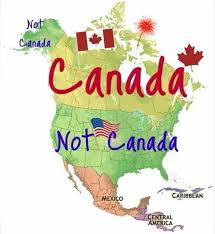
Oh Canada!


Pic courtesy Rosa Miranda Sauret

In the light of Trump's recent postings on social media about Canada, it's worth recalling, gentle reader, one significant historical element of US-Canada relations.

I'm writing, of course, about the tens of thousands of draft dodgers that travelled north to Canada during the war in Vietnam, between 1965 and 1975.

One estimate puts the number between 30,000 and 40,000. 

What is interesting about this history is that it seemed to have no effect on US-Canada relations. When you think about it, that appears odd. After all, the northern escape continued unabated for ten years, and these men whether they were draft resistors or deserters, were clearly in breach of the law in the USA.

Yet Canada accepted them as immigrants and made no attempt to determine their reasons for crossing the border. This turning a blind eye arrangement was accommodated by both Canada and the US, and it's interesting to consider the reasons for this.

One rationale is that the USA had much greater concerns when it came to international relations in general and relations with Canada in particular, so long as the number of war resisters could be contained, and they didn't want to rock the boat by making an issue of their treatment.

Strangely perhaps, draft and military offences were not included in the Canada-US extradition treaty. Basically, even if the US authorities had wanted to take action, they could do nothing providing Canada accepted these young men as immigrants, and indeed Canada did.

In any event, President Gerald R Ford granted an amnesty programme for draft evaders in September 1974, requiring them to work in alternative service occupations for periods between six months and two years.

Later in 1977, Jimmy Carter fulfilled a campaign promise to pardon any draft evader who requested one. I have no idea how many took advantage of this, although a figure of 556 is floating around in the archives.

This 2018 Canadian study (in French and English) by Luke Stewart provides useful background.

My only comment about Trump's offer would be that whilst travelling, I have mistaken a Canadian or two for an American and received a thorough telling-off for doing so.

One young woman said "That's the worst possible insult you could offer any Canadian! The basis of our identity is that we are NOT American."

Friday, 30 August 2024

An Gorta Mor and Remittances


Erin go Bragh - Image courtesy Ireland Reaching Out

Just the other day, gentle reader, I stumbled on an Irish history website which included an essay about remittances sent from the USA during An Gorta Mor (the Great Hunger, the irish famine). 

It was written by Dr Ciaran Reilly, historian at Maynooth University. 

The article reports that in 1851, Lord John Russell, then British PM, claimed that more than 1.5 million pounds had been sent to Ireland as remittances by new emigrants who had arrived in the USA. A survey of Irish newspapers from the late 1840s and early 1850s confirms this, with almost daily reports of people emigrating once they had received the remittance money.

I also remember reading about these remittances on my visit to Ellis Ireland's immigration museum a few years ago on a visit to New York. 

Ellis Island Immigration Museum

The process was not confined to the USA, with a mention in the article of letters received from Melbourne containing amounts ranging from fifty to five hundred pounds.

I knew from my own family history that my ancestors traveled to Moreton Bay on the Erin go Bragh during a voyage in 1862.

The Erin go Bragh was one of thirteen ships which transported people from Ireland to Australia under the Queensland Immigration Scheme. This scheme was established by Bishop James Quinn and assisted by Father Patrick Dunne with the aim of assisting Irish immigrants to make the arduous journey to Australia where it was hoped that they could start a new life of prosperity.

Remittances were used less frequently in Australia (or as then, the colonies of Moreton Bay, New South Wales and Victoria), but they did exist. I have no idea of the mechanics of this, or how the postal services worked back then to keep the funds secure.

If anyone reading this understands the process, please enlighten us in the comments.


Monday, 15 July 2024

Shared Values?


Pic courtesy GovNews

Since the attempted assassination of Donald Trump, we've been hearing a great deal about our "shared values" when it comes to the USA.

The contrasting attitude to gun control is perhaps the most stark evidence of this. In this country you may own a gun, but generally people only do so if they are hobby shooters or live in rural environments. Gun ownership is not seen as a fundamental right, based on a constitutional amendment that was made two hundred and thirty years ago.

The real world outcome of this would suggest that Australian values on this issue are pragmatically superior, and it hasn't made any difference to freedom across the two countries. At least it didn't when I travelled to the USA a few years ago. If anything, we were trammelled with more petty restrictions over there than we are here, ironically enough, many of them stemmed from precautionary scenarios implemented in a fearful community with almost universal gun ownership.

We don't, for example, need control measures in schools such as single-access points, fencing, or internal door locks to enable teachers to lock shooters out at proven intervention points.  

The comparative firearm fatality rate is probably the best example of one result of this different set of values. 

Then there's the contrasting attitude towards health care. In Australia we have a system which provides access to health care which isn't directly related to wealth. Not so in the USA. More than two-thirds (73.4%) of Australians reported being satisfied with their healthcare, whilst only a slight majority of Americans (54.2%) said the same.

Apart from satisfaction rates, a comparison of some important statistics is even more revealing. Life expectancy in Australia is nearly four years longer than the USA. In addition, infant mortality per one thousand live births in Australia sits at 3.14, but it's 5.44 in the USA. It seems that the satisfaction rates are based on a realistic appreciation of the situation in each country.

The firearm laws and health systems in each country are based squarely on opposing values of individualism against egalitarianism.

Then there's the contrasting welfare systems. In contrast to the USA, we don't worship the rich and despise the poor. We have created a welfare system that shares the nation's wealth more equitably than the USA whilst still valuing entrepreneurship and innovation. A wide collection of Australian inventions provides ample evidence of that. 

Because our immigration system is skills-based, we don't need an endless supply of cheap immigrant labour and we pay wages comparatively higher that those across the Pacific.  As of the latest data the minimum wage in Australia is AU $20.33 per hour as against the US federal minimum wage of USA $7.25 per hour.

Travelling in the USA exposes the social divide that becomes evident whenever you walk into a supermarket or a subway. I am beginning to notice the same situation developing here. It's not a positive trend.

My time in Vietnam where we had intermittent contact with Americans made these differences in values stark, particularly when it came to race. I remember being cautioned a number of times by white Americans that socialising with African American GIs when we were on leave was not a good idea.

The irony in this was that the black GIs were far better company that their white counterparts, and their sense of humour resembled ours, which was probably why we gravitated towards them.

And that's another difference. Our laconic sense of humour is a reflection of the fact that we don't take ourselves all that seriously. There is no such thing as Australian exceptionalism.

And that's a very good thing. Shared values? I think not.....

Saturday, 27 April 2024

The One Day of the Year

At the cenotaph 25.04.24

It took me fifteen years after returning from Vietnam before I marched on Anzac Day.

There were all manner of reasons for this, but foremost amongst them was the reception we received in the early seventies if identified as Vietnam veterans. I was never personally called a "baby killer" but the atmosphere of  indifferent hostility (particularly on the campus of the University of Queensland where I was undertaking a Department of Labour and National Service rehabilitation scholarship) was absolutely clear.

So I put the whole experience on a shelf, worked and studied, got married and became a father.

In 1983 I was the principal of a special school in a Northern Brisbane suburb. On Anzac Day of that year the local RSL club donated $500 to the school. 

I'd previously had nothing to do with the RSL, but was obliged to meet with the local president to organise a presentation of the donation on Anzac Day, and he became aware that I was a returned soldier. I refused his offer to join the RSL, but accepted an invitation to march.

It was only after the Welcome Home in 1987, that I felt free to march again. Whilst interviewing many who had served in Vietnam for my thesis, I discovered that this behaviour was typical.

For about a decade and a half (from 1972 until 1987) we were personae non grata. Then came the Welcome Home march, the song, and a change in the public perception. Unfortunately it was too late for some.

So now I march. 

This year I went to Sydney and marched there with two blokes I've known since June 1969, when we were marched into 5 Platoon, B Coy, 7 RAR. We went through six months of intensive training which culminated with a couple of weeks at the Jungle Training Centre at Canungra and a pre-embarkation exercise at Shoalwater Bay near Rockhampton.

Together we embarked for Vietnam on HMAS Sydney on 16th February 1970.

We served together through operations Finschhafen and Cung Chung, and all three of us were involved in an assault on a bunker system on 22nd April. B Coy took one KIA* and two WIA+ in that incident, and a soldier from 4 Platoon died of dehydration the day prior to the bunker contact.

You can read about it here.

Then, coincidentally we were all re-posted out of 5 platoon in June 1970, more or less simultaneously and for a variety of reasons driven fundamentally by manpower requirements which tended to decide the fate of most Nashos, another fact I discovered during my research.

We're all in our mid-seventies, so marching may not be possible for much longer, so I took the opportunity to travel to Sydney to march with them, probably for the last time.

There were only about thirty of us left to march from a unit that had seen thousands pass through its ranks between 1965 and 1972.

Perhaps, if there are no more wars, nobody will be left to march in the future.

I live in hope.


*Killed in Action

+Wounded in Action


Wednesday, 24 April 2024

Jetstar

Pic courtesy Jetstar

I thought I had retired, gentle reader, but now I’m working for Jetstar.

I haven’t flown with them for a while, and the last time I did they were full of surprises.

That hasn’t changed.

Last time I was ignorant of their baggage policies, and I received an expensive surprise when I had to shell out for carry on baggage which I’d wrongly assumed was covered in my fare.

This time, the issue was timing. When you book a flight, There’s a golden window within which you have to tag your bags, weigh them, and go through security.

Because of an accident on the Warrego highway, my bus got me to Brisbane domestic five minutes past the closure of this golden window. The first I knew of this was when the infernal robots refused to accept my already printed boarding pass. 

The robot told me to find a Jetstar staff member, which was a task in itself. The orange garbed people I found must be trained in avoiding eye contact.

Eventually I found a polite young man who seemed to know about as much as I did. He sent me off to the Jetstar help desk. My problems were beyond his pay scale.

I had to pay an extra $85 to be booked on a later flight, even though the one I was originally booked on was sitting on the tarmac, and wasn’t going to depart for at least another forty minutes.

I got in line with my newly minted boarding pass issued by a gentleman, who was polite, but with an accent so thick that it defeated my damaged hearing.

I mimed my way through.

And whilst I was waiting for the later flight (three hours I won’t get back again) I realised that I was now working for Jetstar.

I had printed my own boarding pass, tagged and weighed my baggage, and done all of this without training and supervision. It is the perfect industrial model, and beats paying for staff to complete those messy procedures.

Instead of being paid for these tasks, I had been billed the above mentioned $85 administration fee.

I guess I could regard that as union membership.


Sent from Outlook for iOS

Monday, 15 April 2024

The Forgotten Men


The Canberra billet which I guarded in 1970. Taken in 2006 with an extra floor added. Excuse the blurry shot. 

Between November 1964 and December 1972, 804286 twenty year-old Australian men registered for what was euphemistically called national service.  

Of these, 63735 had their birthdates drawn in one of the sixteen ballots and were enlisted into the Australian Army. They were conscripts, although that word is generally not used.

Perhaps the notion of conscription does not sit well with our national narrative. History would suggest that, which may explain the endurance of the euphemism. 

Of that conscripted group, a minority (15381) served in Vietnam. I was a member of that minority. The remaining forty thousand plus served out their two year obligation in Australia, Papua New Guinea, Borneo or Malaysia. This post is about those who didn't serve in Vietnam, and as a consequence are forgotten. They had no "Welcome Home " in 1987. Nobody wrote a song about them.

Those 63735 men had a number of things in common. They were taken away from their employment and income, their homes and families, and their reasonable expectations of a future on the basis of a lottery draw. Meanwhile their unballoted peers continued with their lives unmolested.

All shared recruit training at Singleton, Puckapunyal or Kapooka depending on their state of origin, but once posted to corps, they had very different experiences. Their postings frequently had them sent to bases great distances from their homes on the Australian mainland, and in many instances overseas. 

These overseas postings included Borneo (where two died) and Papua New Guinea (serving as 'Chalkies" - teachers) in Education Corps. Service in Borneo and PNG is not considered "warlike", so these men have no entitlement to benefits accrued through active service.

Towards the end of the Australian commitment, the period of the National Service obligation was reduced from two years to eighteen months. The National Service Termination Act 1973 used the "exceptional hardship" expedient to legally process this. Towards the end of the period of National Service, these soldiers had almost become an embarrassment. 

During my Vietnam service with 7 RAR in 1970, I was posted to Saigon for about ten days late in my tour to be part of a Saigon guard. My normal situation (when not patrolling on operations) was the ATF base at Nui Dat. These guards were routine, and involved serving Infantry personnel providing security at the Australian billet in Saigon, called the "Canberra". Infantry soldiers were flown to Saigon from the ATF base at Nui Dat. The billet was attacked  during the 1968 Tet Offensive when coincidentally 7 RAR was providing security during its first tour of Vietnam.

During that quite pleasant interlude, I learned a little about the conditions of those ADF members serving in Saigon. They slept in a comfortable bed in what was a middle class Vietnamese hotel, had their laundry done by Vietnamese workers, and ate food prepared for them in the hotel kitchen. They also received a Saigon allowance meant to cover the expense of living in a comparatively expensive environment. 

Compare this experience with a national serviceman posted to an infantry battalion in Borneo. For much of the posting this soldier would be sleeping on the ground, patrolling through jungle with weapon and full kit, and completing piquets at all hours of the night. The Chalkies serving in PNG would have experienced more comfortable conditions, but were still serving in challenging tropical conditions.

Yet the soldier who served in air conditioned ATF headquarters in Saigon and slept nightly in a secure guarded billet is entitled to all the benefits accruing to a soldier on operational service. 

Those who served in Borneo, Malaysia, New Guinea and at home in Australia do not.

That is, to say the least anomalous. 

It's time it was fixed. There's not much time left. These men, like me, are in their seventies.


Friday, 26 January 2024

Short Finals at Cunnamulla


I was going through some archived video the other day, and came across this.

It was a video grab (via iPhone) of a landing we made at Cunnamulla in 2017, when I was working permanent part time as an Advisory Visiting teacher.

The chartered flight (Beechcraft Super King Air) flew Roma - Cunnamulla on Thursdays with the flying surgeon and his offsider anaesthetist. As far as I know, he never performed surgery on these occasions. Rather, he was assessing and preparing patients for procedures carried out in Roma.

To be honest, I never had any idea what he was doing during the day. Upon arrival, I would be dropped off at the school, and the medical (QHealth) people at the hospital. We'd be collected by a government vehicle at the end of the day and driven to the airport. Boarding the aircraft after it had been locked up and sat in the sun all day, particularly in the summer, wasn't much fun, although once the engines were started it cooled down quickly. 

Hitching a ride on these regular charters was a very efficient use of taxpayer resources. The aircraft was a nine-seater, there was plenty of room, and a whole day wasted on travel by car was avoided.

Nevertheless, permission to do it was withdrawn shortly at head office level, overriding the very sensible local decision to allow it. I never was told exactly why. It's possible that it had something to do with cost and/or insurance.

In any case, I always enjoyed the flights, and usually sat in the cockpit where I could see what was going on. The airstrip at Cunnamulla was originally built for US bombers (B-17s) stationed there in World War Two. One of the US personnel involved was a certain Lt Commander Lyndon B Johnson on leave from the US Congress. Apparently he had advised that  Cunnamulla was inland far enough to be out of range of Japanese attacks.

That history explains the length of the strip at Cunnamulla at 1733 metres. It would still be marginal for modern airliners. A 737 needs 2133 metres.  


Sunday, 23 July 2023

The Power of Listening (2)


Apparently that's me. I don't really understand the picture.

I've blogged about this before, gentle reader, but now that the legislation clearing the way for the referendum to be held has been passed, I'll have another look at the issue.

 One of the reactions to that post was interesting, in that it claimed that self-interest has put a barrier between the resources allocated and the outcomes achieved. I wouldn't for a moment disagree with that, but that failed top-down model is the whole point of setting up a voice.

The historical record has shown us that whenever non-indigenous agencies come up with "solutions" to the problem of indigenous disadvantage, the result is failure. There is a succession of these "solutions", ranging from the formation of ATSIC in 1990 and its dissolution in 2005, to Howard's intervention in 2007.  

ATSIC's abolition followed a 2005 report and enquiry by its Select Committee which found that although there had been widespread support for instituting changes to the way that ATSIC was structured and operated, there was also "overwhelming" support for the continued existence of a national Indigenous representative body. Most witnesses to the inquiry had suggested that regional operations could be improved, but they were strongly in favour of having a national, elected Indigenous representative body. Deep concerns were expressed about the disempowerment of Indigenous peoples. One of the recommendations was that the government "give active support and funding to the formation of a national Indigenous elected representative body, and provide it with ongoing funding". That recommendation went begging.

That recommendation could be seen as the origin of the Voice. The dismantling of ATSIC was seen by many commentators as harmful to Aboriginal people in Australia. In 2009, Lowitja O'Donoghue opined that reform of the agency would have been better than abolishing it.

It's instructive to compare the behaviour of Geoff Clarke (disgraced ex ATSIC Commissioner) involving pub brawls, and sexual assaults, with that alleged to have been carried out by Kathryn Campbell (ex Secretary of the Department of Human Services) which occurred in the air-conditioned offices of the DHS, by people "neat and clean and well-advised"*. Clarke's offences didn't kill anyone. It appears that what happened under Campbell's watch did.

The discussion about listening reminded me of my experiences in North-West Queensland referred to in my original post. 

At the time I was a naive, but well-intentioned middle class public servant commissioned to manage and annual budget of $2.8 million to support the NATSIEP (National Aboriginal and Torres strait Education Programme)  initiative in an area twice the size of victoria and Tasmania combined. 

I had to learn on the job. When I left that position, I did so with the good wishes of the Mitakoodi and Kalkadoon elders that I had worked with in the portfolio, and they presented me with some parting gifts. The first one is a dot painting shown at the top of this post.


The second was the poem above. 

What gobsmacked me when I read it again (after nearly 30 years) was the reference to "listening" in the opening line of the second verse. 

I learned a great deal from these wonderful people in the five years I worked with them. Much of the listening took place as I was driving with them along the Flinders Highway to Cloncurry and Hughenden or the Beef Developmental Road (now Route 83) to Dajarra, Boulia, Bedourie and Birdsville. 

Those journey lasted hours, so I learned plenty. All they ever wanted back then was to be listened to and taken seriously. When that was done, and their initiatives and suggestions followed, progress was made. There was never any place for judgement - (see the second line of the second verse). 

They'd had generations of that. 

I doubt much has changed since the nineties.

*From the old Irish Ballad.

Comments closed.

The Difference Between Arson and a Barbecue

  Pic courtesy Holocaust Encyclopedia No doubt, gentle reader, if you are interested at all in local (Australian) politics, you're acros...