Tuesday, 27 April 2021

American Policing


 Pic courtesy Wikipedia

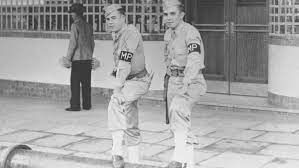
The picture above is relevant in terms of the ongoing debate about policing across the Pacific.

It was taken in Brisbane in early 1942 about the time of the Battle of Brisbane which resulted from tensions between Americans and Australians in general, and American MPs and Australian soldiers in particular.

The swaggering pose, and the behaviour that went with it, is what irritated military Australians, particularly those who were stationed in Brisbane at the time.

Now I'm no expert on the US, but I did spend some time there a few years ago, and what made a lasting impression was the contrast between Australian and American policing.

First up, there were so many different police forces on the streets of both Washington and New York, where I spent the bulk of my time. No doubt the big cities aren't representative of the whole country, but it's fair to compare what is obvious on the streets of say Sydney and Brisbane with what observable in New York. The first impression is of the noise they make. Sirens are everywhere, and each police force seems to have its own dedicated siren tone.

It was not unusual to see two or three different police squads, from different jurisdictions, on one street block. This is unsurprising when you understand that there are over 500 different law enforcement agencies in that state. 

They also wear different uniforms, although all are militaristic in appearance.

But what is immediately obvious to a visiting Australian is the swagger and intimidation generated by their presence. They appear to intentionally promote an image of power and force which is unique to the metropolitan USA.

I have no doubt that this swagger and intimidation is what got under the skin of Diggers in 1942. It hasn't changed and is obviously cultural.

It is easy to understand the current controversy when you compare. Our coppers can be arrogant and intimidatory, but I have seen little of that, even though sidearms, uniforms, and demeanour have changed enormously here in my lifetime.

I guess if you are plod in the USA, and you know that every punter could be carrying a concealed firearm, you'd be toey.

The Americans, with their insane gun laws, have made their bed, and I guess they'll have to sleep in it. 

Let's hope we maintain the NFA.

Comments closed.

Wednesday, 21 April 2021

Anniversary of a Tragedy


Today is the 51st anniversary of the tragic death of Graham Kavanagh from 6 Platoon, B Company, 7 RAR, who died from severe dehydration at the beginning of our second operation. 

Karl Metcalf, ex-platoon commander 4 Platoon, has published experts from the recently released second edition of Seven in Seventy on the battalion's Facebook page. 

With thanks and acknowledgment to Karl, I'll reproduce these excerpts here, as a tribute to Graham and all 7 RAR soldiers who were lost during our tour.

(You can enlarge the images by clicking on them).


May he rest in peace.


Wednesday, 14 April 2021

Golf...

Image courtesy Liveabout

This blog has been a bit neglected of late, as I've been meeting a deadline for a research submission. That's done, so now I can concentrate on more essential activities. 

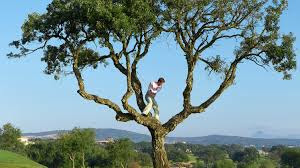
 Many of my friends and acquaintances play this strange game which requires them to buy lots of gear and lump it around for an hour or two, chasing a strange little dimpled ball that doesn't bounce very well and is easy to lose. 

 Some of them have even spent an arm and a leg on battery-powered mobility devices which remove the only rational reason to play the silly game - that of getting some exercise. I played golf once - or to be more accurate a couple of times. 

My eye-hand coordination has never been great and combined with clubs that are too long, a ball that is too small, and a tiny sweet spot on the end of said club, it's not my game. 

 The last time I played a round of golf (I think it's called a "round") was in Mount Isa in 1994. There used to be a pretty good course in the Isa, kept beautifully green (if a little on the nose) by recycled sewage. They have a website, so it's still there. 

The occasion was the North-West Region Principals' conference and the three-day formal proceedings were rounded off with a golf competition. I attended in my capacity as a member of the regional administrative team and was expected to front up at the clubhouse like everybody else. I cast around desperately to find an excuse to give the competition a miss but was unsuccessful. 

Given that I was the first to tee off, and did so in front of the assembled principals from all North-West schools, I was determined to avoid an air swing. In that I was successful. Club struck ball with a satisfying "thwack", and the ball went straight down the middle of the fairway. Unfortunately, so did the club (It was called a "driver" by the way - I know this stuff). It was a warm afternoon, and my hands were sweating. The driver did a slow and graceful loop and finished up a few metres above the ground in a eucalypt. I can't actually remember where the ball finished up, but I got a round of applause when I climbed the tree and retrieved the club from one of the lower branches. 

 I had hoped the incident (witnessed by about thirty people) had been forgotten. 

Not so. 

When I was appointed to a principal's job in Toowoomba in 1996, I continued to attend principals' conferences. At one, (in 2003 from memory) I was greeted by a colleague who like me, had made the journey south and was now working in Dalby. 

He greeted me with "Gidday, Bob - How's the golf?" This was nine years after the event. I had obviously made a deep and lasting impression.

 I did play golf a bit in the North-west. Night golf at Windorah was interesting. The wallabies come out at night, and even though the ball was visible on account of a little glowing plug inserted through it, the wallabies weren't. 

I can't remember what the penalty was for a wallaby strike...

Comments closed.

Thursday, 1 April 2021

Review - The Korean War - Max Hastings


It's been a while since I did a book review, so here's one to compensate that small piece of neglect.

Once you've read one of Hastings' books you've read them all, when it comes to his writing style, but his grasp of both the broad sweep of history and the minutiae of the individual's experience of it is unrivaled.

I guess when you've been writing successfully about war for as long as he has, you've probably mastered the art of contextualising personal experience with epic historical conflict.

He traces the origins of the conflict, the progression of both the UN forces' advances and retreats, and the impact of the conflict on the participants. He provides some interesting and relevant commentary on the connection between the Korean war and events later in other parts of southeast Asia and asks (rhetorically) whether anything was learned from the stalemate in Korea.

My knowledge of the Korean war was pretty sparse, and reading this has put a great deal of the origins of later conflicts in perspective. An understanding of the background of the political atmosphere in the USA, especially as it related to presidential elections is important. It is relevant to note that in February 1952, Truman's approval mark stood at 22 percent. This was the all-time lowest approval mark for a sitting U.S. president, though matched by Richard Nixon in 1974.

He describes the performance of the Eighth Army during the winter of 1950 in a chapter called The Big Bug-Out, in a narrative that put me in mind of the morale of the Americans in Vietnam in 1970, when draftees  (mostly) were fragging their NCOs and officers at an alarming rate.

Hastings interviewed many combatants on both sides, pointing out that he had to take anything he heard from the North Koreans or Chinese with a grain of salt, because of the propaganda involved, but the honesty of many of the British and Americans involved is revealing. Again, there is a thread common to both Vietnam and Korea in that many of the fighting soldiers were honest about their lack of commitment. Many of those involved were conscripts.

President Truman had reinstated the draft in 1948,  and the new Selective Service Act provided for the drafting of men between 19 and 26 for twelve months of active service. In 1950 the Korean War draft called up men between the ages of eighteen-and-a-half and 35 for terms of duty averaging two years. Men who served in World War II did not have to sign up. 

The British National Service Scheme also meant that conscripts from the UK fought in Korea, notable amongst them Michael Caine. 

Hasting's research is comprehensive and his word portraits of those he interviewed are engaging. He also exhibits a direct and impactful narrative style that maintains the reader's attention.

Do yourself a favour and get a copy, or rock up to your local library.

Comments closed.


Monday, 29 March 2021

Inspirational People (3)

Not the lad in the story


Quite a few decades ago, I was responsible for a special school in a provincial city. It had an enrolment of about 70, 30% of whom were children with severe autism.

The remainder of the children attending had severe and profound intellectual and physical impairments. The combination of children with severe autism, who were generally mobile, and children with severe physical impairment, who were not, was challenging in terms of management. We got around the problem of keeping children with no mobility and protective behaviours safe, in a population of children with autism, a few who were physically aggressive, by a combination of careful grouping and staff allocation.

Unfortunately, the staff allocation which operated at the time was insufficient to maintain an adequate number of supervision hours to maintain safety, so we used the school budget to fill the gaps. We were what was called a "self-managed" school which meant we had the discretion and ability to do this. We simply purchased extra teacher aide hours out of the school budget and employed people to provide additional supervision.

One lad with autism needed one-on-one aide support the whole time he was at school. Without it, he was always at risk of running away (which was dangerous, but usually manageable) or harming other children (which was also dangerous, but with a fit and agile teacher aide - usually male - also manageable).

The school budget provided this for the first four years of his attendance. At the beginning of the fifth year, after constructing a budget, it was quite obvious that the funds were simply not there any longer, because of a range of reasons which had nothing to do with managing students with severe autism and were based on state Treasury allocation guidelines.

This lad was in the care of his father, as his mother was no longer on the scene for reasons not relevant to this situation. The dad worked full time in a physically demanding occupation, had a carer employed by a charity to fill in the gaps before and after school, and organised his life around the demands of total care for the lad which involved keeping him safe (locked in) at night, feeding him, bathing him, and providing everything necessary. Respite was never available, and I often wondered how he maintained his sanity and usually cheerful demeanor. School provided his best and only respite, and it looked as if this was no longer going to be possible. To make the budget work, we would have needed to restrict his son's enrolment to four days per week, which meant that the dad would have to leave his employment, which was rigidly five days per week. This was not a tenable prospect, but we were stuck for a solution.

I went to talk to one of the management team in our district office about this issue and in the course of the conversation reminded him that I planned to retire at the end of that year. The bloke I was talking to, a person of long and varied experience and a lateral thinker (unusual for someone in his position) went quiet for a minute and then asked me if I had ever worked as an AVT (Advisory Visiting Teacher). I had, many years ago in the mid-seventies, and I reminded him how much I had enjoyed the work.

He had a different problem he was trying to solve, that of finding someone with the requisite skills and experience to work as an AVT in the western end of the region. The job was itinerant and required many overnight absences from home, which was the major reason he was having problems filling it.

I had enjoyed that work in the past, and absences from home were not going to be a problem for my family, as our children were adults, and all but one had left home. In that sense I was a good match - but who would do my job during my absences, which would amount to one full week per term? My suggestion was that I ask for expressions of interest for acting principal from senior teaching staff during my absences, and when the person was selected, take the whole proposition to the school P & C for their approval. If they were OK with it, the entire (AVT's) salary would be allocated to the school budget and used to purchase teacher aide hours to allow full-time attendance for the lad with autism. You can buy a lot of teacher aide hours with a teacher's salary.

To cut a long story short, the P & C were OK with the proposition, we had a number of teachers interested in acting as principal for the time required. One was appointed and I began to work as an AVT for the specified period. The aide time was applied, and the lad in question was able to stay full time at school, and his dad kept his job. In other words, it was a win all around.

The inspirational person I'm writing about was obviously the dad concerned, but the EQ bureaucrat who came up with the innovative proposition was, in the world of educational administration, also pretty inspirational.

As a footnote to this story, after a break at the beginning of retirement in which I wrote my memoir, I returned to the AVT work and continued it until 2017, until age caught up with me.

I actually failed retirement at the first attempt.

Comments closed.

Saturday, 20 March 2021

Self-Pic


 I've been blogging for years, now but have never posted a current pic.

To please the lurkers, I'll remedy this today.

Only complimentary comments will be posted.

Friday, 19 March 2021

Inspirational People (2) - Dr Geoffrey Swan OAM


Image courtesy Northern Star

This tribute is to Geoffrey Swan. 

Geoff had a distinguished career in Special Education, and I was one of many whom he inspired to make a career of this work.

He was truly a pioneer in the field, and pre-eminent in the education of children with cerebral palsy in Australia. He was awarded an OAM in 1987 for services to children with special needs.

My parents knew Geoff before I did. He was appointed (from Teachers' College, I think), to the small school at Carmila West in Central Queensland in the early fifties. Geoff was a young single man living in fairly isolated circumstances, so my parents, both teachers at Carmila about 7 kilometres to the East, took a supportive interest in him. Geoff at that time had no car (and could not drive).

He was a frequent guest on Sunday evening dinners at our place, and my father would collect him from his lodgings (he boarded with a woman he called "the merry widow") and return him, down a very rough gravel road in our Austin A40, at the end of the evening.

Apparently, he used to put me on his shoulders and carry me around, but at age three or four at the time, I have no memory of this. 

My first memory of Geoff is of a visit I made as a student teacher in the late sixties to what was then called the State School for Spastic Children at New Farm Brisbane. Our visit coincided with Geoff's return to the school as principal from a visit to the UK as part of his award of a Churchill fellowship. Our bus pulled up just as he arrived, and every single child who could (many were in wheelchairs) rushed to greet him. He was obviously loved and respected by the children, and this memory has stayed with me.

In the ten months I spent in Vietnam in 1970, my father used to mail me copies of the Education Office Gazette, which contained notices of vacancies in various schools all over Queensland. In December, I saw an advertisement for teachers in special education and I made a general application. My motive was not driven by any interest in teaching children with disabilities, but by an understanding that special schools were generally located in the cities, and I did not want to follow my father's career path which had seen him transferred all over the backblocks of Queensland before he became senior enough to land a big school in an urban environment.

Whilst it never became explicit, I'm pretty sure that my appointment as a teacher to the State School for Spastic Children was largely on a recommendation from Geoff. Apparently, there was a shortage of males in the field at that time.

I was thrown in at the deep end of teaching students with disabilities, but Geoff was an enormously supportive principal. I remember not receiving a paycheck after the first two weeks in the job, which put me in a spot of bother. The department had somehow mislaid my file during my two years in the army. I had bought a car, placed a bond on a flat, and bought clothes, etc to set myself up for my new career. I was broke.

Geoff hounded pay section in George Street, which led to a payroll clerk driving from the Treasury building to the school at New Farm, and presenting me with a manual cheque, something unheard of at the time. Geoff had the happy knack of bulldozing bureaucracy.

He used this knack to improve the quality of life, initially of the children at his school, and later as an Inspector working statewide with students with disabilities. The school at New Farm had toilets on the verandahs which resembled refrigerators in the colder months. Geoff had, for some time, unsuccessfully pestered the then Public Works Department to install wall heaters in the cubicles. Eventually, he became so exasperated on a particularly cold day in August when the westerlies were blowing, that he invited the local works superintendent to the school. This bloke was surprised to be invited to remove his trousers and sit on one of the toilet pedestals for ten minutes. The heaters were installed the following week.

As I moved around the state as a principal, Geoff was always there in his role as Inspector. He showed no fear nor favour, and if I stuffed up, he would tell me in no uncertain terms. In discussion with my colleagues through the years, I learned that he operated this way with everyone.

He retired in 1987 but continued to maintain a strong interest in the field, completing his PhD on the history of Special Education in Queensland (from Segregation to Integration) in 1996.

A few years before he died, the local Special Education Association held an annual dinner. As a previous office-bearer in the association, I suggested to the organisers that we invite Geoff to the dinner as a guest speaker. Unbeknownst to me, the comedian Jamie Dunn was engaged to provide light relief.

I collected Geoff from his home in Bardon and drove him to the dinner. Jamie Dunn did his gig, and shortly after Geoff rose to speak. He had everybody in stitches by the end of his address. He got more laughs than Jamie Dunn, who is a very funny man.

Geoff died a few years ago, predeceased by his wife Doris, who was one of the most charming and gentle people I have ever known. As my mother used to say "As God made them He matched them".

Geoff Swan made a tremendous contribution to the lives of children with disabilities in Queensland, and he was an enormously positive influence in my life. Thousands of other young and now not-so-young teachers would say the same.

He was indeed inspirational.


Comments closed.
Kerry O'Brien's Thea Astley Address

  Image Courtesy The Echo Kerry O'Brien's Thea Astley address at the Byron Bay's writer's festival on Saturday 15th August i...