Wednesday, 29 January 2025

Harry Smith's Story


I've just finished reading Harry Smith's Long Tan - The Start of a Lifetime Battle, and found it hard to put down.

Harry Smith was the commander of D Coy 6RAR during the battle of Long Tan in August 1966. Despite the title, his book covers events prior to and after the battle, as well as his own account of his company's ordeal when it defied an estimated regimental attack from main force NVA assisted by local elements of D445.

The book has the flavour of an exercise in setting the record straight, and he pulls no punches describing the intelligence failures that led to the encounter battle, the incompetence of senior task force commanders, and his conflict during the heat of battle with these same commanders in getting the artillery support he needed for the survival of D Coy.

Smith (who died in 2023) was a soldier's soldier, and disinclined to suffer fools gladly, especially when it came to the allocation of honours and awards for his soldiers. He spent the remainder of his life post Long Tan fighting for justice for the members of D Coy who were denied awards because of the quota system that operated at the time, and for many years post Vietnam.

Because there was a ceiling placed on the number of decorations to be awarded, senior commanders who experienced the battle from their command posts safe behind the wire at Nui Dat received honours whilst the soldiers under fire for hours had recommendations rescinded. Smith did extensive research for years, especially after the thirty year rule revealed the correspondence relating to these awards.

It makes pretty shocking reading, and it obviously motivated Harry Smith to fight for his men until the situation was largely remedied in November 2016, representing the culmination of a fifty year battle.

Smith's commentary on the human costs of the war makes interesting reading. One example - 

Whilst I have always been deeply saddened by the loss of the 18 young men in a battle that should not have happened in a war we could not win, and as well, the 521 men who gave their lives during the Vietnam War,  I must say now feel too for the families and loved ones of those young enemy soldiers we killed. Many of these soldiers were just teenagers.  (p187).

Apart from the remarkable narrative of Smith's battle for his soldiers, this book provides an amazing insight into the way the Australian military is organised, and the difficulties experienced by a career soldier attempting to maintain a stable family life. Again, Smith's honesty shines through, and he is quite frank about his failed marriages.

The book had a special resonance for me, as I have been to Long Tan twice, and went to school with Frank Topp, who was killed in the first few minutes of the battle. He was a local, and I got to know his mother before she died a few years ago.

My first sight of Long Tan was in April 1970 when we used a site near the rubber as a forming up point before we set out along the dry bed of the Suoi O Lo Nho on a night company move into the AO of our second operation.

The second time I was there was in March 2006 on a tour with my sons and a group of Vietnam veterans, most of whom were ex 8RAR.

The second visit was much more pleasant than the first.

Tuesday, 21 January 2025

Arrogance


Image courtesy Vanguard News

Unbridled arrogance, gentle reader, has always been a feature of modern American culture.

I saw it first hand in 1970, and it was one of the reasons they "lost" Vietnam. 

Vietnam wasn't theirs to lose in the first place, of course, but that is a minor detail.

They fought what the Vietnamese call the "American War" without any understanding of the country or respect for its inhabitants. 

They weren't prepared to listen to anyone, especially the commonwealth forces who successfully defeated the communists in Malaysia.

Perhaps the best account of this from an Australian perspective was documented in 1985 by Hugh Lunn. His Vietnam, a Reporter's War is a great read, and his observations are exactly as I remember them. (959.704332)

Trump, displaying this arrogance, has attempted, using executive order, to change the name of the Gulf of Mexico. He can only change what the USA calls it, of course, because it's a stretch of international water whose naming rights are shared by the USA, Mexico and Cuba.

The executive order changes (through the US agency Geographic Names Information System) what it is called in the USA, but there is an international body (The International Hydrographic Organisation) which standardizes what it is called worldwide.

Trump has no jurisdiction over the IHO.

I sincerely doubt he has ever heard of it....


Monday, 13 January 2025

Oh Canada!


Pic courtesy Rosa Miranda Sauret

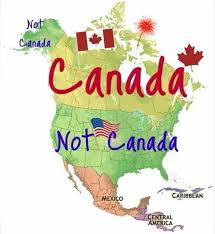
In the light of Trump's recent postings on social media about Canada, it's worth recalling, gentle reader, one significant historical element of US-Canada relations.

I'm writing, of course, about the tens of thousands of draft dodgers that travelled north to Canada during the war in Vietnam, between 1965 and 1975.

One estimate puts the number between 30,000 and 40,000. 

What is interesting about this history is that it seemed to have no effect on US-Canada relations. When you think about it, that appears odd. After all, the northern escape continued unabated for ten years, and these men whether they were draft resistors or deserters, were clearly in breach of the law in the USA.

Yet Canada accepted them as immigrants and made no attempt to determine their reasons for crossing the border. This turning a blind eye arrangement was accommodated by both Canada and the US, and it's interesting to consider the reasons for this.

One rationale is that the USA had much greater concerns when it came to international relations in general and relations with Canada in particular, so long as the number of war resisters could be contained, and they didn't want to rock the boat by making an issue of their treatment.

Strangely perhaps, draft and military offences were not included in the Canada-US extradition treaty. Basically, even if the US authorities had wanted to take action, they could do nothing providing Canada accepted these young men as immigrants, and indeed Canada did.

In any event, President Gerald R Ford granted an amnesty programme for draft evaders in September 1974, requiring them to work in alternative service occupations for periods between six months and two years.

Later in 1977, Jimmy Carter fulfilled a campaign promise to pardon any draft evader who requested one. I have no idea how many took advantage of this, although a figure of 556 is floating around in the archives.

This 2018 Canadian study (in French and English) by Luke Stewart provides useful background.

My only comment about Trump's offer would be that whilst travelling, I have mistaken a Canadian or two for an American and received a thorough telling-off for doing so.

One young woman said "That's the worst possible insult you could offer any Canadian! The basis of our identity is that we are NOT American."

Thursday, 2 January 2025

Should we be Very Afraid or Simply Vigilant?

Darwin Harbour - Managed by the Chinese

During the last week, gentle reader, I came across a number of Youtube discussions about our relationship with China.

Watching these provided a way of filling in the time across lunch and tea breaks during the Boxing Day test in Melbourne. Test cricket is, after all, a quasi-meditative activity, and the breaks in play are too brief to allow the beginning of any new task.

Whilst the computer screen is handy, you might as well put it to good use.

I've always been fascinated by what is perceived as a resemblance between events between World Wars One and Two in relation to the India-Pacific region and the situation now in 2025. Mark Twain had something to say about history which is relevant.

Back in the late thirties, we had an emerging power in Imperial Japan, an isolationist USA, and an Australia that was ill-prepared for conflict.

These days, we observe an emerging great power in China, a President-elect of the USA who loudly uses isolationist rhetoric and an Australia that is once again, ill-prepared for conflict. 

Obviously, the situation is much more complicated than that, and I am supremely ignorant of the art and science of military preparedness, but I certainly don't want to see the mistakes of the past repeated. 

The first three discussions deal in turn with whether China is a military threat, what we should do about it, and two fairly similar viewpoints regarding the current situation. The last is included as a piece of devil's advocacy.

The first piece is an address by Peter Jennings AO presented by the Institute of Public Affairs. He has a distinguished career in the field, specialising in strategic policy, crisis management, international security and foreign policy. He was until 2022 the executive director of the Australian Strategic Policy Institute. It is fair to note that both Jennings and the IPA adopt generally conservative positions on most issues.

 Jennings has a a lot to say, but in summary, he advocates building up deterrence, and seems quite convinced that the Chinese will move against Taiwan by 2027. He also points out that AUKUS is irrelevant, as it is simply too far down the track, even if everything goes to plan. He also assumes that the USA will continue to want to be involved.

I simply don't share that last sunny assumption. 

Michael Shoebridge is the Director of ASPI's Defence, Strategy and National Security Program. He describes how we might quickly develop that deterrence capacity. He references Ukraine, the Middle East, and the asymmetrical conflict involving the Houthis and the US Navy in the Red Sea. Unlike Jennings, he's not so sure that the Americans will have either the capacity or the will to become involved in our near North.

Where Shoebridge makes sense to me is when he advocates the use of drones, and the rapid establishment of local capacity to manufacture quantities of low-tech cheap weapons that can be replaced to meet attrition. The capacity to provide the necessary hardware to sustain prolonged conflict is vital, as the Japanese discovered between 1940 and 1945. 

A discussion that neatly ties the issues together is this interview conducted by David Speers from ABC Insiders late last year with Mike Pezullo and Sam Roggeveen. Again, they repeat a view that conflict looms, but can be avoided. Pezullo is prepared to put the risk of war as a percentage, which he concludes is 10%. Roggeveen makes the very good point that Beijing is closer to Berlin than Sydney, and questions why we need submarines that effectively shrink that distance. 

The final video is puts an argument that Australia's own military-industrial complex is what drives the media's fixation with China, and governments of both political persuasions are complicit in maintaining that fixation. I'm not sure I agree with Boreham, but some of what he says resonates with my own experience as a conscript involved in a tragic war in SE Asia driven by the politics of fear.

I wouldn't want that episode repeated.

You, gentle reader, can make up your own mind....

Sunday, 22 December 2024

Broadcasting Vs Narrowcasting

Andrew Olle (Pic courtesy Australia media hall of fame)

The other day, gentle reader, I listened to the Andrew Olle Memorial lecture, given this year by Fran Kelly.

It was an excellent address, and coincided with the ABC's online platforms releasing a major restructure of their news and information offerings. One of the features of this reorganisation is the capacity for consumers to tailor content based on their interests.

On the face of it, this would seem to be a great way to develop and maintain an audience.

But after listening to Kelly's address, I began to consider a downside to this capacity of consumers to narrow their choices, based on her concept of a shared audience. Reflecting on her seventeen years of breakfast radio, she described the great sense of community that develops around broadcast radio.

She talked about the variety of listeners, the early morning joggers, the tradies on site setting up a job, the parents driving the school drop, the farmers on their harvesters, and the retirees enjoying a lie in, as participants in this community.

She's right, of course, as live radio is a medium that (unlike this one) allows you to move through your daily tasks whilst maintaining your participation. 

You can flick seamlessly using whatever app works, from mobile phone, to car audio, to radio, without the listening process interfering with the task at hand.

I thought about that against the context of the new ABC online platform which allows you to concentrate narrowly on your own set of topics, and wondered what that would do to the sense of a shared community embedded in broadcast radio.

Surely, there will be a trend from broadcasting to narrowcasting (if such a word exists), which is anathema to community.

This move by the ABC is no doubt directed by a belief that the national broadcaster is competing with the other networks for the listener's ear. I'm not sure it is, and whether a redevelopment of the platform will make any difference. 

Frankly, I believe the people determining the future of the ABC should listen to the parts in her address dealing with the threat of misinformation to the listener, and spend time and money on combatting that.


Otherwise, the prediction given in her address that within five years 90% of what is posted on the internet will be AI generated fakery*, may well come to pass.


*see 41.20 in the address.


Friday, 13 December 2024

Crime, Punishment and Politics


Image courtesy Brittanica

Recent elections in Queensland and the Northern Territory have seen a change in government based on policies that are tough on crime.

These policies were reduced to three or four word slogans, such as "Adult crime - adult time" in the case of Queensland, and three point programmes - "Reduce Crime; Rebuild the Economy and Restore our Lifestyle" in the case of the Northern Territory. The Country Liberal Party in the Territory is slightly more expansive in their use of the English language, but it's pretty simple stuff.

So, gentle reader, let's follow the KISS* principle, and keep it simple.

The simplicity ought to mean that if children are locked up for serious crimes in both jurisdictions, the crime rate should fall. Now that is a prediction, and not a certainty. To discover whether or not the action of jailing children lowers the crime rate, it's necessary to look at statistics.

Amongst the many learned articles available on Google Scholar on the topic is an international study. It found that there is no consensus on the impact of the criminal justice system on criminal activity, but that increasing the risk of apprehension and conviction is influential in reducing crime. It's a very detailed study and looks at statistics from a range of locations including California and New South Wales, but found no evidence that an increase in incarceration rates reduces crime.

That conclusion is arrived at by the research over and over again. Having said that, there is a correlation between effective policing and the crime rate.

What to me is significant is the role of the media. Stories about home invasions, street stabbings and random violence invariably attract attention. Reports of domestic violence are not so attention grabbing, although statistically more people (men women and children) are harmed in these latter circumstances than the former.

These media reports enhance the fear narrative used by politicians to seek and hold power, but there is no reason to believe that punitive measures increase public safety and the quality of community life.

Maybe it makes sense to compare recidivism rates across various jurisdictions, identify those countries with the lowest rates,  and examine the practices that reduce recidivism. Currently, Norway has one of the lowest recidivism rates worldwide (20%) which compares with the USA which has both one of the highest (68%) and shares with China and Turkey the highest incarceration rates. This map is instructive.

Incarceration rates worldwide (the darker the higher) - courtesy  Wikipedia

The countries with the lowest recidivism rates are Iceland, Finland and Norway. Maybe we should look at their practices. The Scandnavian option is deccribed here.  What is statistically clear is that getting tough on crime simply doesn't work, whereas prison reform does.

That is, unless you want to use it as a scare tactic in an election. In that context it seems pretty effective. It does nothing for your constituency, but it does get you elected.

*Keep It Simple Stupid

Friday, 6 December 2024

What Price Sovereignty?


This photo of a Chinese made shirt is a reminder, gentle reader, of the profound changes in our relationships with the rest of the world that have emerged in my lifetime.

When I was growing up in the fifties (yep - I'm really old) most of the clothes I wore were made in Australia.

Back then the rag trade was well established locally. 

In Sydney, for example, there were nine thousand (mostly women) working in clothing and tailoring, over four thousand in dress and hat-making, and about eight thousand in shirt making.

Today, if all clothing made in China, Bangladesh or Vietnam vanished overnight, there would be a lot of naked Australians wandering about.

Then there's motor cars. My first memory of our family car was a  green 1952 Austin A40.


Our A40's number was Q484451.

Then there was a Vanguard Spacemaster. 

Our Vanguard. Rego was Q645324 (rear only).

Both these were British imports, but by then an Australian industry had developed on the heels of Ben Chifley's push for local manufacturing, and later we owned a series of Australian made Holdens.

My first non-Australian made purchase was a Renault, but since then I've been buying cars from Japan or Korea. The coalition government pretty much chased local manufacturing away in 2013 because it was ideologically opposed to both unionised workforces and supporting local manufacturing, and there hasn't been a local industry since.

The same phenomenon has occurred in the full range of manufacturing industries, to the point where not very much is made here. We have become a country where we confine ourselves to digging minerals up and exporting them, only to have them converted to manufactured goods offshore which we then buy as imports.

Manufacturing contributes only 6.3% to Australia's GDP, and export earnings through manufacturing are 11% of the total. Only 6.8% of the Australian workforce is employed in manufacturing.

We are almost entirely relying on imports to maintain our lifestyle. This is perhaps not a large issue, except that opportunities for careers in the sector have shrunk, but I find the fact that we are almost entirely reliant on imports for vital commodities such as transport fuels pretty alarming.

Australia holds about a month of fuel supply onshore. Under International Energy Agency rules, we need to hold 90 days in reserve. We do, but most of that 90 days worth is actually tanked overseas!

Perhaps I'm succumbing to some kind of nationalist paranoia, but I find these facts difficult to accept. We seem to have forgotten our recent history.

Perhaps the election of an avowedly isolationist US administration will encourage us to take a look at our national sovereignty. 

We are, let's face it, on our own.

Kerry O'Brien's Thea Astley Address

  Image Courtesy The Echo Kerry O'Brien's Thea Astley address at the Byron Bay's writer's festival on Saturday 15th August i...