Monday, 16 October 2023

Australia, the Nation with a Hearing Impairment

Image courtesy Depositphotos

Now that the referendum is done, gentle reader, it's time for an analysis - or maybe a post mortem.

The proposition was dead from the day that Littleproud, looking over his shoulder at the 5% of PHON voters that stalk the Nationals in Queensland, scurried away from the idea like a rabbit on the run.

This left Dutton with the possibility of blowing up the Coalition agreement if he supported the "Yes" case, and although many in his party were supportive, he also took the coward's option.

From that moment, given the history of referenda lacking bipartisan support, the enterprise was doomed.

The disinformation spread on social media by the keyboard warriors didn't help, but probably wasn't a decisive issue. Disregard, complacency, and general disengagement were complicit. Unfortunately, much of the casual nascent racism that persists on the edges of our culture emerged in this media. Some of it was also apparent on what is called mainstream media.

We used to have a saying in Vietnam - "Thumb in bum - brain in neutral". It was applied to soldiers who had become so complacent, patrolling in a "switched-off" state of mind,  that they were a risk to themselves and other soldiers.

This complacency exists in perhaps half our voting population. If they're not affected, they really couldn't care less. The same cynical political principle applied fifty years ago when 1/12 of twenty year olds were conscripted to fight overseas in a civil war in peacetime. Despite that fact that the policy was morally bankrupt and anti-democratic, it persisted for about ten years until Australian voters woke up.

So that's the "why". 

Let's look at the "what".

First up, indigenous Australians were supportive. This is evident when you examine voting patterns in the remote mobile booths in Lingiari, and on Palm Island. Mornington Island, Hopevale and Yarrabah showed a similar pattern.

Secondly, the electorates that the Coalition lost in 2022 to Green and Teal independents voted solidly "Yes". This means that voters in these electorates are feeling more than a little aggrieved. What are the odds that they will return to the Coalition next federal poll?  

Dutton may have begun a journey towards the complete demise of his Coalition.


Update - This map of the voting patterns in indigenous communities gives the lie to the statement from Jacinta Price that they didn't support it. 


Friday, 6 October 2023

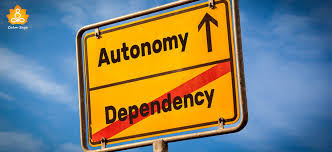
Autonomy


There are a number of different dictionary meanings for this word, gentle reader.

They include "freedom from external control or influence", or "the power or right to act, speak or think as one chooses", or "the state of not being subject to or affected by something".

To me, the vital element of true autonomy lies in an individual or society's capacity to control, manage, develop and/or improve quality of life. 

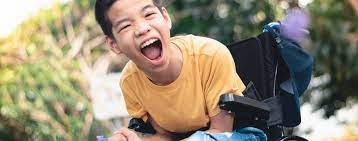
This element is particularly vital to people living with disability. In that case, personal autonomy is often dependant on the capacity to live without relying on others. Of course, for many the disability (which could be related to age or physical impairment) makes it impossible to get by without some form of external help, and the way in which this help is applied can make all the difference.

In other words, true autonomy means that the person being helped is in control and has the power to choose what kind of help is most useful and important. He/she should always be in charge.

And this is often when, with the best of intentions, it breaks down. By that I mean that well-intentioned people, often paid to help, will almost subconsciously begin to exert power and control over the individual or group. Once this happens, the relationship between the those being helped and those helping becomes a co-dependency. 

This is unhelpful, and creates a situation which prevents any growth or development on the part of the dependent group or individual. This is what Noel Pearson often talks about. At the root of it all is resistance to the transfer of power from the helping agency to the target group, or individual.

And this, gentle reader is the main reason behind the lack of progress in improving quality of life for people in remote communities, indigenous or otherwise, and is what the Voice is all about.

Opponents of this transfer of power are often not aware of this issue, and are fearful of a change in the status quo.

Now I have often been admonished by Murris when I point out a similarity between the plight of people with disabilities, and people in remote communities, but I'd always insist there is a valid case to be made that the problem is about a transfer of power. 

Until these people gain control of their own destiny, nothing will change. 

Will the Voice achieve that?

I don't know, but it's a good place to start...


Saturday, 30 September 2023

Same Old, Same Old...


Pic courtesy Montrose Services

The Disability Royal Commission has just released its findings. 

There are over two hundred recommendations. Enacting them will be a monumental task. 

The last Royal Commission with as many recommendations as this one was the 1991 inquiry into Aboriginal Deaths in Custody. 

Of *RCIADIC's 339 recommendations, a Deloitte Access Economics review in 2018 found that, 64% have been implemented in full, 14% have been mostly implemented, 16% have been partially implemented and 6% have not been implemented.

It's to be hoped that twenty-seven years down the track, the disability royal commission has a better outcome.

Somehow, although I won't be around to see it that far down the track, I believe that the result for people with disabilities will be similar to that for indigenous people in custody.

I write this because everything I saw in my 40 year career in special education points in this direction. Ironically, the five years I spent in aboriginal education in remote North-West Queensland confirms it.

Both are areas of enormous challenge, and both are shaped by the general population's disregard, sprinkled with a fair amount of fear and ignorance.

It is dismaying to note the disagreement about recommendations for the future of both special schools and group homes reflected in the findings. The commissioners were divided.

It's profoundly depressing, that in the year 2023, we are stuck in the worn out debates about provision, with the argument cycling around binary concepts, of one style of organisation opposing another.

Here's a simpler solution. All schools should be special schools, and all accommodation universal. By that I mean that the lock-step, highly graded and hierarchical organisational structure of conventional schools doesn't really suit anyone, let alone students with disabilities. 

Schools should be ultimately flexible, and organised around the learning needs of the enrolment, not the classroom spaces and timetable. It can be done, and has been successful. The Australian Institute for Teaching and School Leadership has released a paper that is well worth a read. 

State governments in this country are generally responsible for schooling, and I can't see any of the current governments with the requisite courage and foresight to change the fundamentals. This is, of course, because governments are run by politicians, not teachers, and education is one of the most politically sensitive aspects of government. It was ever thus...


*Royal Commission into Aboriginal Deaths in Custody


Comments closed.


Friday, 22 September 2023

The Story of Thomas Samuels


Pic Courtesy AWM` 

Thomas Samuels was an indigenous man who attempted to enlist in the AIF at Innisfail in October 1917. 

This post from the AWM tells the full story, and reminded me, gentle reader, of the indigenous men I had the privilege to serve with in 7RAR in Vietnam.

 One was WIA* when we hit bunkers in April. He was returned to Australia and died in Alice springs in 1992. The other is living in South Australia. 

This surviving digger remains one of the funniest men I have ever known. 

He was interviewed in 2005 ago by the State Library of South Australia. It's worth a listen. 

The unfortunate part of this story is that Thomas Samuel's experience was far from unique. Many indigenous men shopped around from depot to depot until they found one that would allow them to enlist, and went on to serve. 

It also demonstrates the disrespect held for our indigenous Australians back then. Aboriginality was classified on his documents as a disease. 

Not much changed between 2017 and 1965. Many indigenous men who were called up in the second national service scheme were treated with similar disrespect. The bottom line was that the Department of Labour and National Service really wasn't sure of their status.

Unfortunately much of that disrespect remains as can be seen by what is appearing on social media.

Read it and weep.


*Wounded in action


Comments closed.


Sunday, 17 September 2023

The Ugly Underbelly


A cartoon doing the rounds in the first conscription referendum over 100 years ago.

There has been recent media accusing proponents of both sides of the Voice debate of racism.

I decided to do my own investigation of what's appearing on my feed over the last few weeks. I almost wish I hadn't.

Below are a collection of posts that appeared in a group supporting the "No" case. 


This is just one day's collection.

I won't attempt to categorise them, but as you can see, gentle reader, they encapsulate the stereotypes and cliches that are held by some of the "No" supporters.

Now I'm not suggesting that the "Yes" supporters are all sweetness and light, but these tropes (aborigines are violent, greedy, lazy and wasteful) don't appear on their supporters' pages.

The accusations of cruelty and violence are interesting put in the context of the colonial practice in the UK of hanging drawing and quartering at the time. It wasn't until 1870 that it was abolished.

If, as appears likely as this is written, the referendum goes down, it may deliver outcomes that Dutton and Littleproud may live to regret.

George Megalogenis explains it pretty well in this podcast.


Comments closed.


Sunday, 10 September 2023

Boundaries


Pic courtesy News.com

This is another post which references the Voice, but is more about the history. 

I've lived all over Queensland, and every reasonably sized town that I've known has a Boundary Street or Boundary Road. That includes Rockhampton, Townsville, Toowoomba, and of course, Brisbane. 

Try entering "Boundary St" or "Boundary Rd" into Google Maps, and see how you go.

I've never really wondered why this was the case, but recent reading has revealed some interesting (and harrowing) history. 

These streets and roads mark out the perimeters beyond which indigenous people were not allowed to venture at night during the week or on Sundays. They were common in Queensland towns and settlements and were usually marked by a wooden post (boundary posts).

In Brisbane, since the early 1850s, Aborigines had been allowed into the town during the day, but could be driven out by the police using regulations that came into force about that time. 

They were allowed to come in beyond the boundary during the week where they performed menial tasks in exchange for tobacco, flour and other rations. By the 1870s, organized groups of police would round up any aborigines inside the boundary and used stockwhips to move them out. They would be removed to camps on various watercourses in Dutton Park, Fairfield, Annerley and Coorparoo.

Strangely, in a mid-twentieth century reprise of this process, the boundaries were reinstated to keep African-American servicemen on the "correct" side of the Brisbane River. White Americans were allowed on the north side of the river, but the blacks were expected to confine themselves to the south. This was one of the situations which triggered the famous Battle of Brisbane on 26th and 27th November 1942, when an Australian soldier took exception to an American Military Policeman's attempts to arrest a black soldier with whom he had been drinking presumably because he was on the wrong (north) side of the river. 

The MP used his truncheon on the Australian, and all hell broke loose. There had been simmering resentment of the Yanks for months, but race was the trigger.

Given the vituperative nature of discussion about the Voice on social media, it seems not much has changed since 1942.


Comments closed.

Wednesday, 30 August 2023

Review - Our Vietnam War


Image courtesy ABC iView

This ABC programme has been broadcast on Tuesday nights for the last three weeks. It is also available on ABC iView.

It should be compulsory viewing for all Australian high school students, as it offers a comprehensive, factual and unbiased narrative of the conflict. It is also exquisitely made, featuring interviews with historians (some of whom served during the decade of the war), together with ex-service personnel, of both genders, and Vietnamese refugees. The music of the era provides a sound track, and contributes to an understanding of the time.

The interviews with people like Graham Edwards (ex-7RAR, who lost both legs in a mine incident in 1970), Harry Smith (D Coy commander Battle of Long Tan), Ashley Ekins (ex chief historian at the Australian War Memorial), Mark Dapin (author of The Nashos War and Australia's Vietnam: Myth vs History) and a couple of anti-war activists and Vietnamese refugees, provide an unrivalled cross section of recollections and perspectives.

The topic is covered comprehensively, beginning with the history of the French defeat and concluding with the long shadow created by the war in the lives of so many Australians.

I found it deeply moving, and would recommend it.

It can be found on ABC iView.

Here is a link to the trailer.


Comments closed.

Anti-Social Media

  Image courtesy Franchising.com I have no idea why it's called social media. That's deeply ironic nomenclature. A quick glance at t...