Monday, 6 February 2023

The Power of Listening


Pic courtesy NT Air Services

No doubt, gentle reader, you've been reading and hearing about the proposal to insert in our Australian constitution reference to an indigenous voice to parliament.

You've also, undoubtedly witnessed objections to the proposal voiced (excuse the pun) by people usually labelled "Conservatives". 

Their objection is the alleged lack of information about the proposal.

Frankly, it's a very simple proposition - that the elected parliament listens, and when that parliament has formed legislation as a consequence of the usual numbers on the floors of both houses, legislation as a response will follow. The content of those legislative responses will obviously depend on what the Voice recommends.

For the last two hundred plus years, the situation of indigenous communities has not improved. This situation is starkly obvious when you check the statistics.

There are a complex range of reasons for this, but labelling our indigenous brothers as a primitive hunter-gatherer society, one typical Conservative response, is unhelpful. Our ancestors at the time were not exactly paragons of civilized virtue. One thing I learned, when heading up Aboriginal and Torres Strait Islander educational programmes for five years in Northwest Queensland is that non-indigenous Australians don't really know how to listen.

Don't get me wrong, there is no shortage of good intentions in the full range of bureaucracies tasked with helping these communities, but frankly, these well intentioned people don't have a clue. Back in 1992, I was one of them.

I embarked on a very steep learning curve, and one thing I did learn was that listening was essential but neglected. There was no mechanism in the education departmental structures facilitating a process where members of those communities provided advice to the public servants implementing what were expensive programmes.

We set up a group in the Northwest which met on a monthly basis in the various communities in the educational region, and these committees, made up mostly of elders, and mostly of women, examined project proposals put forward by the school sector in these communities, and funded them in order of merit.  

The communities involved were Boulia, Bedourie, Birdsville, Longreach, Dajarra, Urandangie, Camooweal, and Mount Isa. I was often surprised at the order of merit set up by the NATSIEP* group. It was very different from what I considered appropriate, but the group was usually vindicated at the end of the reporting period when we looked at the results.

On one occasion, we had a problem of kids coming and going across the Territory border following funerals and the usual east-west travel patterns. One of the elders suggested we meet with the NT authorities in Alpurrurulam, across the border.

This involved meeting with the Territory people in an old (fortunately air-conditioned) railway carriage at Alpurrurulam, and thrashing out the details. One of the people in the Territory group was Tracker Tilmouth. Because of his name I asked him if he was related to Charlie Tilmouth from my rifle section in 7RAR. It was then that he broke the sad news to me that Colin (Charlie we called him) was his cousin and had died in 1990. Charlie had been RTA'd on 28th April 1970 after being seriously wounded in our bunker contact on 22nd April.

Charlie (Bruce Ravenscroft on left) in 1970
                         Pic courtesy "Contact Wait Out" - Bruce Ravenscroft

 The result of the Alpurrurulam meeting, was a communication protocol with the Territory education authorities that allowed tracking of kids so that they could move seamlessly from one educational jurisdiction to another, with the programme data available in all locations. It worked.

After my experience in the Northwest, it is abundantly clear to me that we need to listen. This notion, of course, turns over two hundred years of interaction on its head, and I reckon this is the problem for the Conservatives.  

I often wonder what Charlie's opinion would have been.


*National Aboriginal and Torres Strait Indigenous Educational Programme 


Comments closed.


Sunday, 29 January 2023

By Their Mentors You Will Know Them


Anthony Albanese (Pic courtesy Parliament of Australia)

One way of looking at the history and conduct of prime ministers in Australia is to consider their mentors.

Let's look in turn at mentors for Tony Abbott, Scott Morrison and Anthony Albanese.

B. A. Santamaria, a prominent Catholic layman, and strident anti-Communist had a strong influence on Abbott. Many of Abbott's cultural views were modelled on Santamaria's proto-Fascism, particularly his opposition to the Republicans and his support of the Nationalists in the Spanish Civil War.

B A Santamaria (Pic courtesy Catholic Weekly)

Abbott wrote a foreword to Alan Reid's novelisation of Santamaria's life (The Bandar Log) in 2015, and launched Gerard Henderson's biography in the same year.

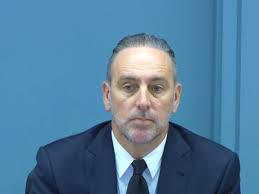
Morrison's mentor was Hillsong Pastor Brian Houston. I write "was" because he has distanced himself from Houston since the latter was arrested on charges of concealing his father's sexual abuse of minors. There were also reports in 2013 and 2019 that he had engaged in inappropriate behaviour with two women associated with his church.

Brian Houston (Pic courtesy The Guardian)

Albanese's mentor was Tom Uren who was Deputy Leader of the federal ALP from 1975 until 1977, and served as a junior minister in the Hawke government from 1984 until 1987.

Tom Uren (Pic courtesy The Australian)

Abbott's mentor was a extreme right winger, and a militant Catholic. Morrison's was a disgraced evangelist. Tom Uren (Albanese's mentor) was an ex prisoner of war of the Japanese who worked on the Burma railway and witnessed the atomic bombing of Nagasaki in August 1945.

The public conduct of these three Prime Ministers is a study in contrasts.

Did this have anything to do with what they learned from their mentors?


Comments closed.


Thursday, 12 January 2023

Pell - Offender or Victim?


Pic courtesy The Australian

George Pell died yesterday in Rome after complications post surgery.

I won't make any comment on his successful appeal to the High Court, and the legal journey that led to that.

I wasn't there, I don't know what happened. Only Pell and his Maker hold that truth.

I can, however, reflect on my minor personal experience with him, and his position in the church in Australia.

Back in 2011, the then Bishop of Toowoomba Diocese, was removed from office after a series of complaints from the Temple Police. I blogged about this situation back in 2011.

I wrote to cardinal Pell protesting Morris' dismissal, and after an interval of six months received a fairly brusque letter from his private secretary. It thanked me for my concern, but claimed that I had been misguided by the publicity surrounding the history. None of the questions I had put to Pell were answered, and the message was clear - mind your own business.

The fact that I was a member of the diocese and that William Morris was my pastor was apparently irrelevant.

Fast forward to the 2018 conviction, the successful appeal to the High Court in 2020, and Pell's transfer to Rome.

Prior to that was Pell's development of the Melbourne Response, the Royal Commission into Institutional Child Abuse, and the public response to the findings. In reference to Pell, they were -

"We are satisfied that Cardinal Pell's evidence as to the reasons that the CEO deceived him was implausible. We do not accept that Bishop Pell was deceived, intentionally or otherwise."

There are a couple of facts of history that will remain relevant to Pell's stewardship and pastoral activity.

First, he was the head of the Catholic Church in Australia during a period when there were literally thousands of cases of clerical abuse of children.

Secondly, he developed an institutional response that initially capped compensation to victims to $75000. The level of compensation was increased during the process to a ceiling of $150000.

Third, he was resistant to any effort to reform the clericalism that was a very significant element of the problem. I learned as a special school principal, that sexual abuse of vulnerable children is a problem of untrammelled power, rather that sexual dysfunction, and whilst that power remains, so does the abuse.

Clericalism in the church has always been about power and control. Fortunately, under the current Pope, there is a slow transformation towards a more pastoral culture, and the power is leaching, at least at parish level, to the laity. There is a long way to go.

Most significant to me was my experience of the required institutional response, in the state education system, that reporting any suspected episode of abuse is compulsory. Failing to report is a criminal offence.The establishment of Suspected Child Abuse and Neglect (SCAN) teams at regional and district level reflects that.

Criticism of the Melbourne Response has always been that it was designed to protect the institutional church, as much as support the victims.

Pell was probably as much a victim of the perpetrators as the children, in that he was unable, given his attitude towards clerical hierarchy, to escape the consequences. His efforts were stymied by the structures he sought to preserve.

However you regard the history, he will be remembered for the positive influence he apparently engineered in sorting the Vatican's finances. His reputation in his own country is much more complicated.

Luke 4:24 writes that no man is a prophet in his own land. 

I wonder if Pell ever had a chance to reflect on that.


Comments Closed.


Monday, 2 January 2023

Yesterday was Australia Day


PUNCH, NATIONAL MUSEUM OF AUSTRALIA. PHOTO: DRAGI MARKOVIC

Here is an extract from the Brisbane Courier of 4th September 1899 - 

Australia is born: The Australian nation is a fact....Now is established the dream of a continent for a people and a people for a continent. No longer shall there exist tose artificial barriers which have divided brother from brother. We are one people with one destiny.

This was one response in the press to the successful referendum on federation held in the then colony of Moreton Bay. 

Previously, successful referenda had been held in Victoria, South Australia, New South Wales and Tasmania. After Queensland, Western Australia followed suit, but only after the Australian constitution had become law in the United Kingdom, although the eventual vote in the west was strongly in favour, with double the number of "yes" votes to "no" votes. It was closer (although earlier) in Queensland, with a slim majority of "yes" of 54%.

The various colonial referenda followed a process which had been kicked off in February 1890, when delegates from each of the colonial parliaments, and the New Zealand parliament met at the Australiasian federation conference in Melbourne. 

The conference produced a resolution which agreed that "the interests and prosperity of the Australian colonies would be served by an early union under the crown".

An economic depression stalled the process for a while, but it was rejuvenated in 1893, and by 1895 had gathered momentum.

After the various votes (albeit in dribs and drabs in the cases of Queensland and Western Australia) popular support solidified, and the actual ceremonial recognition was massive.  

About 500000 people turned out on January 1st 1901 in Sydney at the ceremonial declaration. That crowd size was unprecedented in 1901, and only exceeded in actual numbers by the Vietnam moratoriums in Melbourne in 1970.

There are a couple of bizarre aspects to the celebration of Australia Day now, when considered in the light of this history. One is the depth of ignorance of the average Australian of the federation process. It is simply not covered in Australian schools. If you doubt this, ask any of your school age children to provide a brief outline of how Australia became to be a nation, and how our constitution was developed.

You'll probably hear something about Phillip planting a flag on the sand at Port Jackson in 26th January 1788. Three questions to ask in response could be - Why do we celebrate the arrival of a fleet of ships carrying British convicts and marines on our soil? Weren't they simply setting up a jail? Did any of these people consider that they were establishing a nation?

So yesterday marks the one hundred and twenty second anniversary of the establishment of our nation, based on a series of decisions made freely by Australians voting to set up a constitution and a parliamentary bicameral system of government.

I believe that is worth celebrating. 

Instead, we celebrate the opening of a jail, set up to rid the old country of a bunch of losers that were an inconvenience.

It beggars belief, when you think about it, and that's before any consideration of offence caused to our original indigenous inhabitants.

It's time we moved the date. January 1st is a no-brainer, but if that is considered an unsuitable date because New Year's day is already a public holiday, why not find a significant date remembering an important step in the constitutional process?

The Commonwealth of Australia Constitution Act 1900 was passed by the British Parliament on 5th July 1900, and given royal assent by Queen Victoria on 9th July.

Either of those two dates would work.


Comments closed.


Friday, 16 December 2022

A Clear and Present Danger


Pic courtesy APSI

The brutal behaviour of a couple of ferals from Tara has left a deep scar on our national character that will take a long time to heal, if it ever does.

Apart from the shock most have expressed, and the meal the media (as it always does) has made of it, maybe we should pause and reflect on underlying causes.

It was a bit close to home for me, as I've worked at Tara, Mount Isa, Camooweal and my bride's family comes from Herberton. These were all school locations where one or both perpetrators worked at one time or another.

Maybe it's possible to eliminate a couple of the usual suspects already touted by the Murdoch media. There was an inference that one of the perpetrators had a problem with NAPLAN. Perhaps he did, and certainly he is/was not the only one, but those unhappy with NAPLAN don't usually shoot people.

Owning firearms in the bush has also been suggested as an issue. Again, people have always owned firearms in the bush, but they haven't used them to ambush police officers. 

I was brought up in a household which always had a firearm available. Admittedly, it was an old 310 gauge shotgun my dad kept to save us from snakes. Back then there were nasty ones (Taipans and the like) in abundance, and the shotty was the quick and efficient way of dispatching them. There are pellet holes in the old toilet roof at Carmilla school as evidence. With that thing you had only to aim in the general direction, and there must have been climbers about.

It wasn't humane, but there were no registered snake handlers about, and we lived a long way from medical help.

Then we read that this kind of thing is essentially a transPacific problem, and if you look at the statistics, it certainly is. 

But there is another factor. 

Click to enlarge


There have, for a long time, been any number of feral blogs festering in the USA. They have a few common characteristics. Their authors are usually anti-government,  pro-gun, and on the extreme right of the political spectrum. They frequently advocate violence, usually involving firearms.

The lunacy that inhabits these sites has begun to seep across the Pacific. Locally, we have New Catallaxy, Michael Smith News, and Cairns News, to name a few. I have occasionally called out the rubbish I read on these. It's a waste of time, I know, gentle reader, but one has to try. I have been banned from the first two, and haven't ever posted on the last one.

I post (when I'm allowed) on sites like these for good reason. Apart from seeking out ideas that are different from mine to challenge my beliefs, rather than finding those who agree with me to consolidate them, I have always harboured the naive notion that facts are useful. This leads to disappointment of course. Facts are optional in echo chambers, but I've always had a problem with the publishing of egregious rubbish.

One of the perpetrators of last week's tragedy was an occasional poster on Michael Smith News, and a more frequent visitor to Cairns News.

Do you reckon Michael will post this?


To my way of thinking, anybody prepared to publish ideas promoting and suggesting violence as a solution to political grievances, real or imagined, bears a responsibility if said posters act on them.

It will be interesting to see if anything changes as a result. Based on past events, it probably won't, but perhaps a national registration scheme for firearms would be the next logical step. 

The National Firearms Agreement (1996) recommended that New South Wales, Queensland, and Tasmania immediately establish an integrated license and firearms registration system. The remaining jurisdictions were required to review their existing registration systems to ensure compatibility so that the databases could be linked.

We do have a national firearms agreement, so the various state governments getting their ducks in a row to the point of establishing a national database should not be too expensive or onerous. It hasn't happened yet.

Your average cop on the beat would probably welcome it.   

Comments closed


Friday, 9 December 2022

The Carmila Cyclone

Photo courtesy Courier Mail

On March 10th, 1950, I was a three year old living in Carmila with my mother and father (who was principal of the school), and my sixteen month-old brother. 

Dad had been principal (or head teacher as it was called then) since the beginning of 1948. We lived in a solidly built school residence and there was extensive bushland surrounding the school.

On the evening before the cyclone struck, the wind had built up swiftly and rain squalls became more frequent. It was a Thursday, and as the evening came on, the phone began to ring incessantly, as dad had a barometer and local people were phoning (on the party line as it was then) asking about the readings. They were dropping quickly, and I remember dad saying "The bottom's going to drop out of the bloody thing if this keeps up".

Back then, there was no forecasting through radar imaging, and nobody really knew where the cyclone was.  

By midnight, the wind was howling, and the house began to shake with the walls moving in and out. We sheltered under a very large and heavy dining room table and said the rosary. I don't recall being especially frightened, thinking that it was all a bit of a novelty. Mum and dad obviously kept us calm, and if they were frightened were hiding it well. At about three in the morning, the roof began to peel off, and according to a case study written by Jeff Callaghan, (a severe weather forecaster from the bureau of Meteorology), the winds peaked between 3.30 and 4.15 am and the eye passed over at about this time. I remember the howling wind returning from a different direction.

The school in the fifties

Over the sound of the wind, you could hear objects striking the walls of the house, although I don't know exactly what they were. Neighbours who lived about 300 meters away made their way to the school residence, miraculously dodging corrugated iron and assorted debris, and joined us in the kitchen. By sunrise, the wind had dropped and we were able to see the aftermath. My little brother had recently learned to ride his tricycle and charged it along the verandah which was covered with puddles of water, proclaiming "This is the beach!"

I remember that you could see for kilometres, as the trees that hadn't been uprooted had been stripped of foliage, and there were dead and injured possums and koalas scattered around. A sheet of corrugated iron from the residence had been blown into the school fence which had cut two grooves 30 cm long from the fence wire in the sheet. That gave us some idea of the power of the wind. The only time I have seen anything resembling this was during a visit to the Cyclone Tracy museum in Darwin in 2015. 

What we didn't know, and was hidden from us, was that a seventeen year-old girl had been killed by a falling tree, and four other people injured. (Carmila had a population of about four hundred in 1950). Reports at the time indicated that only eight buildings were left standing, one was the school residence, and another the school building. We moved into the school building because it wasn't as badly damaged as the residence, and stayed put for two weeks as the residence was made habitable.  

Unfortunately, one of the members of the family that had moved in with us the night of the cyclone came down with tuberculosis. Back then, any bedclothes used in a house where tuberculosis had been detected had to be destroyed. I remember mum piling the sheets and blankets into the base of the copper used to boil clothes, and setting fire to them. My mother's distress, and the smell of the burning bedclothes remain one of my most vivid memories.

Eventually, life began to return to normal with the aid of special reconstruction trains sent with materials and tradesmen down the rail line from Mackay.   

This particular cyclone was especially destructive as it zigzagged backwards and forwards between the coast and the mainland, causing drownings in Mareeba and Innisfail before wrecking Carmila. 

As far as I know, it wasn't given a name, and is known in the record as the Carmila Cyclone.

Here is Jeff Callaghan's report. 

Here is a report from the Rockhampton Morning Bulletin of 13th March 1950.

Here is a report from the Townsville Daily Bulletin of 13th March 1950, where dad gets a mention.


Comments closed.

Tales from the Booth

Pic courtesy CBC

Right now, elections are very much in the news, but what prompts the timing of these stories is the recent 50th anniversary of the December 2nd 1972 election of the Whitlam government.

In 1972, after returning from Vietnam at the end of 1970, I had taken advantage of a Department of Labour and National Service Rehabilitation scholarship.

This meant I had taken leave without pay from my job as a teacher at the then State School for Spastic Children New Farm, and was paid an allowance (equivalent to the basic wage at the time) for the duration of the university year. Back then, the academic year lasted 40 weeks (as it still does), which meant that I had 12 weeks without income.

I had to find work to fill the gap, and I did so, working in the J C Cooke nail-making factory (in Morningside from memory). That's another story which I will relate here at some point. I also took advantage of working for the AEC* at the polling place at the then Greenslopes Hospital in Brisbane on the day of the poll. It paid well.

I was reasonably familiar with the protocols of the AEC, as I was brought up as the son of a bush school principal who was routinely chief polling officer at his school when state and federal elections were held. Bush schools were almost always the polling stations as they were ideally set up for it, and the teachers were almost always the poll workers. I reckon I was a veteran of half a dozen such elections as dad's offsider by the time I left home to go to boarding school, so felt entirely comfortable in the job. As noted above, it paid well, and I didn't need much training.

I had two jobs on 2nd December 1972. The first was to conduct a mobile booth (on a trolley on wheels) to move around the wards so the old diggers (mostly WW2 and Korean veterans) could get to vote. Myself and another teacher did this, and it wasn't too difficult until we came across an old soldier who had a stroke and was both paralysed and unable to speak. As a newly-minted teacher of non-verbal children (I'd been doing this for a whole year in 1971), I reckoned I had the solution. We'd take him through the list of candidates on the ballot, and use eye-blinks (one for "yes" and two for "no"). This worked a charm, except that his wife was present, and for the first time in their fifty-year marriage, realised that he had been voting in exact opposition to her all those years. We saw the funny side - she didn't.

My other job, when the mobile booth work was done, was to cover the stationary ballot boxes in the hospital foyer, This was a doddle. All we had to do was check the voter's name off the roll, give him/her the initialled ballot paper, and make sure it was slotted into the ballot box on the way out. 

Greenslopes back then

This was fine until about 30 seconds before the booth closed, when an old digger, very much under the weather, staggered in through the front entrance to the hospital, demanding a paper so he could "vote for bloody Billy McMahon".  He'd been on a day release from the hospital and accomplished a fairly comprehensive pub crawl. His name was on the electoral roll, so we gave him a ballot. He wasn't happy when Billy McMahon's name wasn't apparent, but grudgingly accepted the explanation that he could vote for the Liberal candidate if he wanted. He staggered off, in the direction of the toilet, rather than the ballot box, and as I was the most junior polling clerk, I was assigned to follow him so the initialled ballot paper didn't go missing. 

He disappeared into one of the toilet cubicles and I began to wait. By this time the polling had been finished for twenty minutes and the count had started. Eventually I peered under the cubicle door, and noted that he was passed out on the toilet. The unmarked ballot paper was on the floor, so I reached in and retrieved it. The vote was counted as "informal" so he never did get to vote for Billy McMahon.

I summoned a couple of orderlies who carried him off to sober up.

It had been a very interesting day. 

*Australian Electoral Commission 


Comments closed 


Groundhog Day

M109 at the Horseshoe Back in May 1970, I was a reluctant member of 5 platoon, B Coy, 7 RAR, and about one third into my sojourn in South Vi...