Saturday, 22 February 2020
The Best and Worst of the Era.
This is one of the most evocative music videos of the era.
The extraordinary music of The Doors and the juxtaposition of the video grabs works extremely well.
Lest we forget.....

Thursday, 20 February 2020
Stolen Wages
 |
| Graph courtesy ABC |
This item appeared in yesterday's news.
There is a long list of companies who have underpaid workers. It includes -
Bunnings
7 - Eleven
Woolworths
The ABC
Blackwoods
Dominos Pizza
Workwear Group
Coregas
Greencap
Rebel Sports
Supercheap Auto
BCF
Commonwealth Bank
Bankwest
Michael Hill Jewellers
MAdE
Press Club
Gazi
Hellenic Republic
Jimmy Grants
Rockpool Restaurant
Subway
Endota Spa
Coffee Club
Jamaica Blue
Muffin Break
Crust Pizza
Her Fashion
Box Sushi
Sushi 79
Wage theft is now institutionalised in Australia.
This is the result of a decline in union membership which has led to a massive power imbalance between workers and employers.
Then there's superannuation theft.
One third of eligible Australian workers are being underpaid super.
This is 2.4 million workers collectively having $3.6 million stolen from them each year.
No wonder Millenials are OK with socialism.
Capitalism is right royally ripping them off.
Friday, 7 February 2020
A Globetrotting Parcel
 |
| Well travelled parcel. |
My youngest daughter is living and working in the UK, which means last Christmas was the first she had spent away from family.
Our mob always get together for Christmas.
So we missed her a great deal.
In an attempt to compensate, we selected one small gift from each family member, gift wrapped each, and packed all of them in an Australia Post mailing box.
This was dispatched, together with a separate large envelope containing family photos, well in time to get to the UK for Christmas. Both items were posted on the same day.
Australia Post has an excellent tracking system, and we were able to follow the progress of these items as they made their way to to other side of the globe.
Subsequently my daughter received a card in her letter box letting her know that there was an item waiting for to collect at the local Royal Mail Post Office.
She went to the Post Office expecting two items, but was presented with one - the envelope with the photos. She was more than a little surprised to be told that there was only one item, not two, as I had photographed both packages and messaged the shots to let her know they were on the way.
She demurred, saying that she knew there was a second item, but was told, in no uncertain terms, that if there were two items, she would have received two notifications.
When she told me, I checked the tracker (which by this time had been taken over by UK Royal Mail), and it told me that the second item had arrived at the same time as the first, and was indeed waiting to be collected.
I let my daughter know, who went back to the post office, only to be told that there was no second item.
This process occured one more time, until my daughter began to feel embarrassed by returning to the Post Office without a card. No card - no parcel, apparently.
Eventually the 18 days allowed for an item to be collected expired, and Royal Mail sent the parcel back to Australia. The infuriating aspect of all of this was that both myself and my daughter knew where the item was the whole time, and there was absolutely nothing we could do about it.
Anyway, it has just been delivered to my address (returned to sender) and I am about to reboot the whole process. Hopefully it will get to my daughter by Christmas 2020!
If it does finally get to her, it will have travelled about 48000 kilometres.
Update -
It arrived yesterday.
Monday, 20 January 2020
Playing God

The targeted assassination of Qasem Soleimani is only the latest in a long line of ex-judicial killings carried out by the USA, Israel, and many other countries. The fact that it was drone facilitated is also nothing new.
Wikipedia reveals the Israelis as the most prolific users of targeted killings, listing 29 since 1972, but they're certainly not the only state using the strategy.
The most well-known of the Israeli attacks is Operation Wrath of God, avenging the Munich Olympic terrorist atrocity, although the Israeli catalogue includes targeting a wide range of individuals across a number of countries, including Malta, Jordan, Lebanon, Tunisia, and Malaysia.
The Israelis have used a wide variety of methods, ranging from airstrikes, Apache helicopter-launched missiles, electrocution and shootings. Collateral damage, on the shape of civilians in the wrong place at the wrong time, is also not unusual.
These assassinations as carried out by Mossad have become almost commonplace.
Next in line in terms of the frequency of these killings is the USA.
The War on Terror was used by both the Bush and Obama Administrations to justify targeted killings, and the Trump Administration has followed suit.
The most famous of these assassinations carried out by the USA was that of Osama Bin Laden in 2011, but there have been a succession, including most recently that of Abu Bakr al-Baghdadi al-Qurashi, the leader of the Islamic State of Iraq and the Levant.
The Intercept ran an interesting expose of US drone operations on its website recently.
Other regimes, including North Korea, Iran, and Russia have used targeted killings. The Russian speciality is poisoning. The North Koreans are more creative.
Perhaps, gentle reader, I'm squeamish, but I have deep reservations about any strategy of targeted assassinations, however noble the motive.
Extra judicial killings have no place in international law, and despite the fact that many countries, including the USA, scorn the notion of the rule of law applying internationally and universally, it is a noble concept worthy of recognition.
Without it, the powerful can basically do what they like.
Then there is the issue of innocents being caught up in these attacks.
I can acknowledge that these killings target the worst of the worst, but even the most notorious NAZIs were given the privilege of trials.
When you think about it, this use of technology is something entirely new.
With all the power of artificial intelligence unleashed, nobody on God's good earth, no matter where they live, or their race or nationality, is safe.
God does not live in the White House, the Knesset or the Islamic Consultative Assembly, nor, as far as I know, does He have a squadron of Raptors handy.
Wednesday, 11 December 2019
Thursday, 5 December 2019
The Inclusive Mitre
 |
| Scary mitre |
I was reminded of this at last Sunday's mass when a contingent from SPRED*, a diocesan organisation supporting this cohort of the population were involved actively in the service.
This notion of participation was what led to the formation of the organisation in the first place.
I became aware of SPRED as a new principal of one of the (then) three special schools in Toowoomba, late in the last century.
One Monday morning my secretary told me that she had the Catholic Bishop of Toowoomba diocese on the phone. I had been the principal of five schools by this time, in various parts of the state, and this was the first time I had been phoned by a bishop.
It turned out that he was aware that many children with disabilities often weren’t able to go through the routine sacramental preparation that was a vital part of Catholic practice, and was looking for ways of including them.
He had thoroughly sensible ideas, some involving cooperation with my school, and I remember telling him we’d help where we could. The fact that I was a Catholic was neither here nor here.
To cut a long story short, the idea morphed into a preparation programme that was implemented during religious instruction sessions at school, as well as with the parents at home. The parents of the participating children took turns in opening their homes to the parishioners who were offering the instruction, much in the same way as it worked for able-bodied children.
It was a resounding success, but wasn’t without its moments. The bishop decided he’d have a dress rehearsal, which was fortunate, as when one of the children, a girl from the Phillipines with an intellectual impairment, first saw him in full regalia, she ran screaming from the church. She was quite unprepared for the mitre.
This programme became annual, and was still successfully progressing when I retired in 2005.
This same bishop got himself on the wrong side of the Vatican a few years later, and the rest is history.
His ideas about inclusion and compassion were probably a little ahead of their time, faced with the clericalism that was a feature of the Australian church at the height of the stewardship of George Pell.
*SPecial Religious Education & Development
Tuesday, 26 November 2019
Conscription - The Political Context
-->
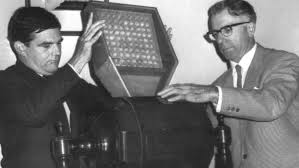
Australian party politics at the time of the
introduction of National Service in 1964 provided a secure basis for the
introduction of a scheme of peacetime conscription of young men for overseas
service. Even though conscription had always been contentious in the past,
especially during the First World War when it had divided the community, the
Menzies government of the day assumed that its introduction would not
constitute a risk at the ballot box.
This second scheme of national service wasn’t
introduced until November 1964 so was not an issue at the 1963 federal
election. Menzies campaigned effectively on other issues such as the proposed
North-west Cape communications facility, state aid for students at both
government and non-government schools, and the “Faceless Men” controversy. The
Coalition criticised Labor for its insistence on Australian decision making in
the event of warlike use for the facility and was portrayed by Menzies as being
weak in its support for the US alliance. This was integral to the successful
Coalition strategy of using the US alliance as a campaign issue, a strategy
that shored up the all-important DLP preferences.[1]
The half senate election on 5 December 1964
resulted in the Coalition winning exactly half the contested seats with the
Democratic Labor Party and independent senator Reg Turnbull holding the balance
of power. This poll was held shortly after the introduction of national service
in November 1964, but before the announcement in May 1965 heralding new powers
that enabled it to send national servicemen overseas.
This sequence of events helped set up the
political viability of the scheme. The importance of the DLP vote, bolstered by
anti-Communist rhetoric, together with the staggered timing of the announcements
(first of the second National Service scheme in November 1964 and then of
National Servicemen being liable for overseas service in May 1965) were
significant factors.
On the floor of parliament, the issue of
conscription was almost always broached in the context of the threat from the
north. On 22 September 1964, Sir Wilfred Kent Hughes (Member for Chisholm, and
an ex prisoner of war) asked the following question –
I
address a question to the Prime Minister. If, as the right honourable gentleman
said in Sydney last week, " Australia had never lived in a state of
greater risk ", why has the Government not already taken the necessary
action to provide a defence potential commensurate with such risk? As 44.5 per
cent, of the recruits for the Australian Regular Army during the last year were
between the ages of 17 and 19 years, the latter being the earliest age for
active service, and the total of recruits for the last three months would not
even provide for wastage, when does the Government propose to re-introduce
national service training involving the calling up of 14,000 a year, or some
similar scheme to provide the necessary man power for the defence potential
which must be built up? Does the Government intend to continue making an appeal
to the pockets and not to patriotism of young Australians?[2]
The Prime Minister, in his very brief reply,
referred to the issue as “a matter of policy” and inferred that it was already
under serious discussion. Indeed, it was, and the second scheme was introduced
a few months later. Questions such as this one had laid the groundwork.
The notion that the scheme could result in
young men serving unwillingly in a war zone was usually countered by drawing
attention to the loophole provided by CMF membership, an option which was taken
up by only a very small cohort of prospective conscripts totalling 7197, out of
the 804,286 who registered during the duration of the scheme.[3]
Senator
MCKELLAR (NEW SOUTH WALES) (Minister for Repatriation) - The position is this:
Our young men today who are eligible for call up have the opportunity to join
the C.M.F. Until fairly recently, this opportunity did not exist in the
country. It does exist now because extra units have been raised. If young men
intend going into the C.M.F. and they are liable to be called up, they must
decide to enlist in the C.M.F. before the ballot is due. It could well be said
that a young man who has not decided to join the C.M.F. and subsequently is
called up could be classified in those circumstances as being sent to Vietnam
unwillingly. If there are some youths in this category, I would think that they
would be very few.[4]
One strange aspect of the scheme was that any
twenty-year-old migrant called up, who had served for a continuous period in
the military of his country of origin, could subtract that time from his
two-year national service obligation.
The following answer was given by Senator
Wright, Minister for Labour and National Service, with reference to this issue
on Tuesday, 21 April 1970:
A
Yugoslav or any other migrant who arrives in Australia prior to the date
proclaimed for his age-group to register is required to register for national
service. If, following the relevant ballot, he is called up for national
service, he will be required to serve for two years less any period of
continuous full-time service he has rendered in the naval, military, or air
force of Yugoslavia or any other country.[5]
The reasoning behind this is difficult to
understand, but it does highlight the irony in the attitude of the government
of the day which on the one hand used a random but unfair process to conscript
young men, but once they were conscripted gave the appearance of treating them
fairly.
Questions about national service were often
concerned with ensuring that the scheme was being implemented fairly, rather
than its moral justification.
Perhaps this emphasis on fairness after the
event was a strategy of distraction.
As the end of the decade approached, Hansard
began to reflect a more militant attitude on the part of the opposition, as the
questions about national service begin to focus more on the rationale behind
the country’s commitment in Vietnam, than on the implementation of the scheme.
By April 1970, the parliamentary discourse was
very much about the war rather than the soldiers, and the realisation that
support across the Pacific was faltering rapidly was becoming a political
factor.
Senator
MURPHY (NEW SOUTH WALES) - My question is directed to the Leader of the
Government in the Senate, ls it a fact, as reported all around Parliament House
and also in the daily Press, that the Deputy Prime Minister, Mr McEwen,
yesterday told a meeting of Government Parties that America had lost the war in
Vietnam because it had lost the war at home? If so, will the Leader convey to
the Government our congratulations on the truth having percolated through to at
least one member of the Government that this illegal, immoral, and unjust war
has been lost?[6]
The issue of the moral underpinning of the war
came to a head during the moratorium campaigns of 1970 and 1971, but it was
always emmeshed in objections to conscription.
In his backgrounding of the political build up
to the Australian commitment, Michael Sexton refers to the DLP, and B. A.
Santamaria –
Under the intellectual
domination of Santamaria, therefore, the DLP became a vigorous advocate for
American policies and greater Australian defence capability…….It was this climate
of fear – in addition to the DLP’s votes – that proved so electorally valuable
to Menzies and prevented Labor – or anyone else – initiating a debate on some
of the premises of the government’s foreign policies.[7]
Sexton contends that Labor was effectively wedged
by the political climate, and that they risked electoral damage should they
make an issue of the Vietnam commitment. Conscription, at this early stage,
seemed somewhat lost as an issue -
Even
more important for the men who were organising Australia’s Vietnam involvement,
they
could be sure that in this climate no real debate on their decision could take
place. Only the Labor party was likely to attempt a debate, and it had been
effectively discredited before the decision was even made. In the short term,
therefore, they had ensured their safety from any adverse judgements – even if
their peace of mind required a high price to be paid by others.[8]
Between 1964 and 1972, 804,286 twenty-year-olds
registered for national service and 63,735 of these national servicemen served
in the Army. About a quarter of those called up (about 15,000), served in
Vietnam. Of those, 202 were killed and 1,279 wounded.[9]
These young men came from a wide variety of
backgrounds and communities, but they had at least one universal experience
derived from their schooling in Australia. They had attended ANZAC Day
ceremonies at their local schools, and many would have participated in the
associated marches and ceremonies.
[1]
L.F. Crisp, (1970), The D.L.P. Vote 1958 – 1969 and After, Politics, 5:1,
DOI:10.1080/0032367008401191, p62
[2]
Sir Wilfred Kent Hughes (member for Chisholm), Parliamentary Hansard, Question
Time, House of Representatives, 22nd September 1964, question
addressed to the Prime Minister, p1
[3]
Sue Langford, Appendix: The National Service Scheme, 1964 – 1972, https://www.awm.gov.au/articles/encyclopedia/viet.app
(Accessed October 2019)
[4] Senator Kenneth
McKellar (New South Wales) (Minister for Repatriation), Parliamentary
Hansard, Senate Question Time, Tuesday 18th October 1966, p1132
[5]
Senator Reginald Wright, (Minister for Labour and National Service),
Parliamentary Hansard, Senate Question Time, 21st April 1970, p1
[6]
Senator Lionel Murphy, Parliamentary Hansard, Senate Question Time, Thursday 23rd
April 1970, p1
[7]
Michael Sexton, War for the Asking, New Holland, Sydney, 2002, p96
[8]
Ibid p108
[9]
Ashley Ekins with Ian McNeill, Fighting to the Finish, The Australian Army and
the Vietnam War, 1968 – 1975, Allen & Unwin, Sydney, p837
Subscribe to:
Comments (Atom)
Groundhog Day
M109 at the Horseshoe Back in May 1970, I was a reluctant member of 5 platoon, B Coy, 7 RAR, and about one third into my sojourn in South Vi...

-
 Fascism as a political movement exhibits four basic criteria. First, fascism it is not an ideology, but an activity. Secondly, it...
 -
 Pic courtesy The Atlantic The media is having a field day with its coverage of the pandem...
 -
 Two young women are apparently largely responsible for the reintroduction and spread of the Corona virus into South East Queensland. Their s...