Thursday, 4 July 2019

Travelling North

An early start was the go.


I've been a bit slack with postings of late, gentle reader.

the major distraction has been enrolling at Uni after a gap of 39 years.

The tertiary institutions that I earned RPL* from have had problems with their archives, caused, I understand by the most recent Brisbane floods.

Anyway, they have resurrected sufficient of my academic record to mollify the campus I'm dealing with, so it's all good.
Roadworks were a pain.


To fill in the time whilst waiting to get started at the beginning of semester 2, I took a long road trip north - to Mackay, to be exact, where my 90-year-old aunt was celebrating her birthday.

There were many cousins, most whom I haven't seen for 30+ years, so it was interesting (and revelatory). I seem to have worn better than most of them.

It's all that clean living.

Travel stained at Bororen.

Anyway, I pointed the nose of the MX5 north, and set out early.

An MX5 SE is not designed for long distance cruising, but this little machine acquitted itself well.

It has an excellent driving position, and cruises at about 3000rpm. An overdrive would be nice, but it doesn’t feel (or sound) stressed at this rev range.
Safely in Mackay.

The only problem I had was in 110km/hr zones, because the turbo kicks in at about 105km/hr in top gear, and holding it below the limit required lots of concentration.

It used 7.5lit/100kms of 98 octane, which is pretty good. Prices were surprisingly consistent except for Mackay city.

Despite wet weather and loads of caravans, the trip north ws enjoyable, and the journey back, in fine weather, was great fun.
Town of 1770.
EV chargers at Marlborough.

Friday, 7 June 2019

Baby and Bathwater


Pic courtesy European Movement
There’s plenty in the media about the 75th anniversary of the D Day landings, and so there should be.

This event changed the course of history in Europe and formed the basis of the free and prosperous Europe we see today.

Not long after the end of the war in Europe, (24th October 1945) the United Nations officially came into existence.

Representatives of 50 countries met in San Francisco at the United Nations Conference on International Organization to draw up the United Nations Charter.

Those delegates deliberated based on proposals worked out by the representatives of China, the Soviet Union, the United Kingdom and the United States at Dumbarton Oaks, United States in August-October 1944.

This was only 5 months after the fall of Berlin on 8th May 1945.

The delegates at that conference would have had the chaos and suffering of the Second World War uppermost in their minds.

It was after all, a global war that lasted from 1939 to 1945 involving the vast majority of the world's countries including all the great powers. It resulted in the eventual formation of two opposing military alliances: the Allies and the Axis. A state of total war emerged, directly involving more than 100 million people from over 30 countries. The major participants threw their entire economic, industrial, and scientific capabilities behind the war effort, blurring the distinction between civilian and military resources.

World War II was the deadliest conflict in human history, marked by 50 to 85 million fatalities, most of whom were civilians in the Soviet Union and China. It included massacres, the genocide of the Holocaust, strategic bombing, premeditated death from starvation and disease, and the only use of nuclear weapons in war.

Looking back, the foundation of the UN represented an expression of hope, and a determination that global conflict would not happen again – surely a noble aspiration.

Not much later, in 1951, the Treaty of Paris, and in 1958 the Treaty of Rome (1958) established the European Economic Community (EEC). Winston Churchill had called in 1946 for a "United States of Europe", and the original development of the European Union was based on a supranational foundation that would "make war unthinkable and materially impossible.

Seventy-five years after D Day, and sixty years plus since the Rome and Paris treaties, with the exception of localized conflicts (1991–1993 Georgian Civil War, 1992–1995 Bosnian War, and Kosovo 1998 – 99), Europe has been generally peaceful.

This is in marked contrast to the preceding 50 years, marked as it was by “the war to end all wars” and World War two.

And yet, we see Brexit, rising nationalism in many European states, and condemnation of the UN from some.

History is either not read, or not understood.

Throwing the baby out with the bath water is always bad for the baby…

Monday, 20 May 2019

Queenslanders are Different


Tambo Dawn

Queensland has always been different and never properly understood by southerners.

We identify by our distance from the capital (Brisbane), more strongly than by any other factor. The further we live from Brisbane, the more militant and contrarian our opinions.


I learned this when working in regional administration in Mt Isa. We talked bitterly about BFBs (Bastards from Brisbane) and saw our main function as opposing every suggested initiative that came from Central Office.


This identity by region probably derived from the history. Unlike other mainland states, Queensland was settled district by district, from the productive inland to the coast, rather than from the capital outwards.


The east/west railway links were completed before the north/south Brisbane/Cairns link.


Soldiers embarking for Gallipoli (and the western front) in World War One, did so on steamers from ports like Rockhampton as well as from Brisbane.


Prior to the Second World War, many Queenslanders lived out their lives in their own regional areas without ever travelling to the capital. The distances and the state of the roads saw to that.


This geographical history underpins our political consciousness, and creates an electoral environment beyond the ken of journalists in NSW and Victoria.


Every now and again, this lack of comprehension is revealed by the commentary, as demonstrated by the collapse of Labor in 2012 - and again yesterday.


Having said that, Queensland can surprise from the other side of the political spectrum.

Remember Red Ted Theodore?

Remember the shearer’s strike?

Monday, 6 May 2019

Reviewing Dapin's "Australia's Vietnam - Myth vs History"


It’s time for another book review, gentle reader.


I’ve studiously avoided commentary on politics. It’s never a good time to do that during a campaign.


The book in question is Mark Dapin’s Australia’s Vietnam – Myth vs History.


Dapin posted me a copy on the strength of the fact that he used some material I sent him in reference to one of the myths he eviscerated.

He looks at (amongst other things) the following accepted narratives and debunks them -
  • Every National Serviceman who went to Vietnam was a volunteer.
  • Some National Servicemen (Normie Rowe and Doug Walters, for example) were enlisted without being balloted to show that no-one was exempt.
  • The powers that were played God with the ballot process.
  • There was a hidden Australian My Lai.
  • Returning diggers were spat upon at airports and when parading in the capital cities.
The work is interesting and engaging in three ways.


First, it’s written in an irreverent non-nonsense fashion, sprinkled with factual barbs directed generally at the establishment. For me, as an habitual contrarian, that’s always a plus. In this case, the “establishment” is a generation of the more respectable chroniclers including notables like Ham, Edwards and Horner. He takes them on, and in the judgement of this humble reader, makes many of their assumptions look silly.

His conclusions are backed by research that is almost forensic in its character.


The second factor is that he readily admits that much of what he has written on the subject in the past is at least misguided and at most simply wrong. His explanation of this sets a framework for his conclusions that the war has been misremembered and mischaracterised by many, including those who participated in it.


This contention struck a chord for me. I’ve attended my fair share of reunions, and have listened to plenty of stories, tall and not so true. We call them “warries”. The telling of these stories is harmless, and probably helps the narrators make sense of their experiences, but it does nothing for the accurate recording of history.


And thirdly, his work encourages me to dig deeper in reference to the reasons for the existence of the myths in the first place. 


It’s really a three-stage process; the recounting of the myths, their debunking, and the analysis of why these myths developed in the first place.


Dapin’s book comprehensively completes the second stage of the process. I’d like to have a go at the third.

Hence I'm enrolling at USQ to do just that.

Blogging may be light as a consequence.

Friday, 19 April 2019

A Very Ordinary car


Years ago, I published a piece about all the cars I’ve owned.

It’s enough to say that there have been plenty, and some more loved than others, but amongst the collection there are vehicles which simply felt “right”.

It probably had something to do with time and place, but amongst them I’d nominate my Peugeot 505 wagon, my second Renault 12, and my Commodore ute.

Note I haven’t included any of my three MX5s, or the various Falcons I owned over the years.

These were all great cars, but they didn’t instantly feel “right” from the moment I got behind the wheel.

The MX5s were essentially “special” cars for enjoying driving. There’s a difference between “special” and “right”, and it relates to function. Cars that feel “right” are universally useful all of the time.
Ever tried to move house with an MX5? 

The subject of this post, my son’s Mazda 323, does feel “right”.

I’m driving it because he has a job a short cycle ride from where he lives, and simply doesn’t need it, as he lives very close to a railway station for the occasions he needs to get somewhere other than work.


On the other hand, he doesn’t want to sell it in case he gets a transfer in his job to a location not so accessible, so I’m garaging it for the time being.

The 323 is indeed a very ordinary car, but it’s comfortable, reliable, and accessible. By “accessible” I mean easy to get in and out of, and easy to see out of. Modern small sedans are over-styled, and as a consequence neither accessible or with good visibility. This is probably one reason why SUVs have become popular.

The 323 has a six CD stacker and cruise control as aftermarket accessories, and these bits add to the appeal. My iPhone will mount to the dashboard, and with the correct adaptor becomes a basic version of Apple Car play.

This means the phone becomes a satnav.

I’ve found a Bluetooth accessory that allows me to play the tunes on my iPhone over the stereo. It works a treat.

So the 323 has all the mod cons available in our Kia Cerato, but is easier to drive, easier to get in and out of, and easier to reverse, even though it doesn’t have a camera. It’s all to do with the greenhouse, and the ease with which you can turn to see over your shoulder. 
I’m getting on a bit you know…..

Sunday, 31 March 2019

Nostalgia


It's been over twelve months now since I retired.

My first attempt at retirement was an abject failure, as it lasted only six months.

This one is permanent. I'm deaf, which makes working in noisy environments impossible. Trying to plan with my co-workers on the way to jobs, and conversing with kids and teachers in noisy classrooms had become embarrassing.

I do miss the work. One of the experiences I miss is flying in and out of places like Quilpie, Cunnamulla and Charleville.

This video was taken as we were landing at Cunnamulla.

The aircraft was a chartered Beechcraft Super King Air.

Cunnamulla was an American bomber base in World War Two, and Lyndon Johnson spent time there. I guess the Yanks figured that the Japanese would get so bored flying over the country between the coast and the outback that they'd shelve any ideas of attacking it.

Enjoy the vid.


Thursday, 14 March 2019

My Flying List


No - I've never flown on a Concorde. This one is at the Intrepid museum NYC.

I don’t pretend to be an expert, gentle reader, but I reckon I’m as qualified as any lay person to comment on matters aviation.
I’ve done plenty of flying. Some I’ve forgotten. This I remember in chronological order –
1968 – Slingsby glider at Goondiwindi
Slingsby
1969 – TAA Vickers Viscount (Brisbane – Williamtown – Nasho intake)
TAA Viscount

1969 – RAAF UH1H and Navy UH1B, C-130A and C-130E, DHC Caribou, (Training in 7 RAR)
DHC Caribou

UH-1H
1970 – RAAF and US Army UH1H (Operational flying – More times than I can count – beat walking); DHC – American Airlines R & R charter – Saigon/Bangkok – Boeing 707; Caribou; C -123; Qantas Boeing 707 10/12/70 (RTA)
C-123
Qantas 707

1974 – Lake Buccaneer (GBR trip)
Lake Buccaneer

1977 – TAA Boeing 727
TAA 727

1978 – Air NZ DC-10 (The actual aircraft that crashed at Mt Erebus – ZK-NZP one year later. I always note the rego numbers)
Air New Zealand DC 10

1979 – Boeing 727
British Airways 747

1980 – Boeing 747 – (British Airways – UK & return).
Australian Airways 737

1983 – 1989 – Various Boeing 737s.
DC3

1986 – DC – 3 (“Champagne flight”). My bride got airsick.
C130 during pilot's strike

1989 – C-130 E Townsville/Brisbane during pilot’s dispute. Tail number indicated that it was an aircraft I had flown in during Nasho training in 1969.
Chartered Cessna 180

1993 – Cessna 180 on charter – Mt Isa, Dajarra, Boulia, Bedourie, Birdsville, Windorah (Researching indigenous communities)
QantasLink Super Kingair

1993/94 – Beechcraft Super King air – 4 Flights annually attending Townsville board meetings from Mt Isa.

1994 – 2000 – Various 737s and Airbus 320s – attending national conferences.
Virgin 737

2006 – Singapore Airlines 777 – Brisbane/Singapore. Airbus 320 Singapore/Saigon.
Singapore airlines 777

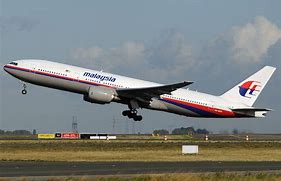
2007 – Brisbane/KL – Malaysia Airlines 777. KL/Saigon – Airbus 320,Air Vietnam 737 – 800 Da Nang/Hanoi.
Air Vietnam ATR – 72 Saigon/Da Nang.
Vietnam Airlines ATR 72

Malaysian Airlines 777

Malaysian Airlines 737

2008 – 2015 – Numerous flights to Adelaide on Virgin 737 – 800s. Flight to Perth to connect with Indian Pacific – Virgin 737 – 800.
2010 – Darwin/Brisbane Boeing 767.
Qantas 767

2007 – 2015 – Lear Jet; Piper PA-42 Cheyenne; Beechcraft Super King Air (All charters involving consultancy work at Charleville, Quilpie and Cunnamulla – one flight per school term). The Lear was amazing. We hit an emu on the Quilpie strip in the King Air.
Beechcraft Super King Air

2018 – Qantas 747 Brisbane/LA/New York. COPA 737 – Washington/Panama City/Havana.
Qantas 747 - 400

2019 – Various flights to Newcastle – Airbus 320s and 737s. I usually travel domestic every couple of months, and have discovered that whilst Toowoomba’s new airport is convenient, fares to Sydney, Townsville, Cairns and Melbourne are expensive.
Jetstar A320. If you travel with this mob, read the fine print before you book online.

Air north fly Embraer 170s and I have used these various times direct from Toowoomba to visit friends and rellies in Townsville and Cairns.

Airnorth E170


My favourite long haul aircraft is the Boeing 747 – 400 (especially if you book row 46 or 58 behind the exits).
My favourite short haul aircraft – Embraer 170 as configured by Air North.
My most memorable flight – It's a toss up between flying out of a dirt strip in the Colo training area in a Caribou in July 1969 in a massive cross wind. (We were last stick out and all flights were cancelled after ours), and Charleville/Roma on a stormy November afternoon in 2010 when we struck hail and wind shear. Pilot was a genius.

Groundhog Day

M109 at the Horseshoe Back in May 1970, I was a reluctant member of 5 platoon, B Coy, 7 RAR, and about one third into my sojourn in South Vi...